 0:00
0:001 of 1 shots sampled
1. Beat 1
Model synopsis: The first beat is a black screen with no visible content, objects, or people. No transcript lines are provided for this segment.
No renewal found Free in the US since 1 January 1961, on the registry's reading: registration LP3512 of 1932 by Associated Talking Pictures, Ltd was not renewed in the volumes searched. Record.
Arthur Wontner’s Holmes follows a treasure whose promise of wealth keeps drawing new people into an old crime.
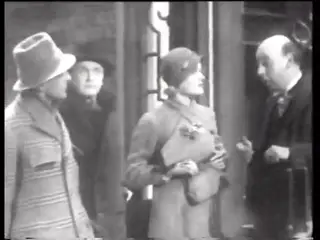
The treasure in The Sign of Four is less a prize than a means of passing a crime from one household to another. Mary Morstan comes to Sherlock Holmes seeking an explanation for her father’s disappearance, with anonymous gifts of pearls suggesting that someone knows more than she does. An invitation from an unknown benefactor offers a way into that concealed history. In Arthur Conan Doyle’s story, the people who possess the treasure cannot separate their good fortune from the circumstances in which it was acquired. Holmes must reconstruct that history before he can make sense of its consequences.
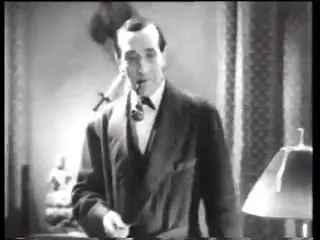
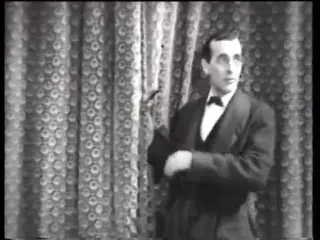
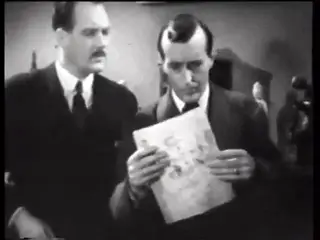
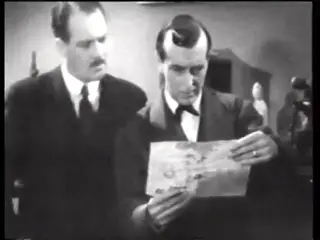
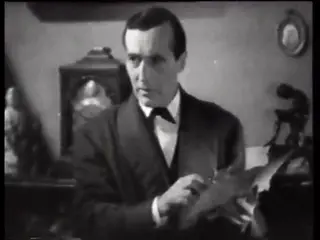
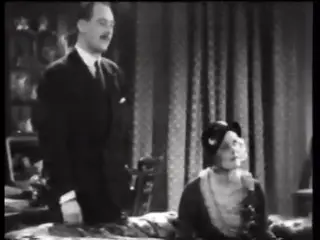
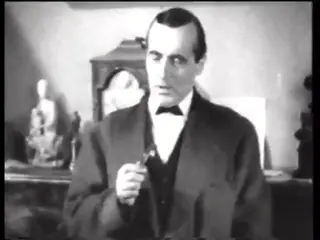
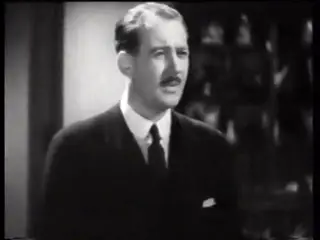
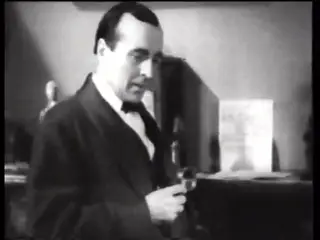
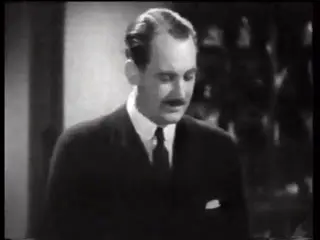
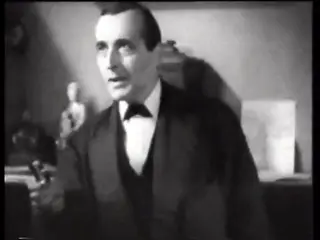
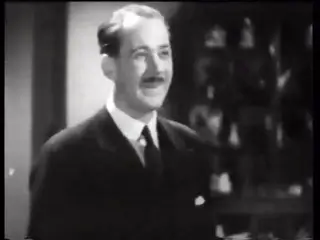
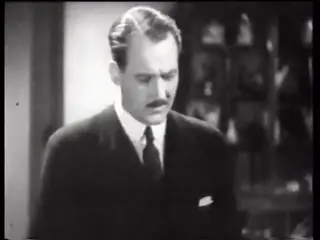
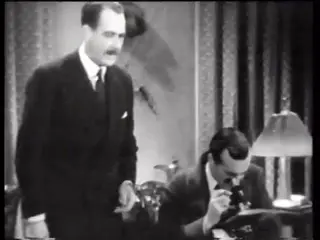
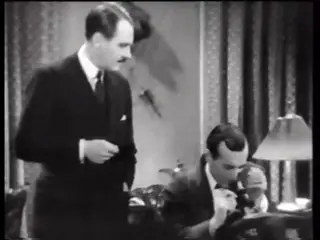
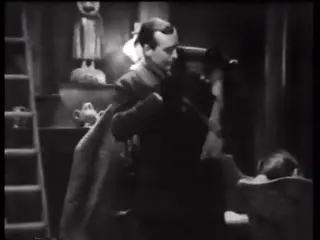
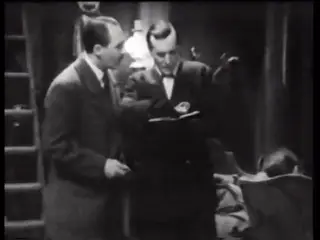
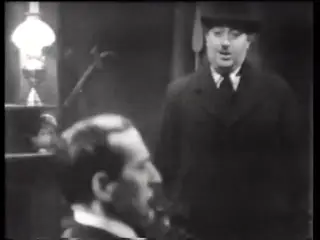
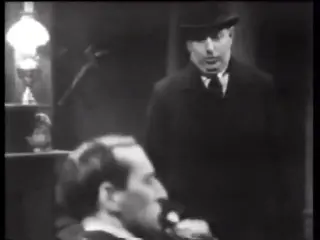
The 1932 film was made by Associated Talking Pictures.1 W. P. Lipscomb adapted Doyle’s novel for the screen.4 With Arthur Wontner as Holmes opposite Ian Hunter’s Watson, the investigation has its centre in the partnership between the two men.4 This was one of five Holmes films Wontner made between 1931 and 1937.6 Mary’s arrival brings another household’s unfinished business into the rooms where Holmes and Watson work.
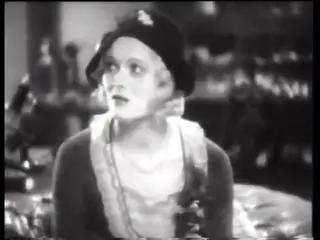
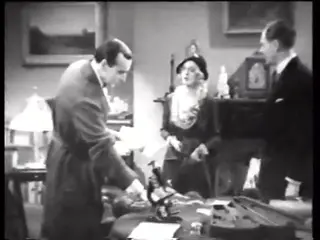
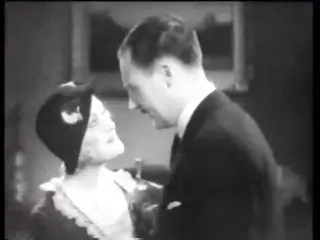
The story gives those partners different kinds of work. Holmes treats Mary’s predicament as a problem whose scattered particulars must be brought into relation. Watson’s attention to Mary herself makes the treasure’s uncertain ownership a personal matter. Affection becomes entangled with the question of who stands to inherit. The romantic possibility is therefore part of the investigation’s stakes rather than a diversion from them. Jonathan Small, played by Graham Soutten, brings the buried history into the present.4 His account is necessary to understanding what the treasure means. The movement toward a confrontation depends on a return to the original theft.
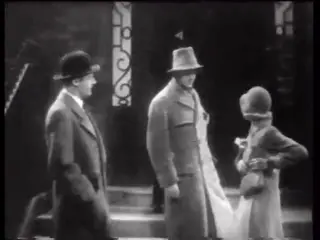
That structure is a firmer basis for discussing this copy than unsupported claims about its visual style. The atlas has not yet supplied annotated beats from which to offer a close reading of a scene. Even the film’s catalogue identity needs some care. One director credit names Graham Cutts alone.1 Another pairs Cutts with Rowland V. Lee.2 Reported running times differ too, from 65 or 74 minutes in one entry to 75 minutes in the other.12 Those discrepancies do not establish that distinct versions survive. They are reasons to distinguish the work described by a catalogue from the particular print a viewer encounters. A duration in a reference entry cannot establish whether anything is missing from a copy.
Its later circulation has made that distinction especially relevant. A home-video survey in 2004 described the Wontner Holmes films, including The Sign of Four, as circulating in the public domain.8 The Internet Archive copy used here carries that designation too.7 These labels are evidence of how the film has been presented, not documentation of the legal steps behind the designation. The ready availability of a copy does not explain when protection ended. Nor do the gathered distribution sources supply the registration and renewal trail. That requires a different kind of record from the one that tells a viewer where to find the film.
The record: Registration LP3512 by Associated Talking Pictures, Ltd is dated 14 August 1932. The registry found no renewal in the renewal volumes for 1959 to 1961, nor in the Copyright Office's records from 1978 on; on that reading the term ended on 31 December 1960 and the film has been free in the US since 1 January 1961. That conclusion rests on the registry’s reported search rather than on the labels attached to circulating copies. The record does not settle the film’s status outside the United States. It also leaves open the provenance and completeness of any particular surviving copy.
Written 6 September 2026 by gpt-6-astra from the registry record, the atlas's own evidence and the sources below, gathered by Qwen/Qwen3.8-Max with web search and questioned by deepseek-ai/DeepSeek-V4-Pro. Numbered notes are the sources; a claim marked unverified has no source yet; times open the atlas at that second. How these are made and checked.
429 shots over 1:12:44 · 211 beats in 92 sequences · 1053 transcript lines · JSON
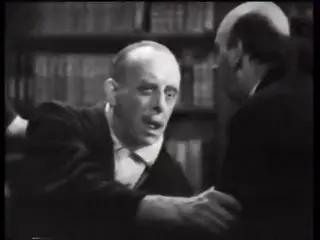
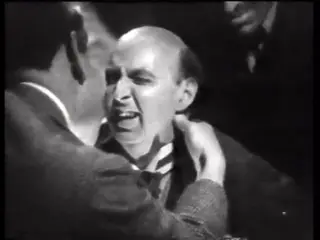
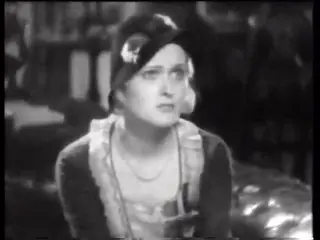
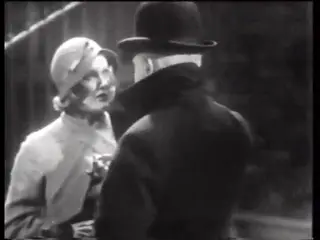
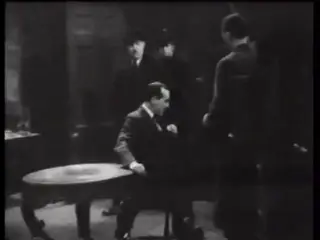
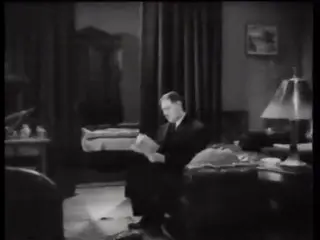
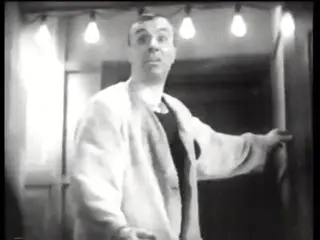
429 shots over 1:12:44, read from the Internet Archive copy The_Sign_OF_Four (The_Sign_Of_Four.mp4, 640×480, 29.97 fps). Shot boundaries by PySceneDetect's adaptive detector; each frame links to the Archive's player at that second. Registry dossier: The Sign of Four No renewal found. JSON
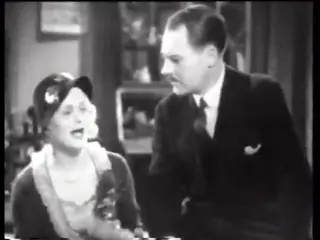
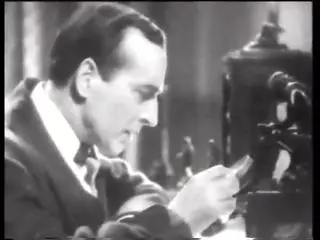
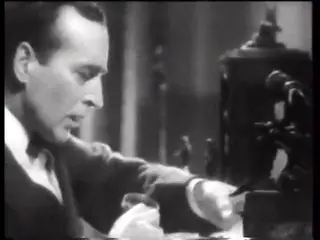
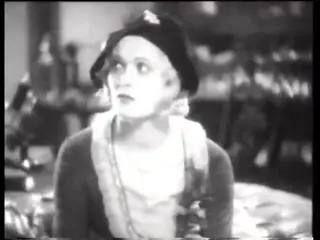
Measurements: black-and-white film on its keyframes (0 of 429 shots judged colour), average shot 10.2s long, a frontal face detected in 33% of keyframes. Shots are detected automatically and each is represented by its midpoint frame.
Released 1932 (Internet Archive).
211 beats in sequences, cut automatically at shot boundaries scored on picture change, pauses in speech, topic shifts, on-screen text and cutting rhythm (each beat says why it starts where it does). Each is annotated by a vision-language model from four sampled frames and the transcript lines in it, as observations with evidence; anything the frames and lines do not support is left null. Machine annotation (Qwen/Qwen3-VL-235B-A22B-Instruct), checked automatically: quotes must be verbatim, names must be spoken, "visible" events are sampled to a second model.
Passages cut at shot boundaries and annotated by a machine from four sampled frames and the transcript lines in them. Each beat says why it starts where it does and what was checked; sequences are visual groups, not scenes.
0:00Model synopsis: The first beat is a black screen with no visible content, objects, or people. No transcript lines are provided for this segment.
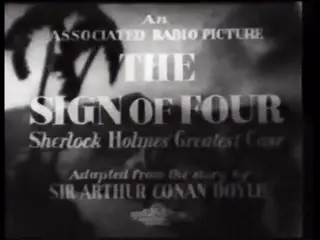 0:05
0:05Model synopsis: The beat shows a title card for the 1932 film 'The Sign of Four,' adapted from Arthur Conan Doyle. No characters or actions are visible; only text is displayed.
 0:37
0:37Model synopsis: A title card from the 1932 film THE SIGN OF FOUR credits Graham Cutts as director. No people, actions, or settings are depicted beyond the text and background image.
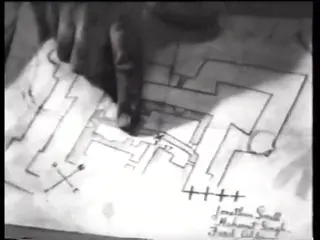
Model synopsis: Two close-up shots show a hand-drawn map and handwritten text on paper, with a pen resting beside the map. No people or dialogue are visible or audible in this beat.
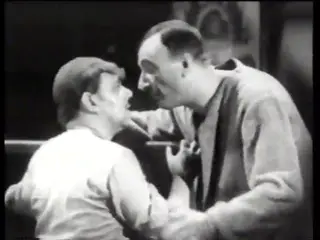
Model synopsis: A man in trousers and shoes walks across a wooden floor; a close-up shows a man with a mustache speaking. A sound effect 'Tonk' is heard at 1:44.
2 people observed.
“*Tonk*” 1:44
 1:54
1:54Model synopsis: Two men are in a room; one seated at a desk says 'Come in.' The other stands with arms crossed. No names are spoken.
2 people observed.
“Come in.” 1:54
Model synopsis: A person enters a room as another man gestures toward them. A third person stands behind a large box-like object.
3 people observed.
“Come in, come in.” 2:04
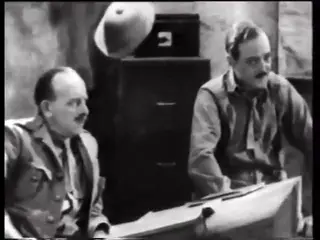
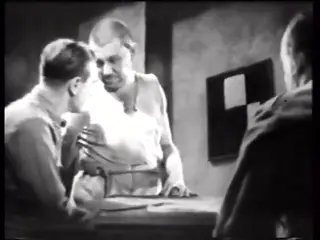
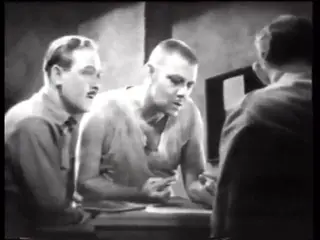
Model synopsis: Three men negotiate in a dim interior; one demands a quarter million and mentions pearls, while another agrees to let them escape before returning. No names are spoken that identify the individuals.
4 people observed.
“And I want a quarter of a million. Roger, but Tana's pearls alone are worth more.” 2:19 · “to find out the truth of your story. Before you come back,” 2:26
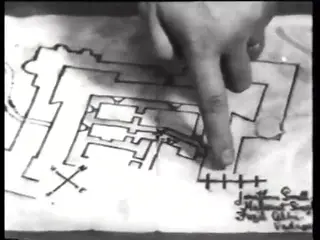
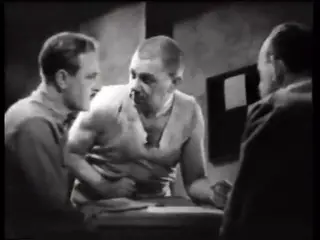
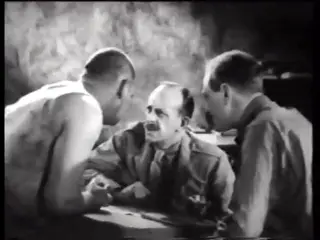
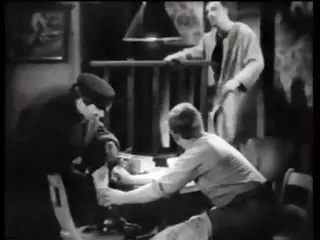
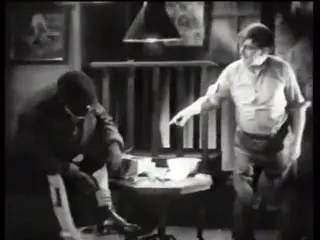
Model synopsis: Three men are gathered around a table in a dim interior, one pointing at a hand-drawn map while others listen. Dialogue suggests a tense negotiation over dividing stolen goods and references to a 'Major Salto' and 'Captain Morstan'.
3 people observed.
“The sign of fall.” 2:34 · “There are four of us in this.” 2:36
Model synopsis: Three men examine a ground plan in an interior setting. One man points to locations on the plan while others listen, and dialogue refers to a fortress and a cornerstone.
3 people observed.
“Where is this place?” 2:57 · “The fortress of Angra.” 3:00
 3:25
3:25Model synopsis: A man sits at a desk writing while another person stands nearby in a dimly lit room. A third person is partially visible in the background, and dialogue mentions a 'sign of fall.'
3 people observed.
“Mind you, don't forget.” 3:27 · “A sign of fall.” 3:30
 3:42
3:42Model synopsis: Two men are shown in close proximity, one seated and one leaning over him, in what appears to be an indoor setting. No names are spoken, and no objects or text are clearly identifiable beyond their clothing and posture.
2 people observed.
“Free brick.” 3:36 · “That is...” 3:39
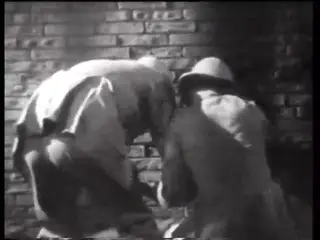 4:04
4:04Model synopsis: Two figures in hats and coats are bent over near a brick wall in a dimly lit scene. No names are spoken, and no objects or text are visible beyond the wall and their clothing.
2 people observed.
“The one?” 3:51 · “Cool.” 3:53
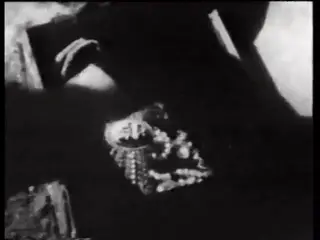 4:27
4:27Model synopsis: A close-up shot shows a hand reaching toward a glittering object on a dark surface. No dialogue or other context is provided in this beat.
1 person observed.
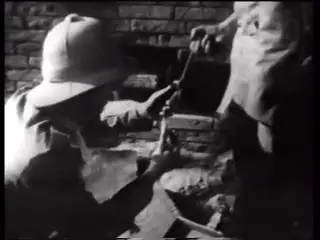 4:42
4:42Model synopsis: A person in a pith helmet and another person are visible near a brick wall, with one holding a tool. No spoken dialogue or on-screen text is present in this beat.
2 people observed.
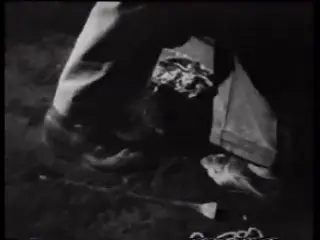 4:50
4:50Model synopsis: A close-up shows a person's legs and feet standing near a crumpled paper bag and a small object on the ground. No dialogue or identifiable location is visible in this beat.
1 person observed.
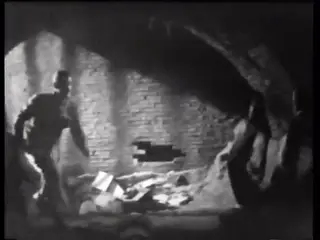
Model synopsis: A person is seen moving urgently in a dark, arched space with debris, while voices urge action and one exclaims 'No!'. The setting appears to be an underground or enclosed area with brick walls and low lighting.
1 person observed.
“Oh, my God.” 4:52 · “I'm going to go.” 5:03
 5:16
5:16Model synopsis: A person lies on their back in a dark, low-angle shot. No dialogue or clear setting is visible in the frame.
1 person observed.
 5:25
5:25Model synopsis: A dark, shadowy interior scene shows a figure standing over a prone body on the ground. No dialogue or on-screen text is visible in the frame.
2 people observed.
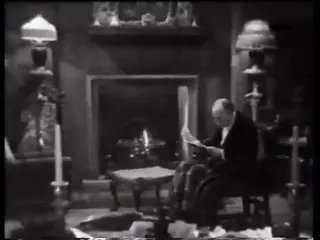 5:32
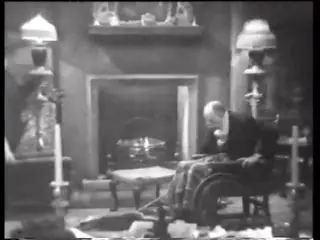
5:32Model synopsis: A man sits in a dimly lit room reading a document near a fireplace. The room contains ornate furniture and a lit fire.
1 person observed.
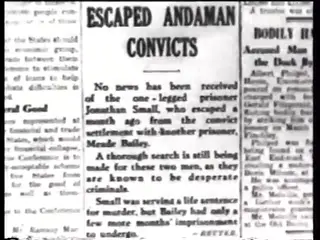 5:38
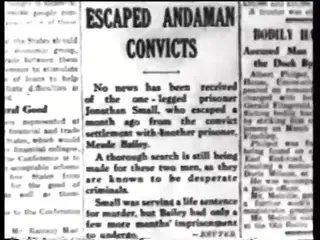
5:38Model synopsis: A newspaper headline reports escaped convicts, with text mentioning Jonathan Small and Bailey. No people are visible or audible in this beat.
 5:48
5:48Model synopsis: A newspaper headline about escaped convicts is shown. The transcript contains a single spoken word, 'Okay.'
1 person observed.
“Okay.” 5:46
 5:59
5:59Model synopsis: A bald man in formal attire is visible in a dimly lit interior, holding a book or folder. No dialogue or on-screen text is present in this beat.
1 person observed.
 6:05
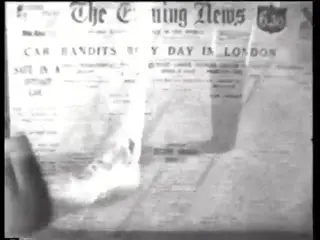
6:05Model synopsis: A hand holds a newspaper titled 'The Evening News' with a headline about car bandits in London. No people are visible or audible, and no events are described beyond the newspaper's content.
 6:09
6:09Model synopsis: A newspaper headline is visible in a single frame. No people, spoken dialogue, or clear setting beyond the paper is shown.
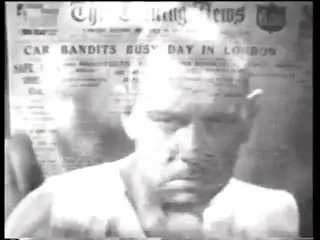 6:13
6:13Model synopsis: A man is shown in close-up reading a newspaper with a headline about car bandits in London. No dialogue or additional context is provided in this beat.
1 person observed.
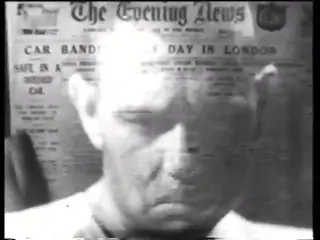 6:18
6:18Model synopsis: A close-up shot shows a man's face in front of a newspaper headline. No dialogue or action is visible in the single frame provided for this beat.
1 person observed.
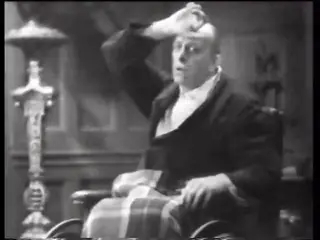
Model synopsis: A man in a wheelchair is shown in a dimly lit room with ornate decor; another figure moves near a doorway. A line of dialogue requests two sons be fetched. No names are spoken or visible.
2 people observed.
“That's what?” 6:26 · “fetch my two sons to me at once.” 6:27
 6:40
6:40Model synopsis: A dark interior with heavy curtains and a wall-mounted object is shown. No people or actions are visible in this beat.
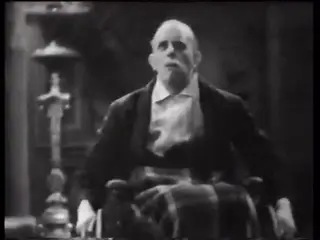 6:44
6:44Model synopsis: A man in formal attire sits in a chair in a dimly lit interior space. No dialogue or action is visible in the single frame provided.
1 person observed.
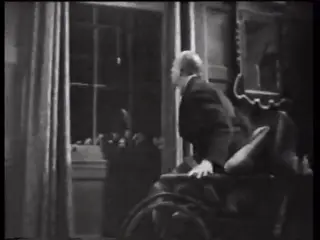 6:55
6:55Model synopsis: A man in a wheelchair is seen from behind, looking out a window in a dimly lit room. He says he is going to go, but no further action or context is shown in this beat.
1 person observed.
“I'm going to go.” 6:58
 8:19
8:19 8:49
8:49 9:15
9:15 9:23
9:23 9:32
9:32 10:23
10:23 13:50
13:50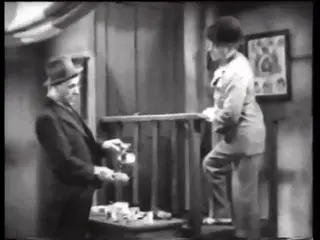 14:27
14:27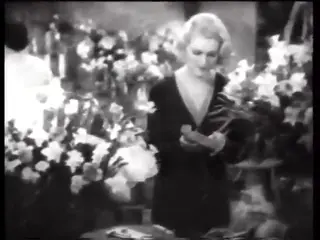 15:07
15:07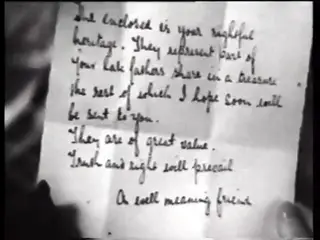 15:23
15:23 15:29
15:29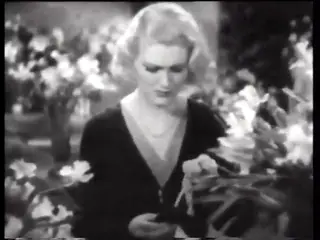 15:36
15:36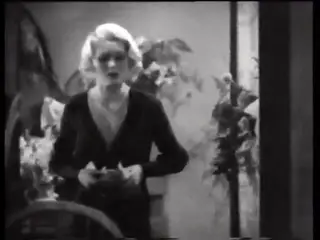 15:45
15:45 16:09
16:09 16:31
16:31 16:42
16:42 16:54
16:54 17:53
17:53 19:04
19:04 19:47
19:47 20:13
20:13 20:36
20:36 20:43
20:43 20:52
20:52 21:03
21:03 21:11
21:11 21:35
21:35 21:44
21:44 21:48
21:48 23:22
23:22 24:34
24:34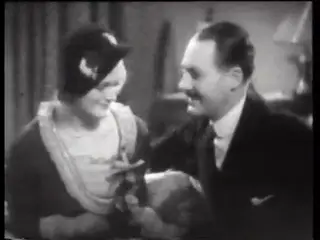 24:37
24:37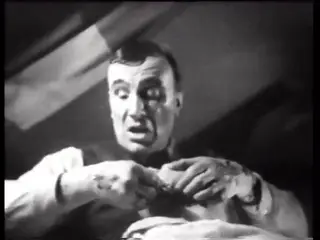 26:20
26:20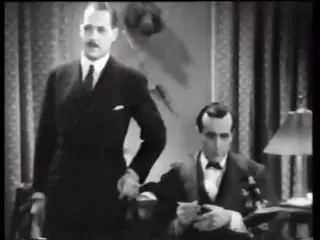 31:00
31:00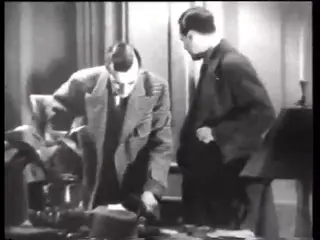 32:2333:07
 33:25
33:25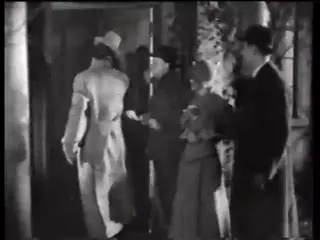 35:42
35:42 36:13
36:13 36:26
36:26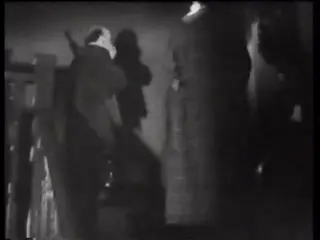 36:33
36:33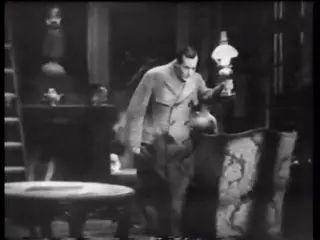 36:39
36:39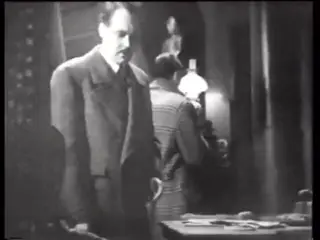 37:09
37:09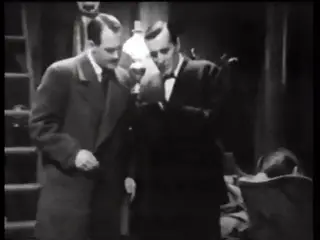 38:31
38:31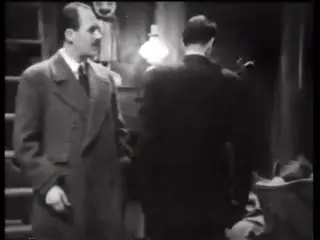 39:28
39:28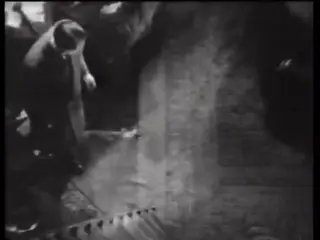 42:39
42:39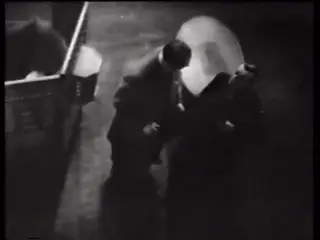 43:0443:34
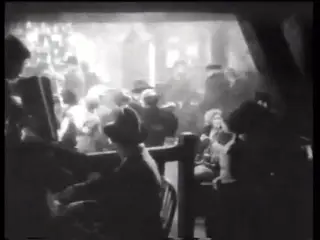 49:29
49:29 49:35
49:35 49:39
49:39 50:00
50:00 50:09
50:09 51:01
51:01 51:47
51:47 52:10
52:10 52:26
52:26 53:09
53:09 53:52
53:52 54:18
54:18 55:21
55:21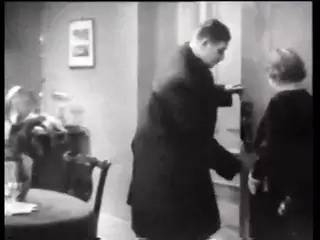 56:37
56:37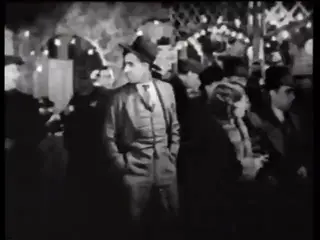 58:52
58:52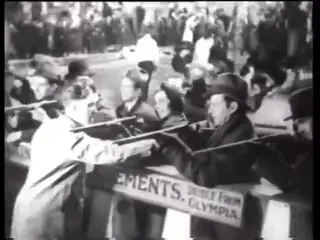 59:07
59:07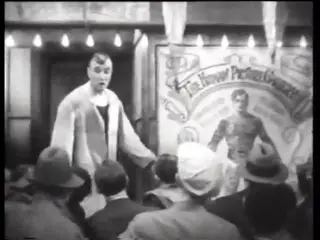 59:16
59:16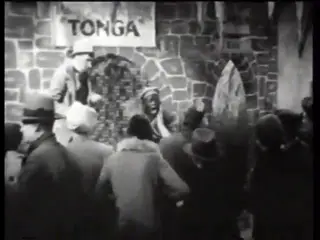 1:00:34
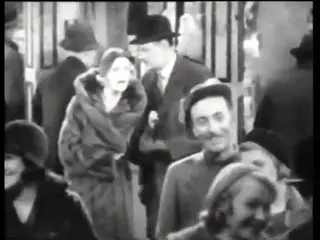 1:00:38
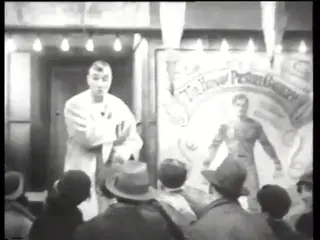 1:00:43
 1:00:46
 1:00:50
 1:00:55
 1:00:59
 1:01:04
 1:01:57
 1:01:59
 1:02:07
 1:02:11
 1:02:20
 1:02:28
 1:03:32
 1:04:00
 1:04:36
 1:05:40
 1:07:15
 1:07:53
 1:08:05
 1:08:42
 1:08:45
 1:09:46
 1:10:09
 1:10:50
 1:11:54
Machine transcription of the Archive copy's audio with Whisper large-v3-turbo (temperature 0); the model heard it as en. 1053 segments kept, 390 dropped as the kind of hallucination the model produces over music and silence. Each timestamp links to the Archive's player at that second. This has not been checked against the film and can be wrong.
Every free film of 1932 with a copy
By the average clip vector of the keyframes; a measurement, not a judgement
 White Zombie
  The Most Dangerous Game
  Mr. Robinson Crusoe
  The Thirteenth Guest
  Slaves in Bondage
  The Front Page
  Brideless Groom