Bob Hope’s baby photographer plays detective in a comedy where hardboiled confidence keeps giving way to bodily discomfort and romantic confusion.
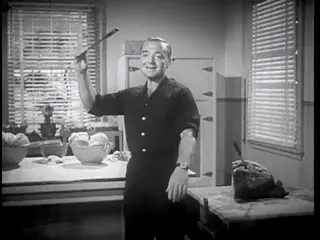
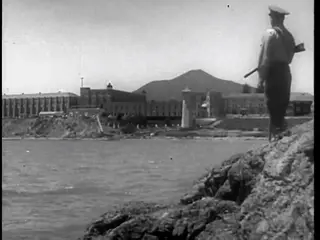
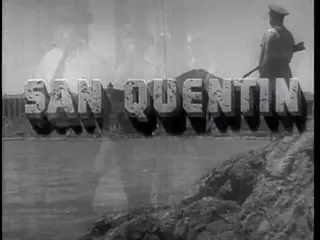
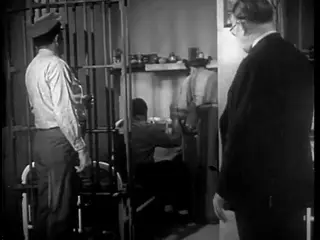
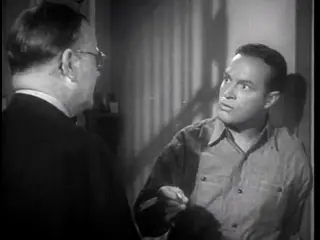
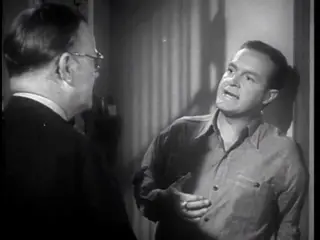
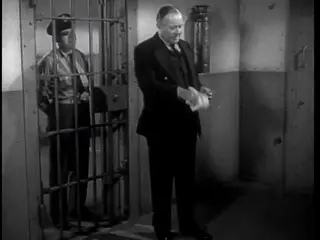
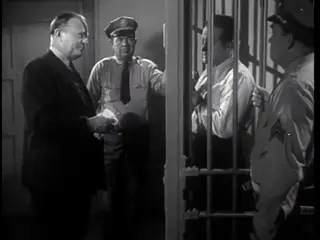
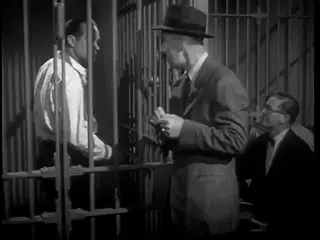
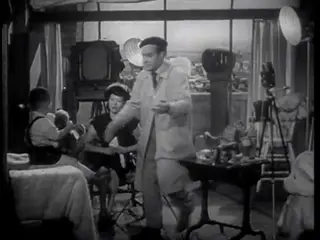
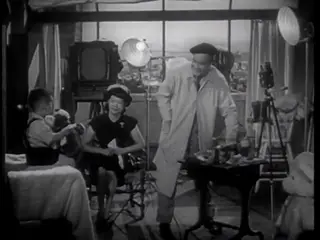
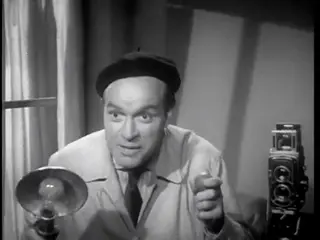
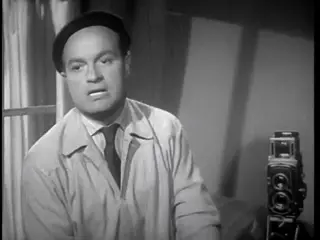
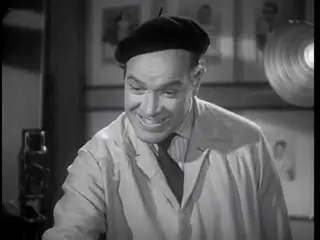
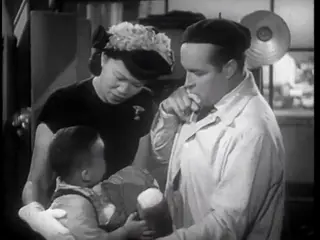
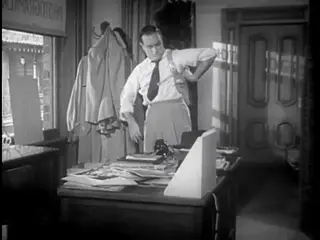
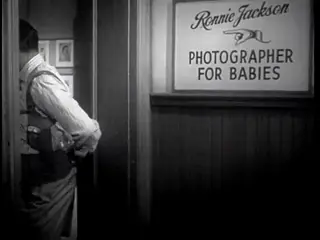
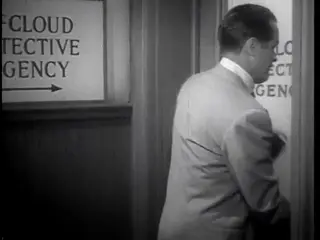
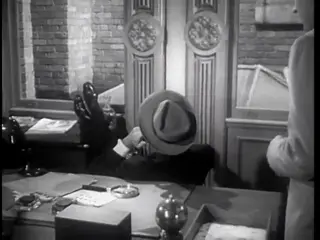
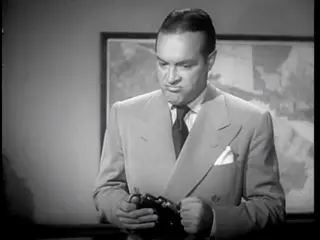
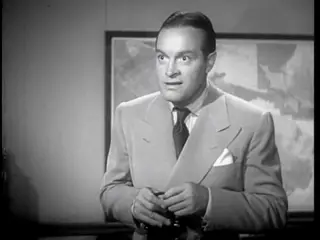
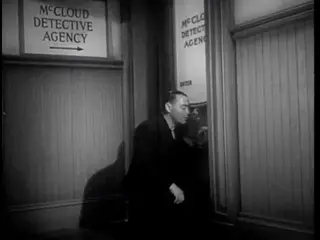
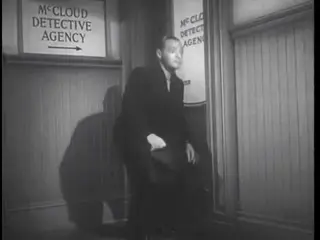
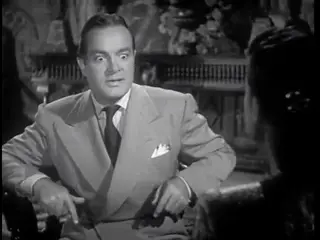
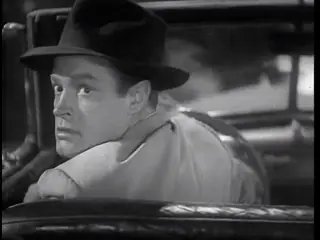
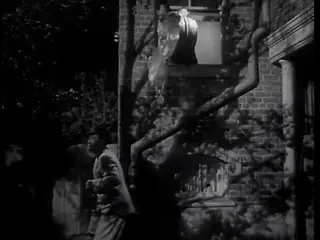
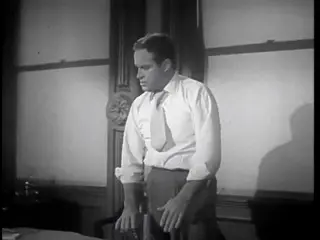
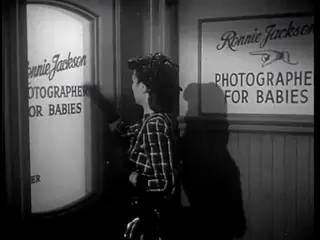
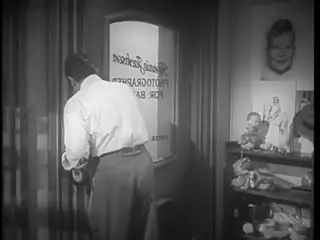
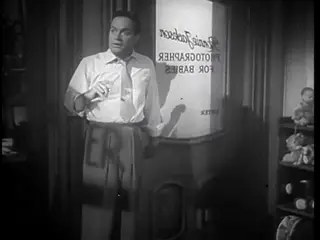
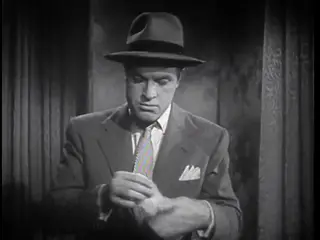
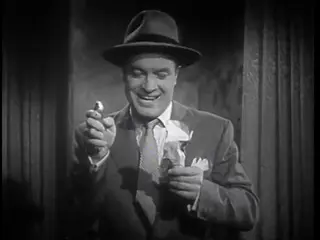
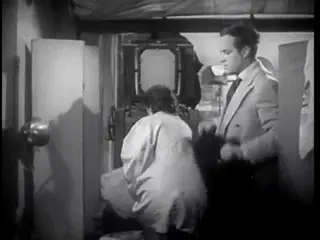
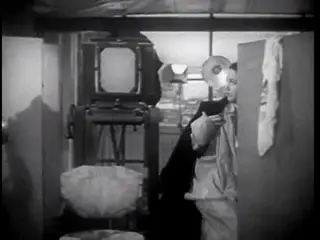
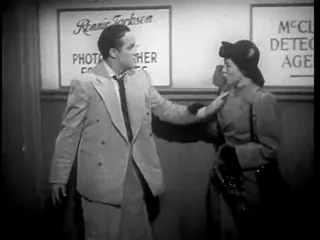
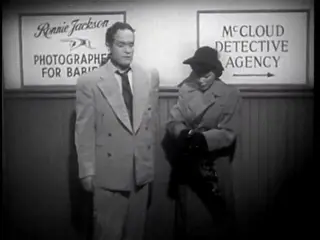
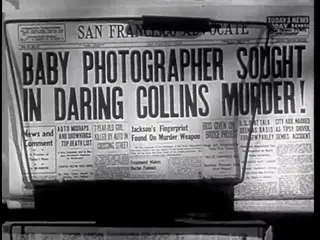
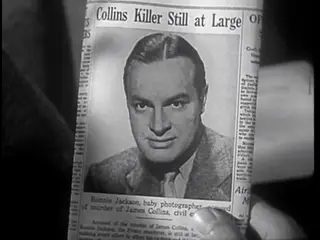
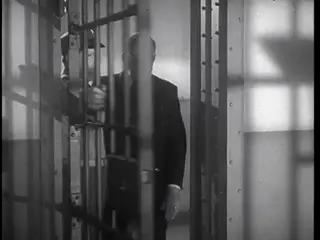
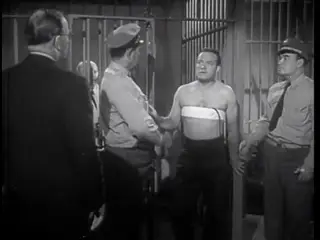
A baby photographer awaiting execution is an unusually bleak starting point for a Bob Hope comedy. In My Favorite Brunette, Ronnie Jackson tells reporters at San Quentin how his ambition to become a private detective brought him to death row.6 The distance between his ordinary occupation and his imagined one supplies the film with more than a mistaken-identity premise. A photographer needs people to sit still and cooperate. A detective must work among people whose intentions remain hidden. Ronnie wants the authority of the second profession without surrendering the reassuring arrangements of the first. Hope makes that mismatch the centre of the comedy, playing a man who can talk through danger more readily than he can understand it.
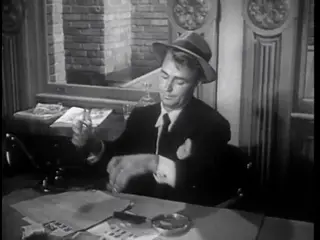
Elliott Nugent directed the film for Paramount and Hope’s production enterprise.2 It was released on 4 April 1947.1 Its connection to My Favorite Blonde was that of a sequel in name only.1 The hardboiled detective film supplied the model for Hope and Dorothy Lamour’s comedy.3 Alan Ladd makes an unbilled appearance.3 His presence gives Hope’s performance a point of comparison: Ronnie’s confidence has none of the stillness that might make it convincing.
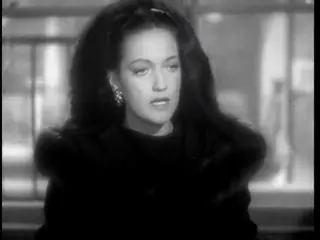
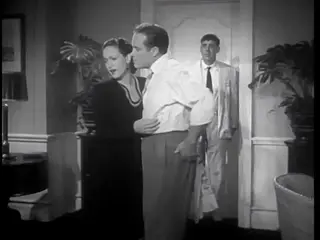
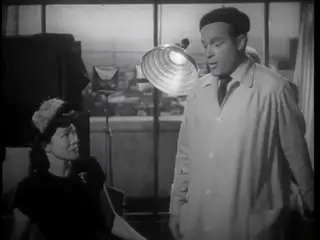
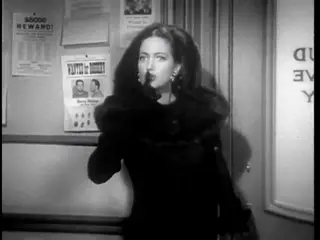
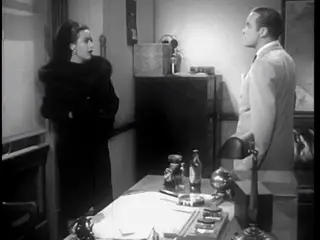
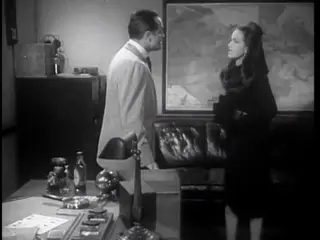
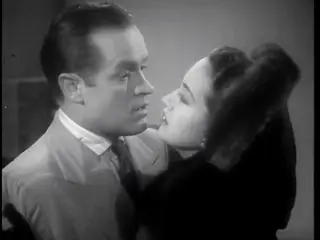
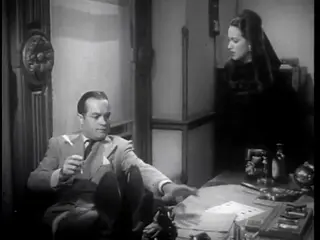
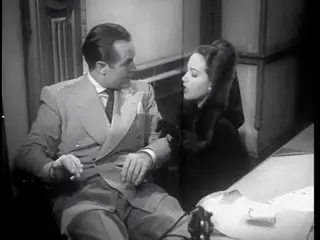
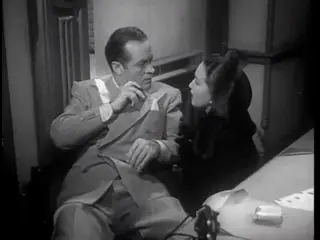
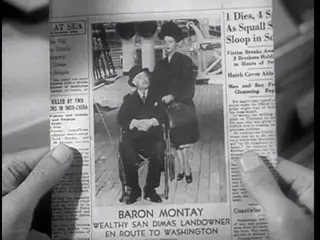
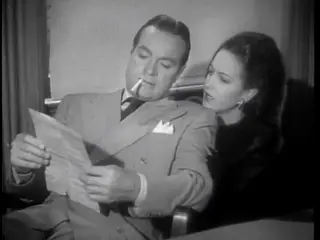
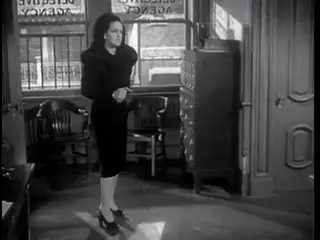
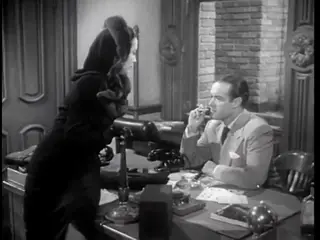
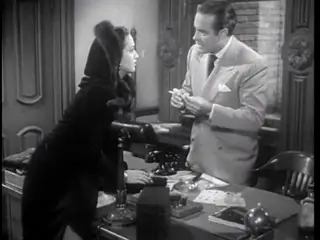
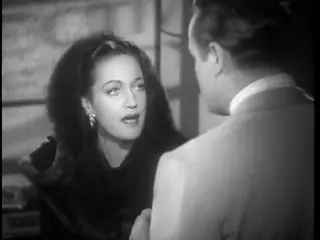
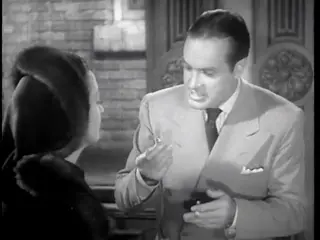
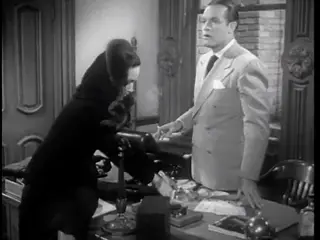
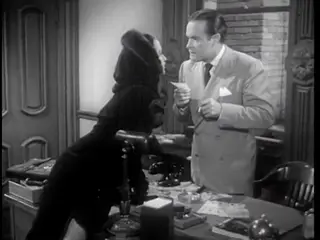
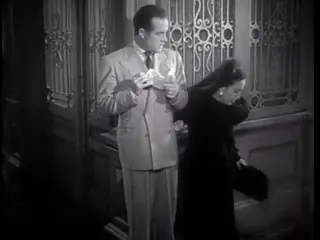
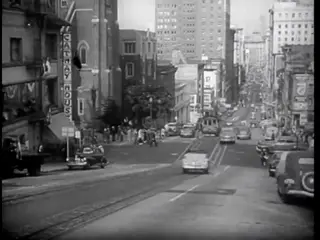
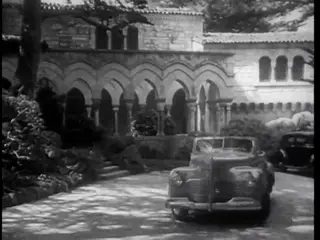
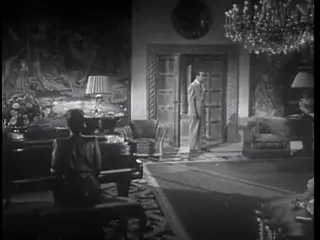
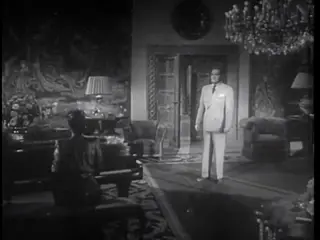
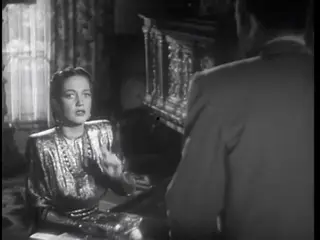
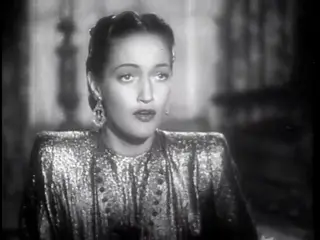
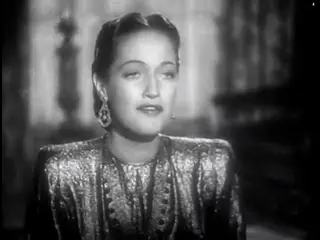
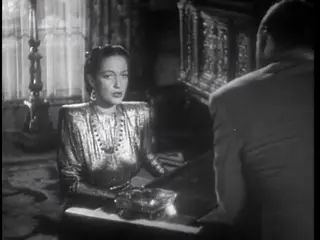
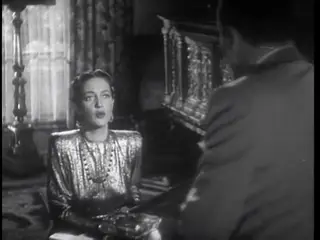
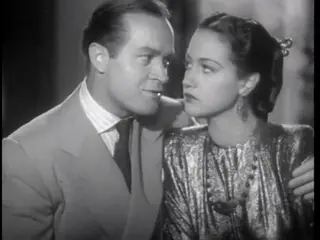
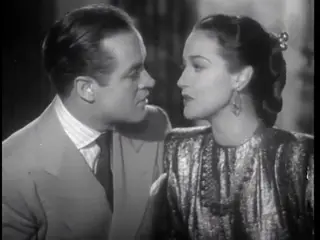
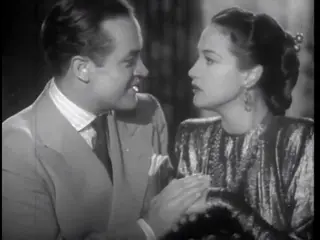
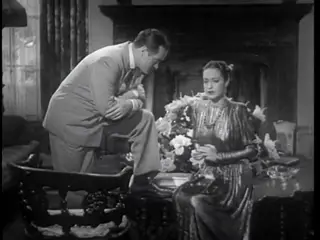
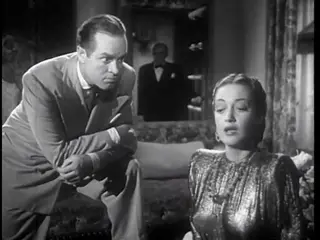
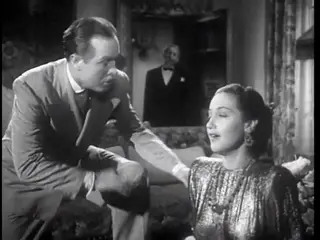
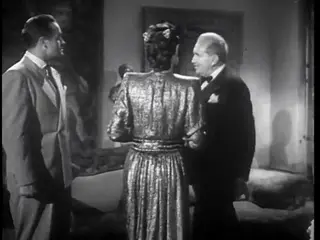
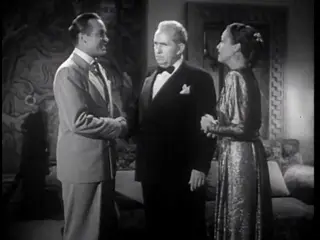
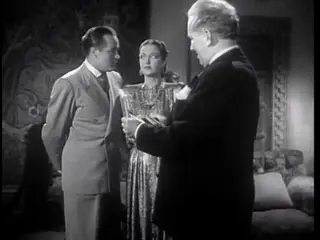
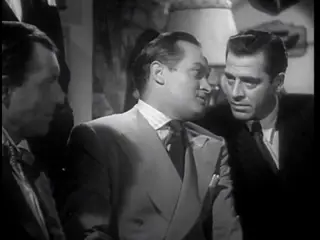
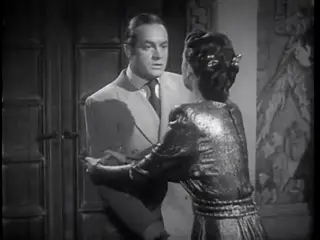
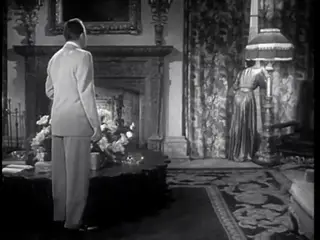
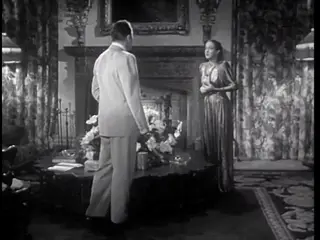
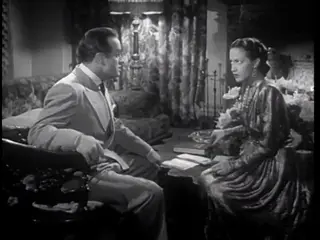
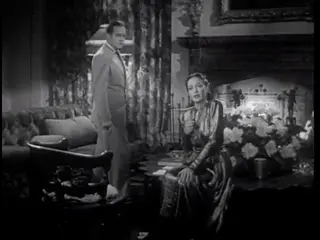
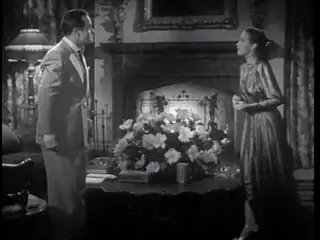
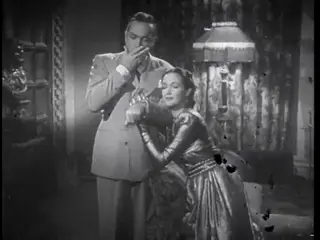
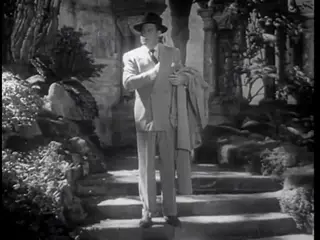
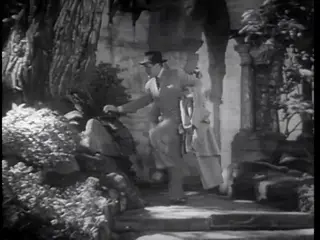
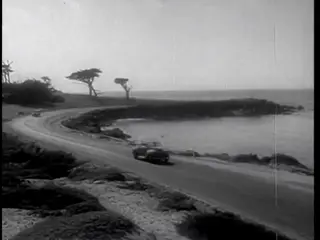
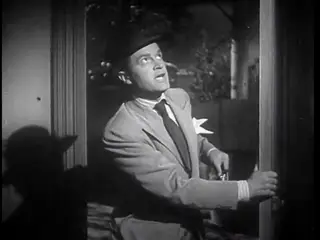
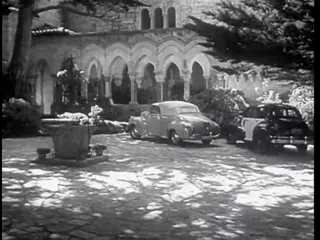
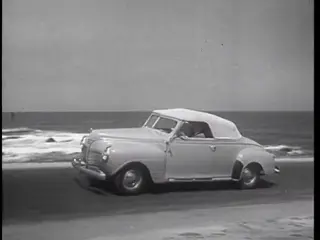
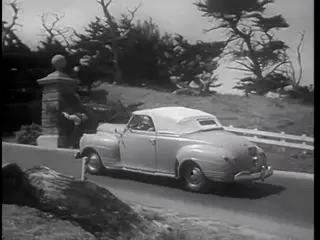
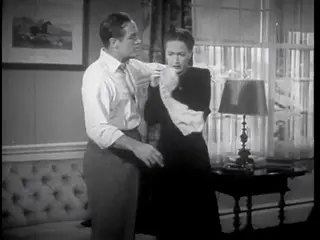
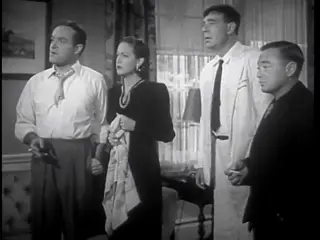
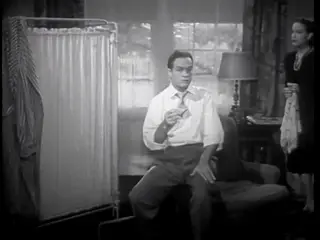
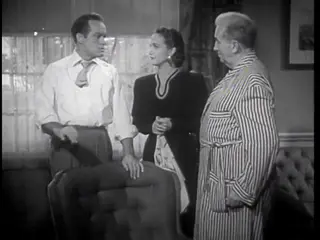
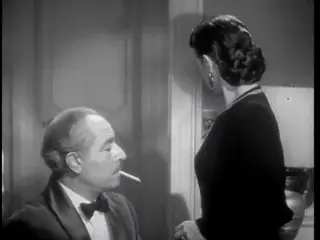
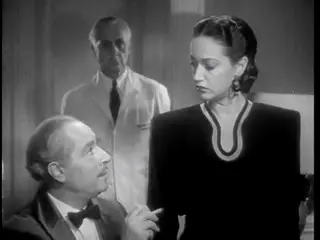
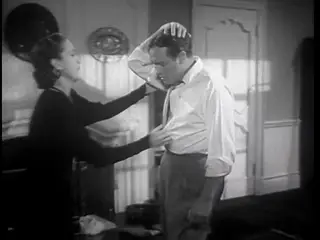
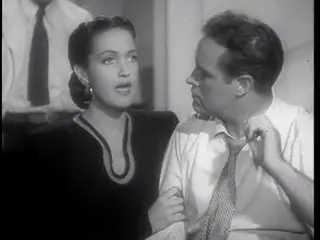
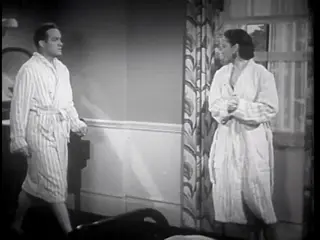
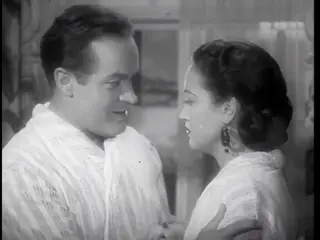
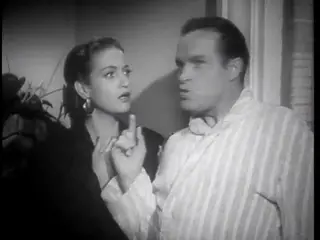
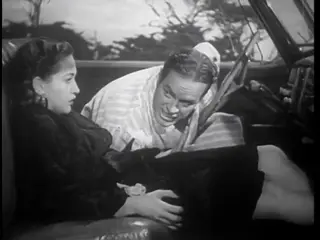
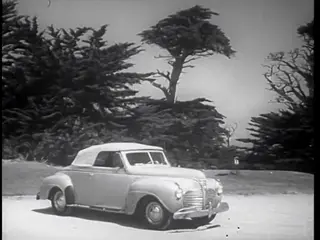
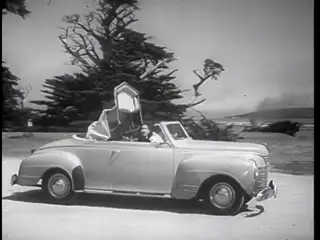
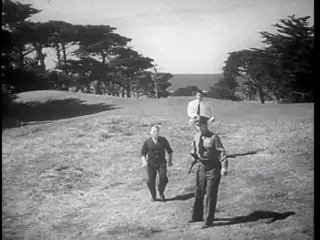
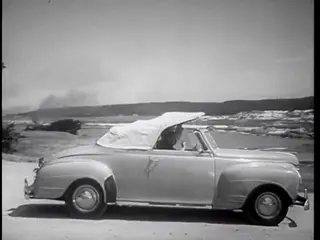
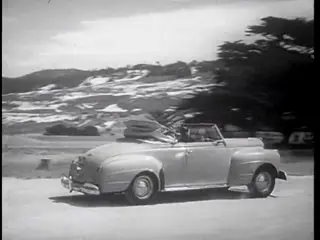
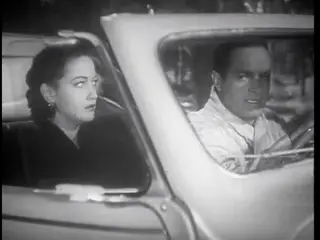
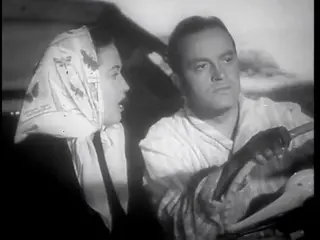
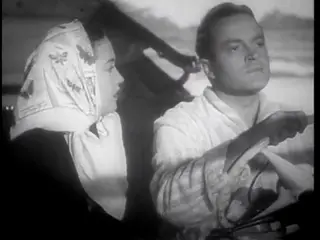
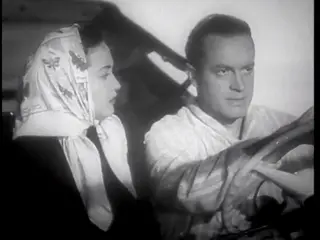
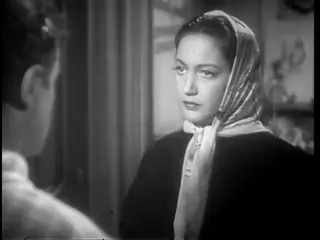
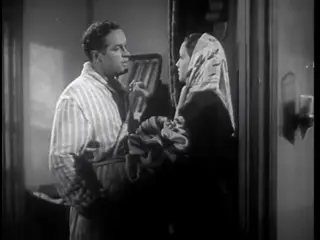
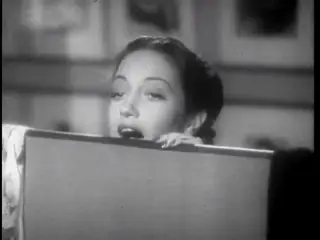
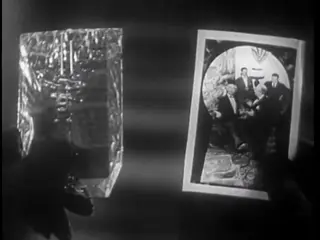
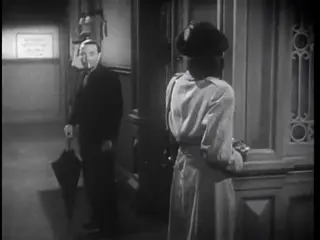
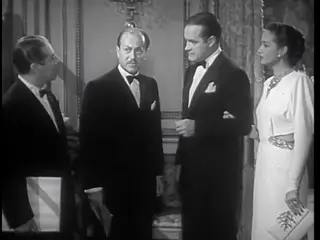
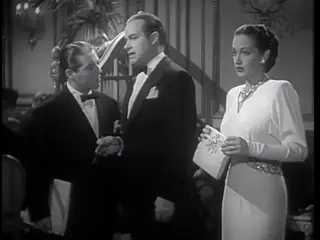
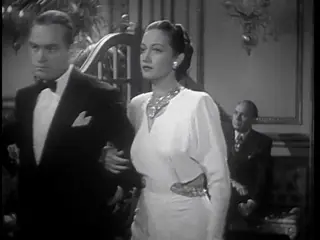
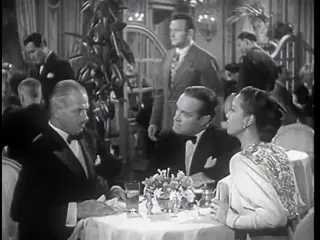
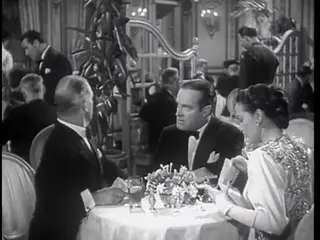
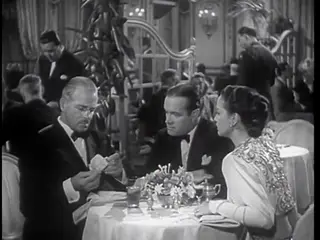
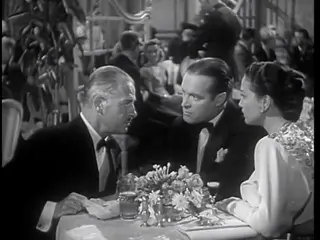
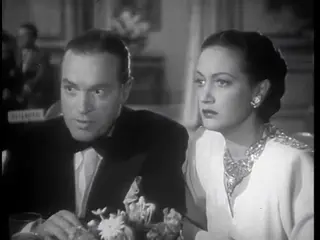
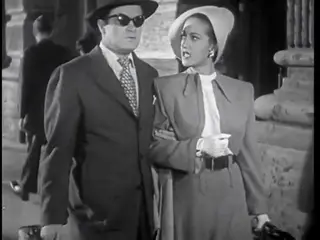
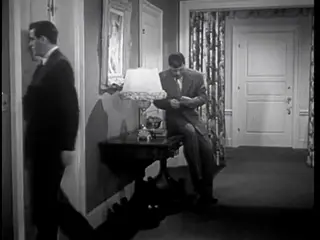
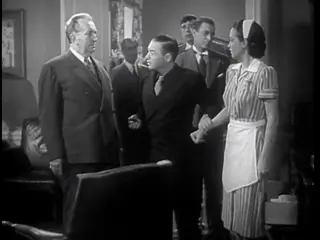
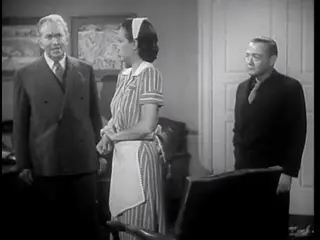
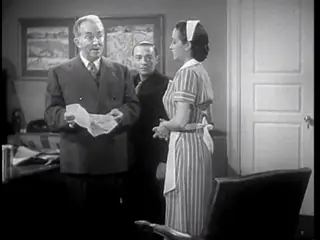
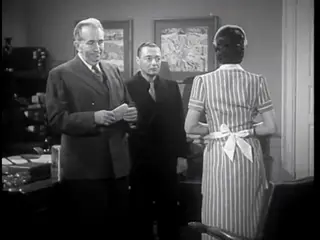
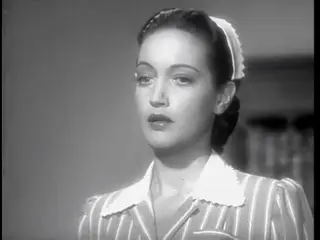
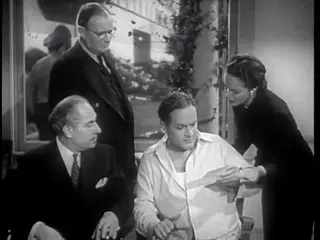
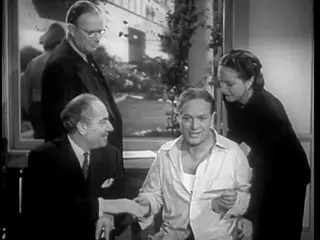
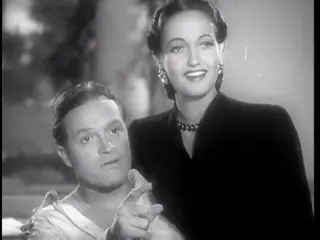
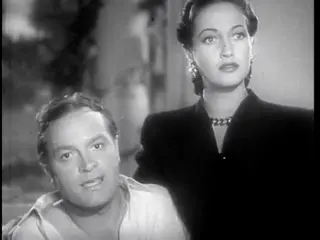
The production used San Francisco locations.3 It also filmed at the Crocker Mansion in Pebble Beach, then owned by Paul Fagan.3 That investment in place suits a comedy which needs its intrigue to have some substance. Ronnie has entered a world whose evidence he cannot reliably interpret. At 10:09 in the atlas copy, Lamour’s character holds a newspaper clipping showing herself with Baron Montay, a wealthy landowner travelling to Washington. Her claim to have arrived with “the Baron, my husband” produces Ronnie’s response, “Oh, you've got a husband.” The exchange ends with “No.” The clipping promises documentary clarity that the conversation immediately defeats. Ronnie’s romantic interest intrudes at the very moment he ought to be establishing facts.
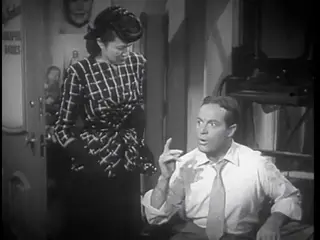
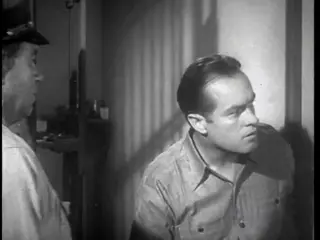
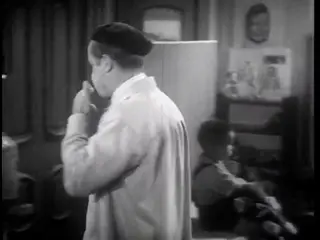
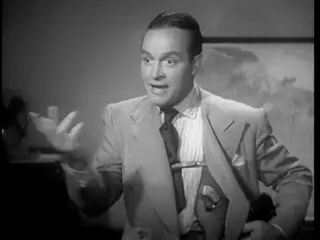
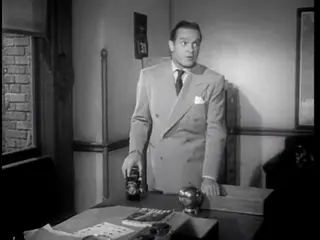
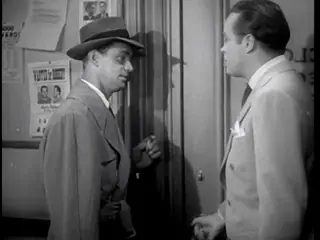
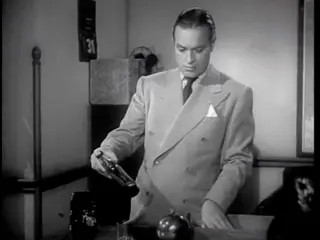
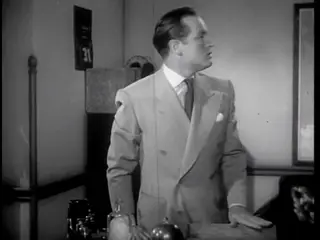
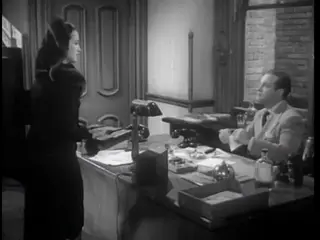
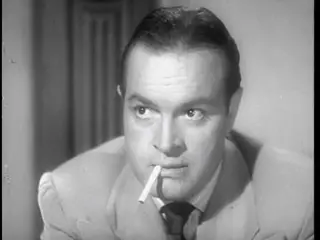
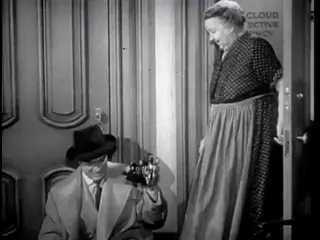
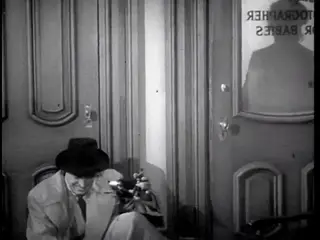
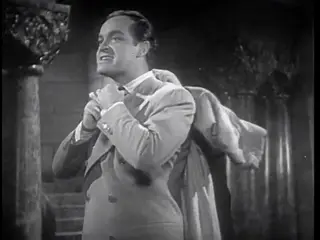
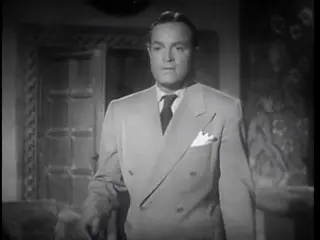
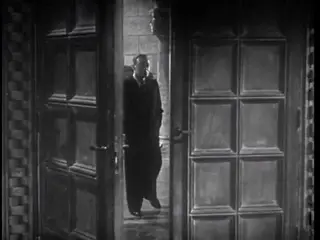
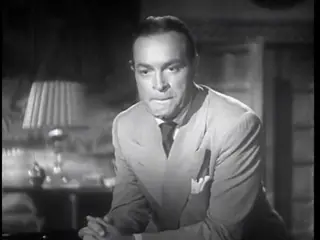
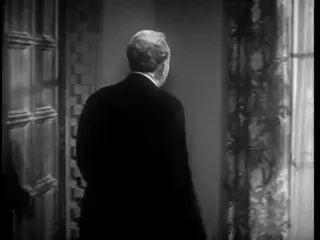
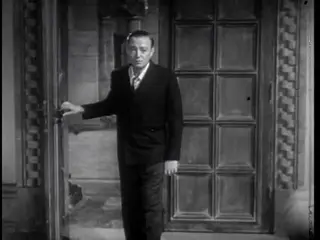
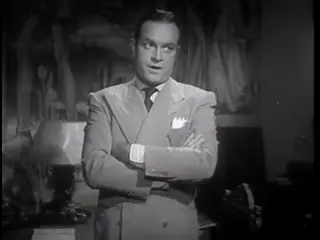
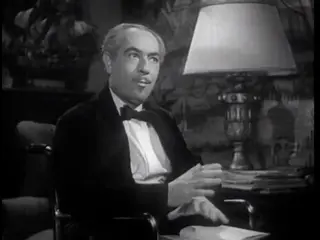
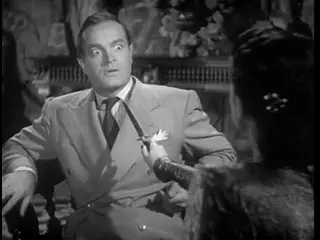
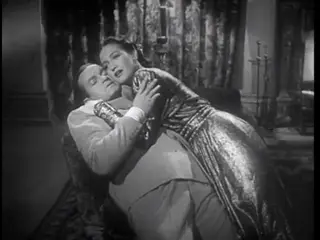
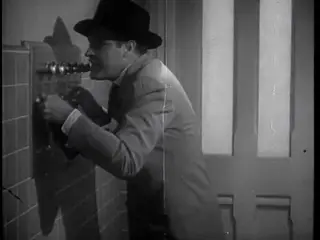
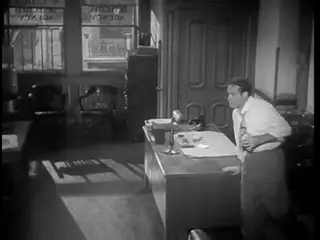
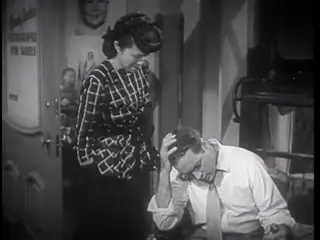
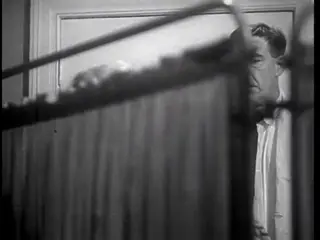
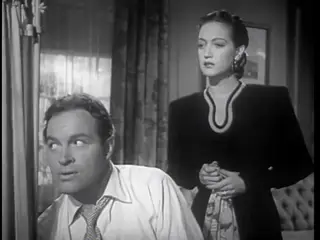
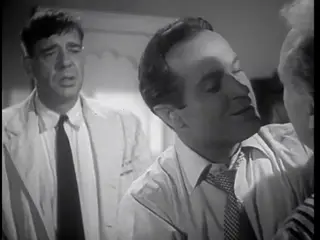
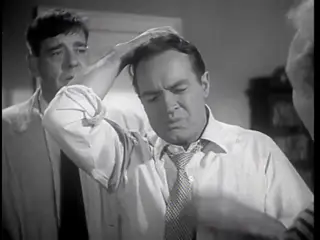
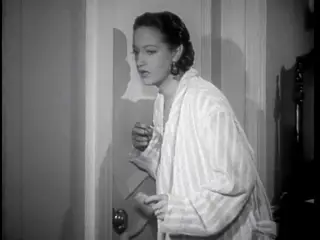
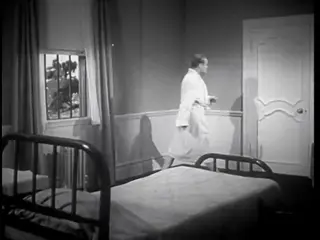
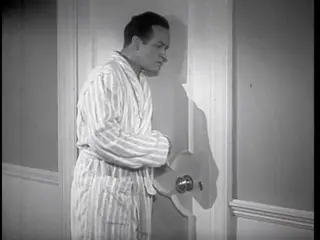
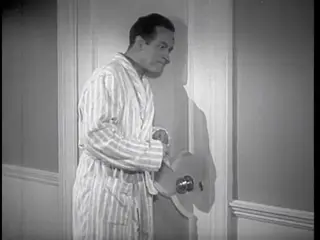
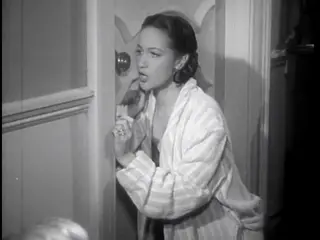
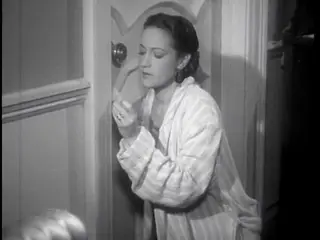
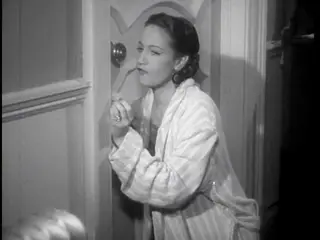
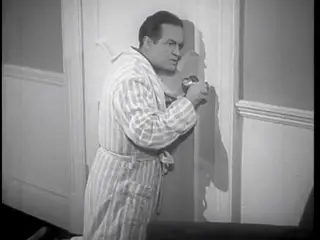
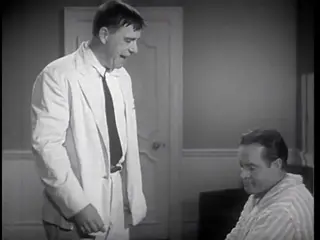
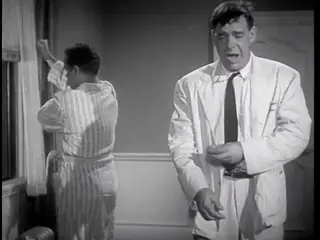
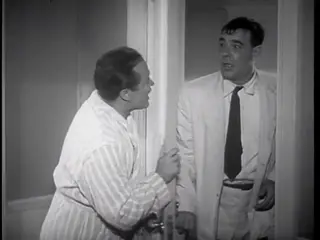
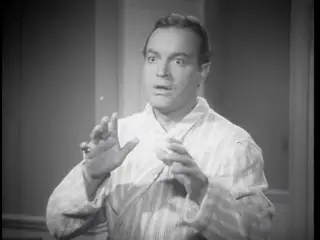
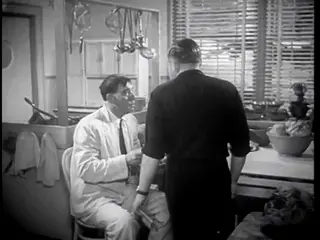
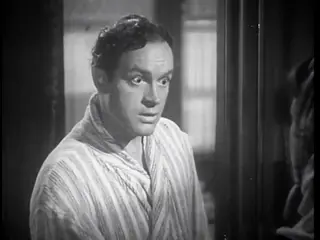
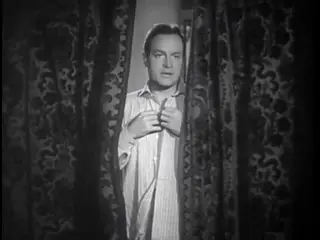
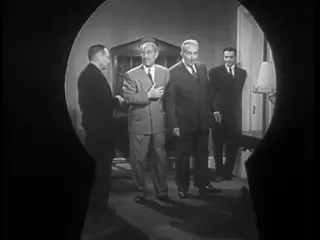
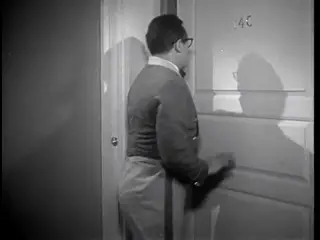
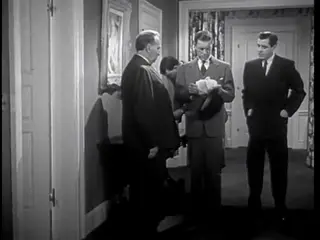
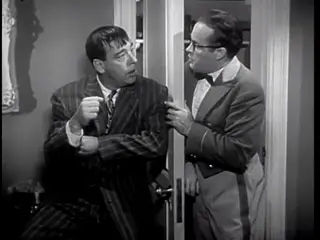
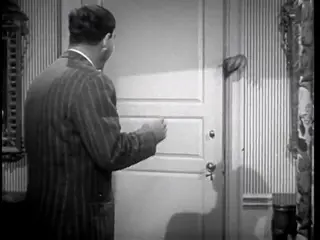
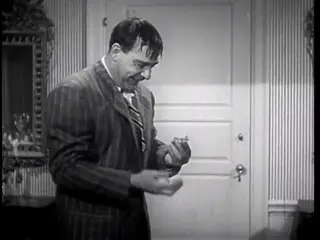
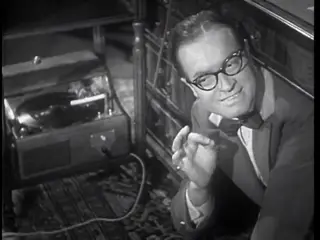
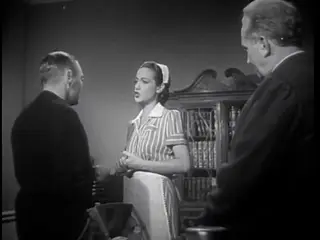
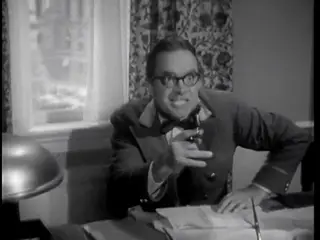
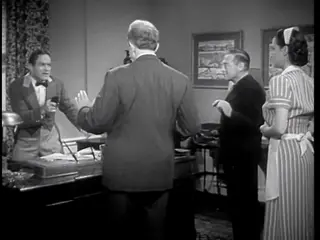
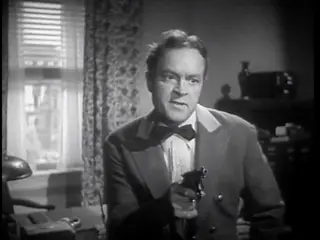
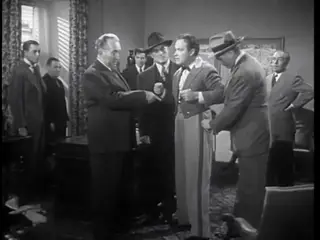
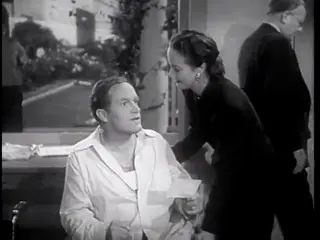
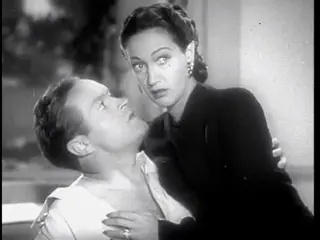
The film also makes trouble out of the detective’s power to narrate. Possession of the story does not grant Ronnie command of events. At 33:01, a pounding headache turns into an actual knock at the door: “And those kids with the hammer started pounding again. But the thumping wasn't in my head. It was somebody knocking on the door.” A familiar piece of figurative language becomes a small failure of perception. When the visitor enters, Ronnie is still holding his head. The joke brings the narrative voice back to the vulnerable body that produces it, exchanging the detective’s cultivated composure for a man’s difficulty telling pain from interruption.
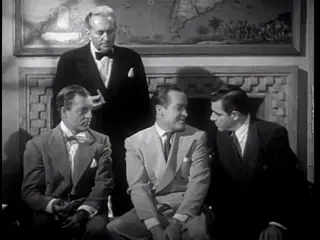
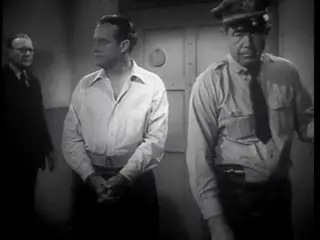
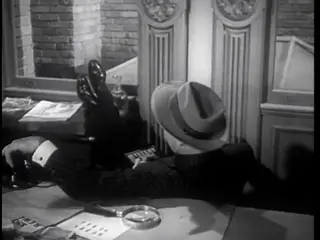
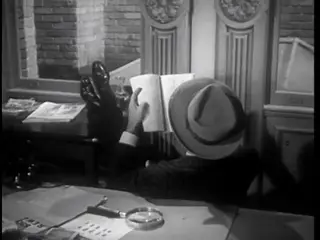
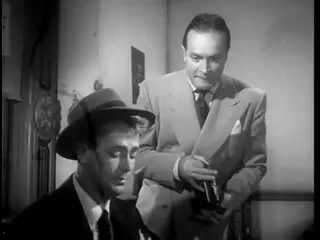
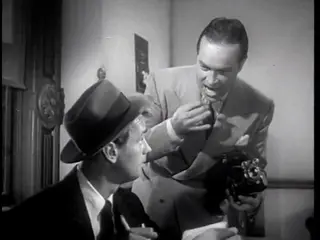
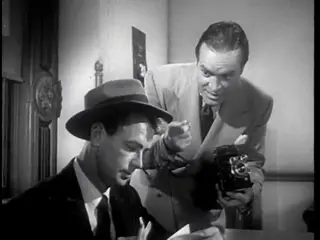
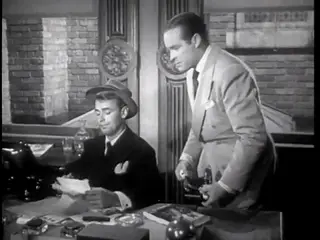
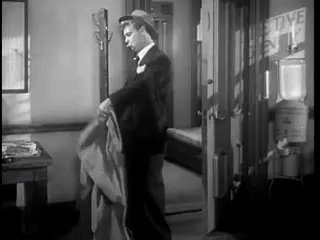
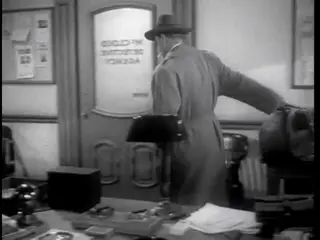
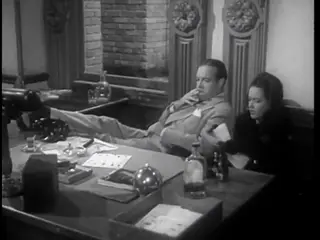
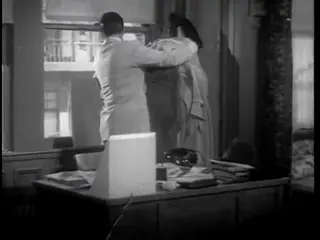
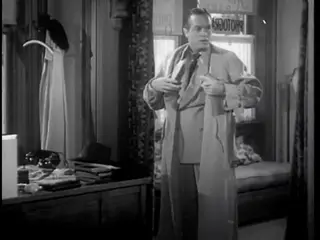
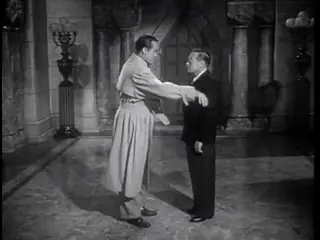
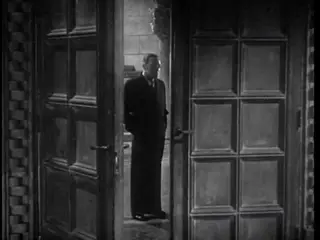
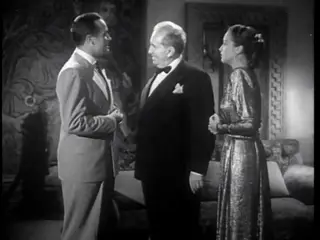
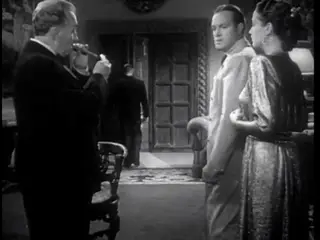
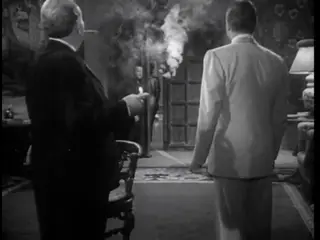
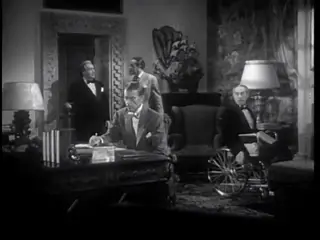
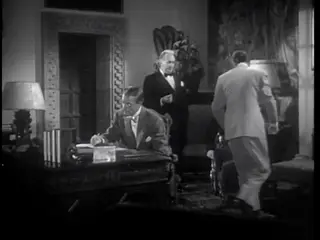
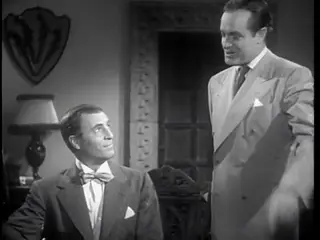
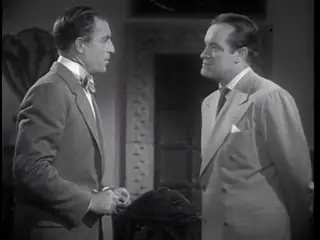
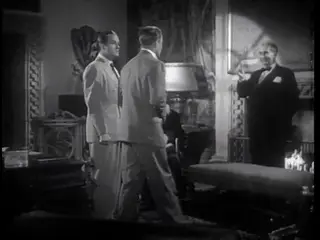
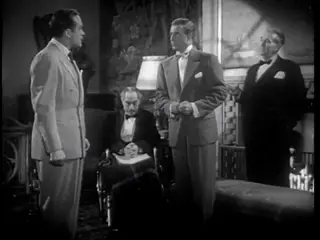
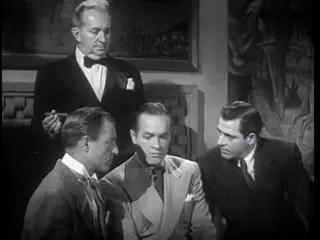
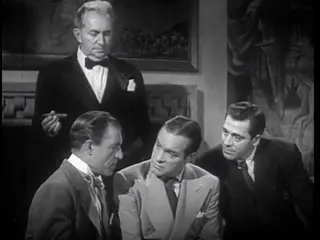
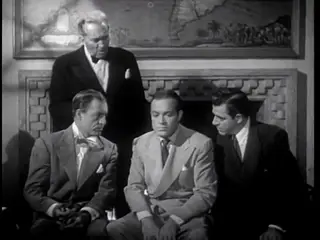
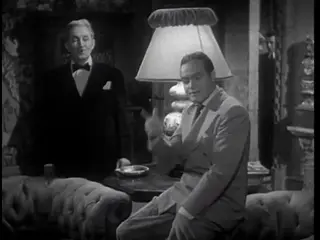
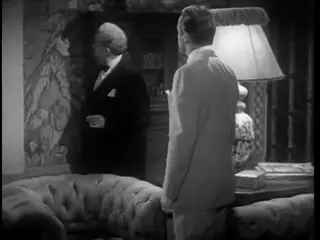
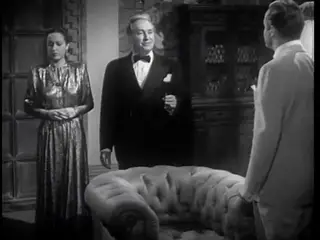
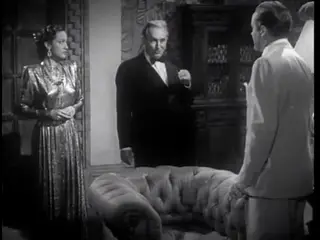
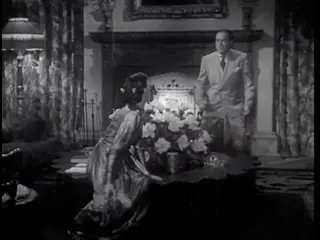
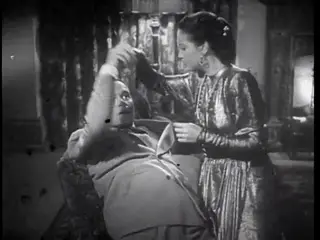
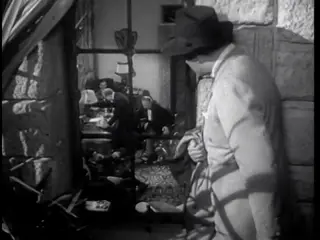
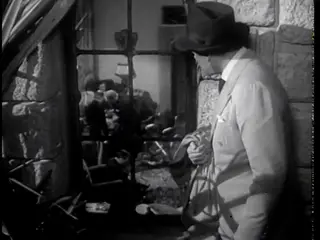
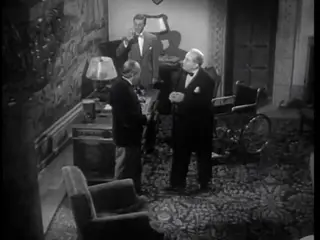
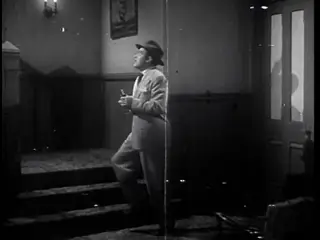
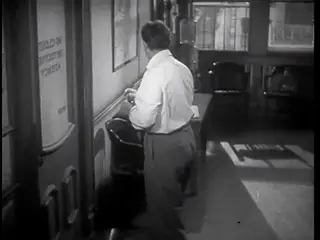
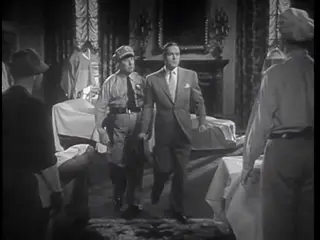
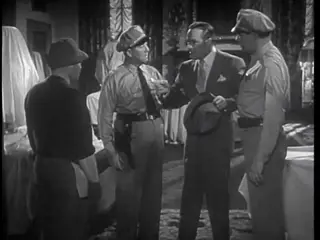
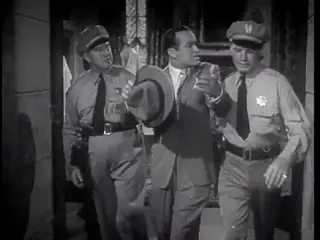
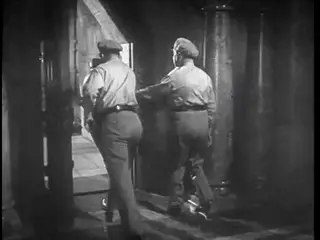
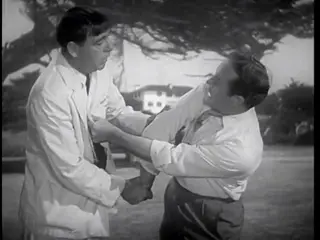
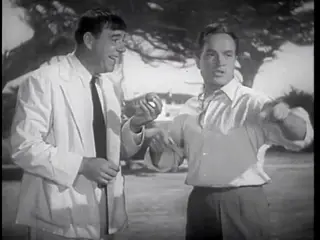
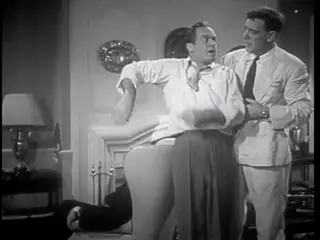
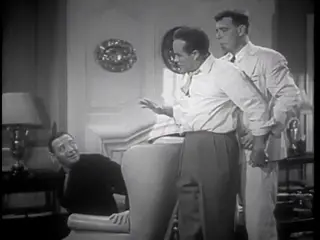
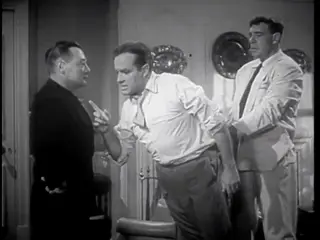
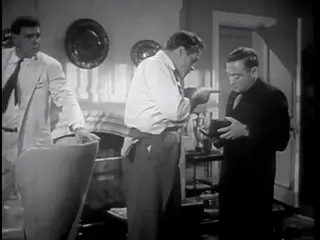
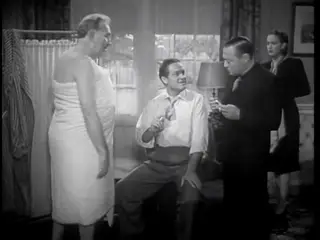
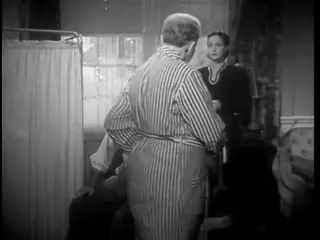
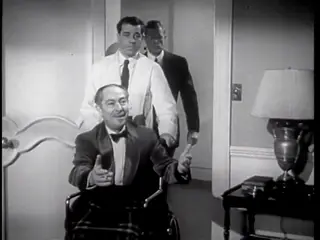
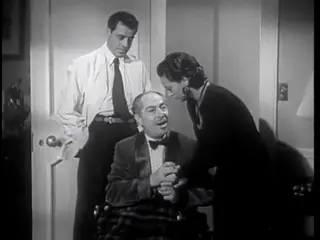
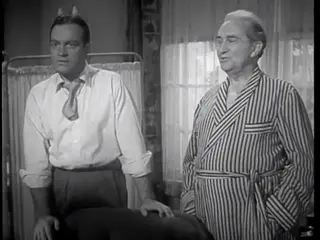
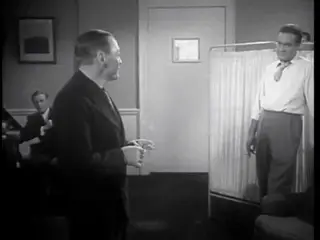
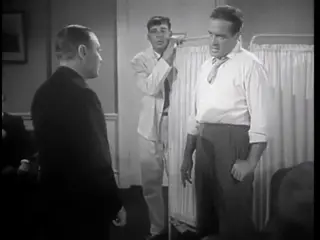
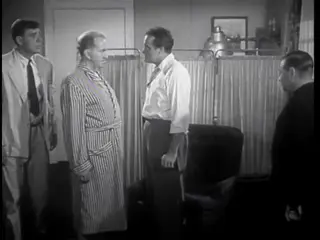
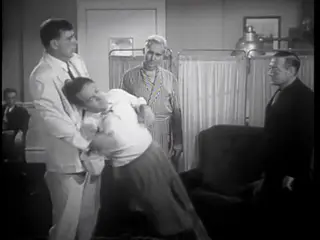
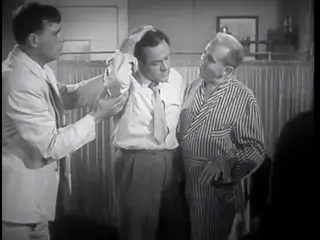
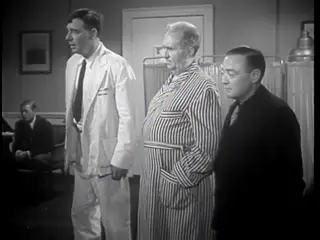
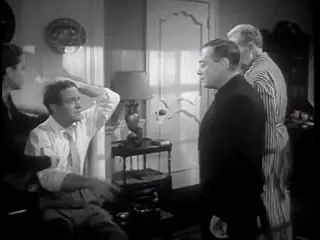
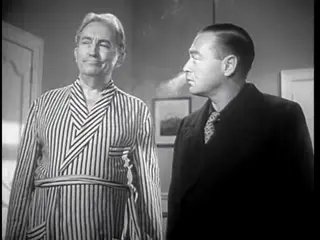
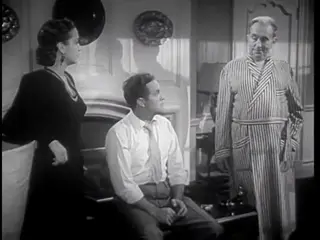
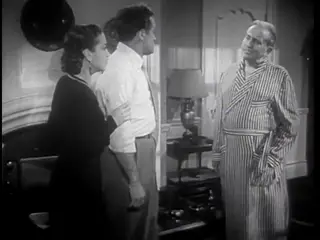
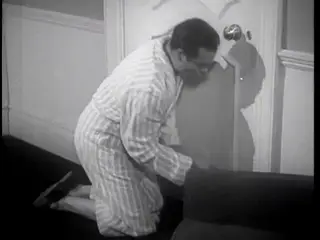
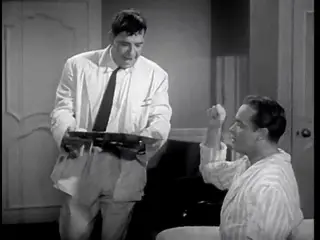
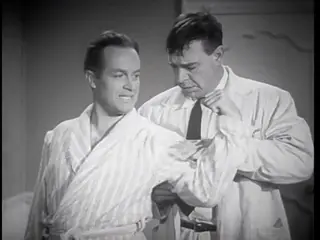
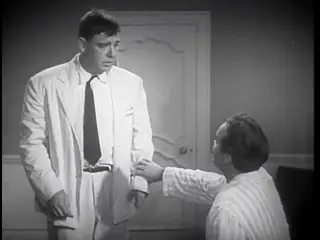
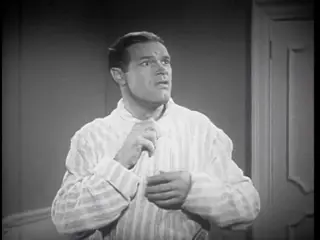
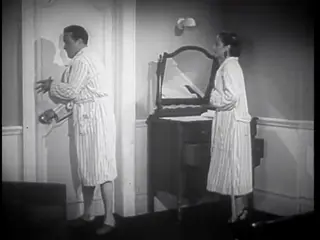
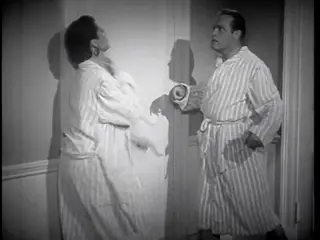
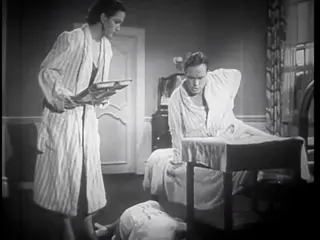
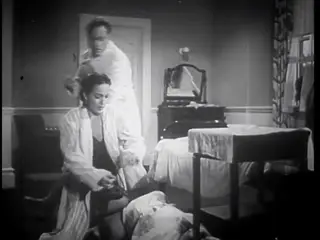
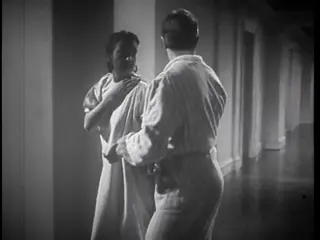
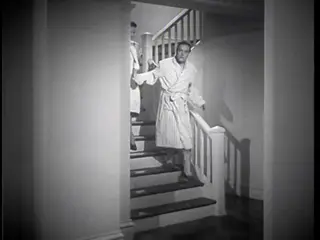
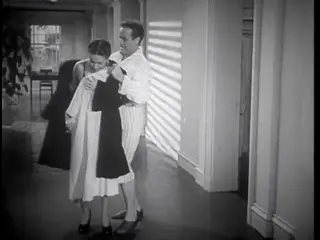
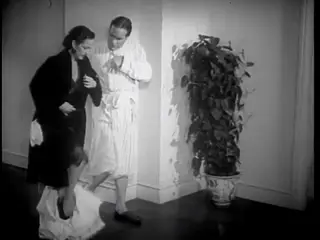
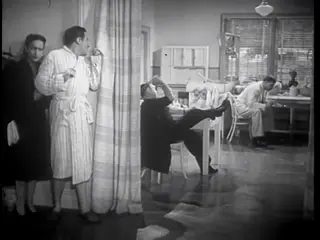
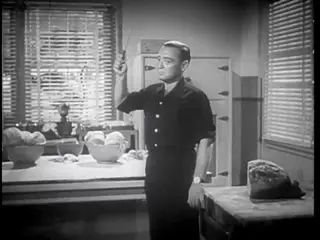
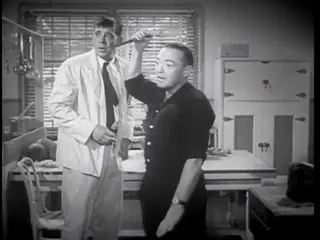
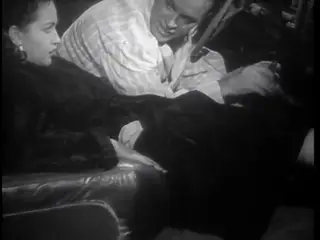
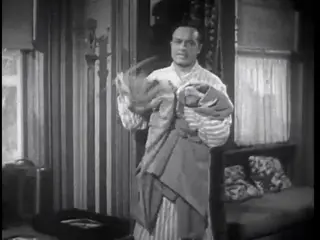
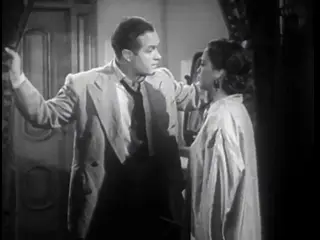
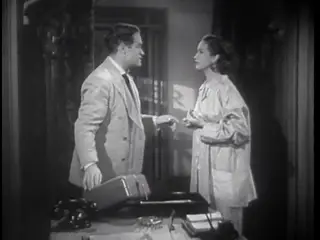
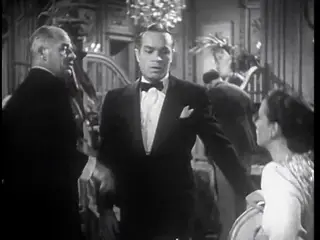
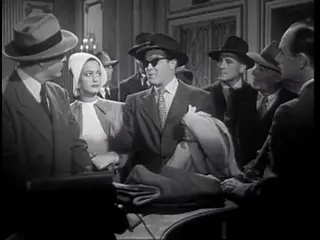
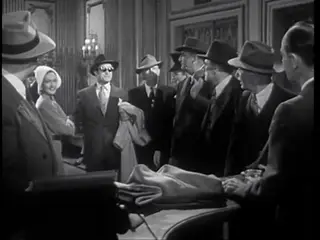
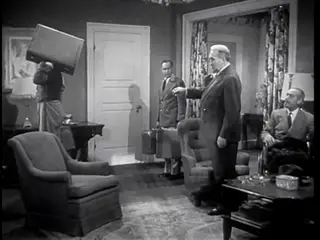
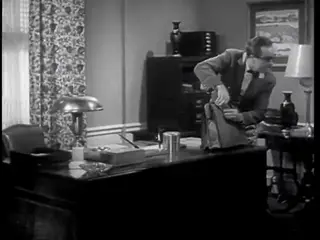
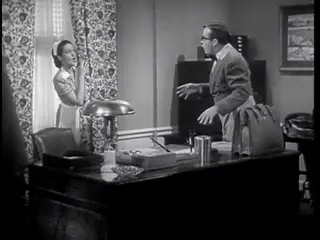
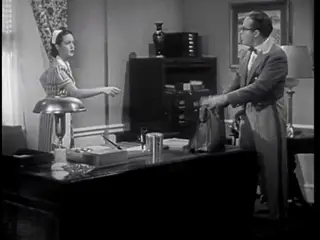
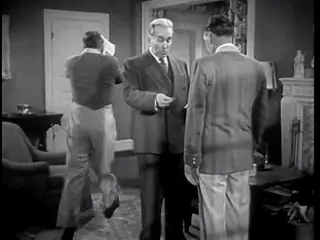
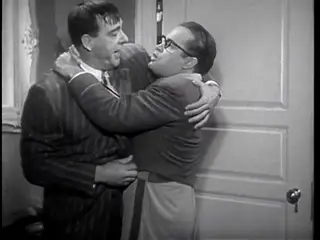
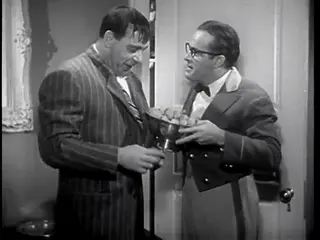
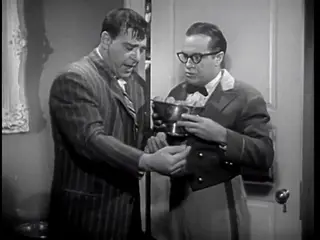
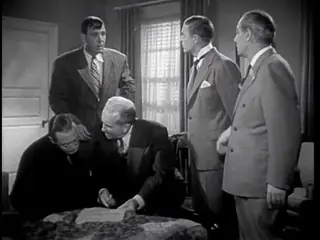
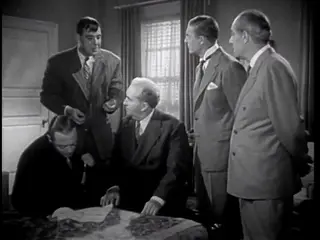
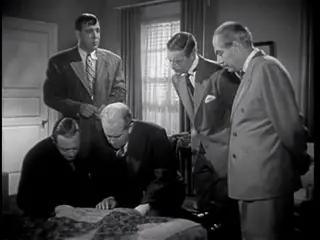
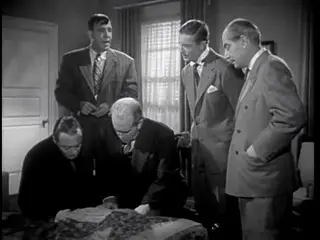
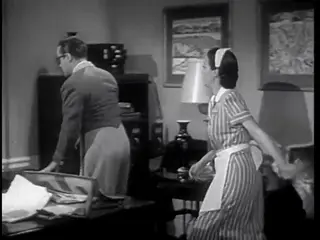
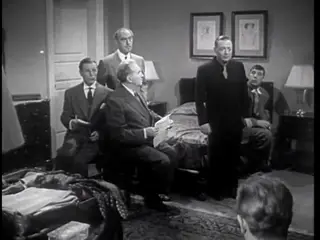
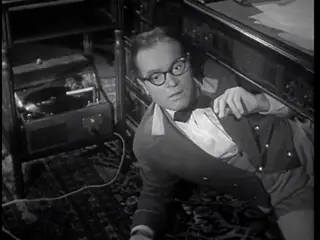
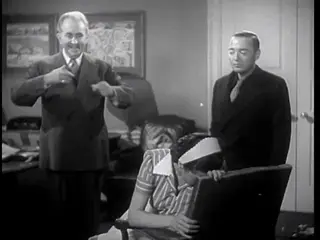
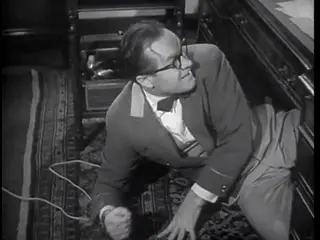
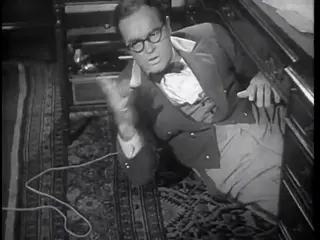
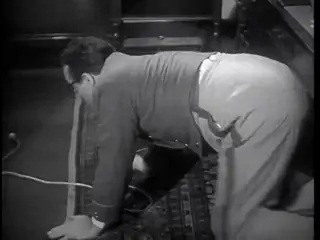
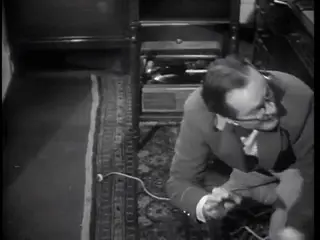
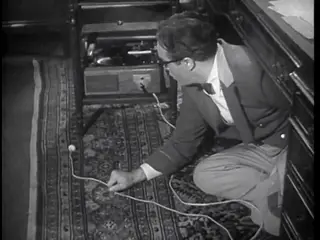
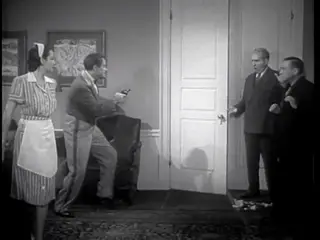
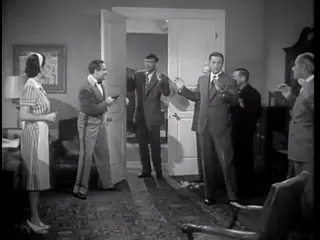
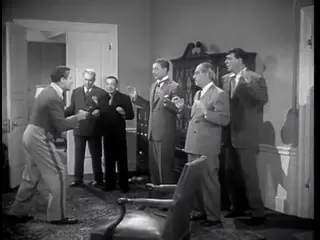
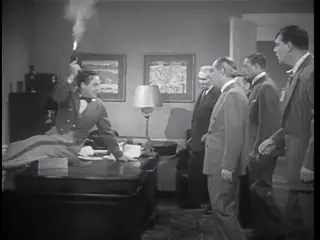
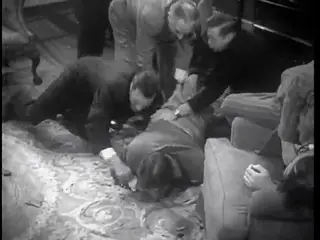
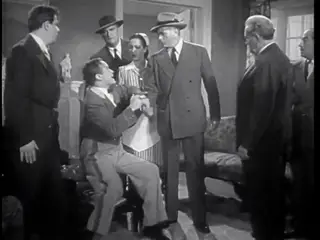
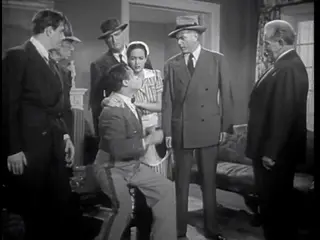
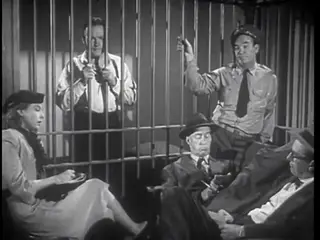
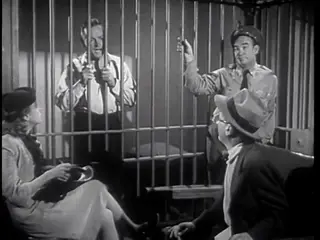
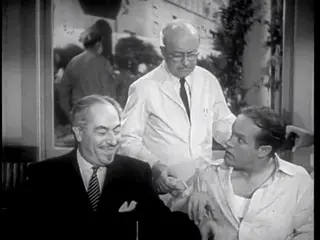
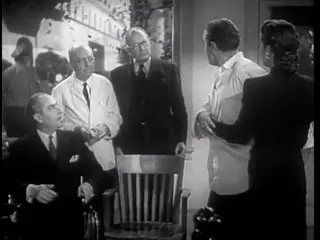
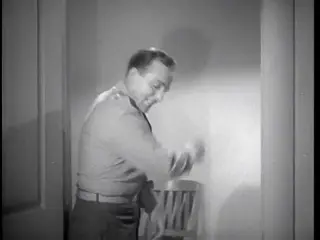
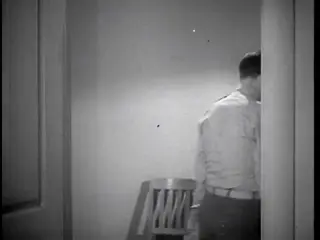
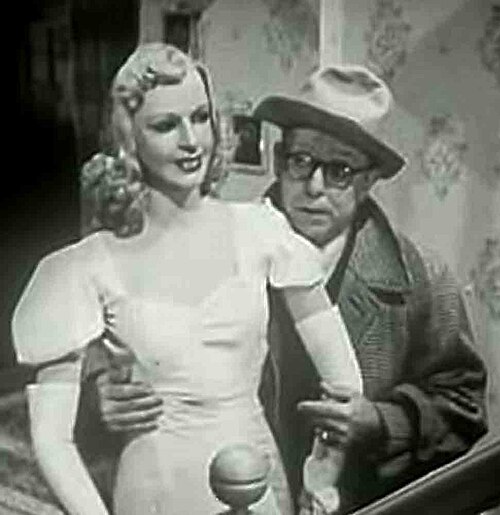
Physical action keeps exposing the same gap between authority and helplessness. At 53:03, a man in a robe holds a book near another seated with his hands behind his head. A third person lies on the floor. “See, I told you there was no use struggling” precedes an instruction to get the keys. The business is practical, concerned with the means of moving through a room or getting out of it. A confident remark offers little protection against such necessities. The comedy does not abolish the machinery of the thriller. It lets that machinery continue operating while Ronnie struggles to find a position within it that will preserve both his dignity and his skin.
The film’s later circulation includes a listing on a free streaming site devoted to films presented as available without copyright restriction.7 That listing establishes a route by which viewers can encounter the film, not its legal history. Ready availability and a documented search for renewal are different kinds of evidence.
The record: These findings are supplied by the registry rather than independently verified here. Registration LP899 by Hope Enterprises, Inc., Hollywood is dated 20 March 1947. The registry found no renewal in the renewal volumes for 1974 to 1976, nor in the Copyright Office's records from 1978 on; on that reading the term ended on 31 December 1975 and the film has been free in the US since 1 January 1976. The record does not settle the film’s status outside the United States. Rights in material added to later editions also remain outside its scope.
Written 6 September 2026 by gpt-6-astra from the registry record, the atlas's own evidence and the sources below, gathered by Qwen/Qwen3.8-Max with web search and questioned by deepseek-ai/DeepSeek-V4-Pro. Numbered notes are the sources; a claim marked unverified has no source yet; times open the atlas at that second. How these are made and checked.
- catalog.afi.com https://catalog.afi.com/Film/25276-MY-FAVORITE-BRUNETTE?cxt=filmography
- variety.com https://variety.com/1946/film/reviews/my-favorite-brunette-1200415037/
- tcm.com https://www.tcm.com/articles/202639/my-favorite-brunette
- en.wikipedia.org https://en.wikipedia.org/wiki/My_Favorite_Brunette
- commons.wikimedia.org https://commons.wikimedia.org/wiki/File:My_Favorite_Brunette_(1947)_1.jpg
- imdb.com https://www.imdb.com/title/tt0039645/
- publicdomainmovies.info https://publicdomainmovies.info/my-favorite-brunette-1947-starring-bob-hope-and-dorothy-lamour/
- en.wikipedia.org https://en.wikipedia.org/wiki/Dorothy_Lamour

 Fear in the Night
  The Red House
  Angel and the Badman
  Dishonored Lady
  Doomed to Die
  Misbehaving Husbands
  Road to Happiness
 _1.jpg)