Public Reel

War's End (1959)

US Government work A work of the United States Government, which US copyright does not cover (17 U.S.C. 105). Record.
Frame from the Internet Archive copy gov.dod.dimoc.30120
Copy
gov.dod.dimoc.30120 on the Internet Archive; released 1959
Read
323 shots over 28:34 · 133 beats in 79 sequences · 214 transcript lines · JSON
Record
War's End US Government work
Wrong?
Report a problem
Lands on the beat covering that second.
79 sequences; each is also a heading below.
Check before citing the shot count. A 1:50 shot at 0:00 (shot 0): either a static hold or a run of missed cuts. Treat it as unverified.
How this page was made

323 shots over 28:34, read from the Internet Archive copy gov.dod.dimoc.30120 (gov.dod.dimoc.30120_512kb.mp4, 320×240, 59.94 fps). Shot boundaries by PySceneDetect's adaptive detector; each frame links to the Archive's player at that second. Government-works dossier: War's End US Government work. JSON

Measurements: black-and-white film on its keyframes (0 of 323 shots judged colour), average shot 5.3s long, a frontal face detected in 11% of keyframes. Shots are detected automatically and each is represented by its midpoint frame.

Released 1959 (Internet Archive).

133 beats in 79 sequences, cut automatically at shot boundaries scored on picture change, pauses in speech, topic shifts, on-screen text and cutting rhythm (each beat says why it starts where it does). Each is annotated by a vision-language model from four sampled frames and the transcript lines in it, as observations with evidence; anything the frames and lines do not support is left null. Machine annotation (Qwen/Qwen3-VL-235B-A22B-Instruct), checked automatically: quotes must be verbatim, names must be spoken, "visible" events are sampled to a second model. 133 of 133 beats annotated, 132 passed the checks, 1 flagged.

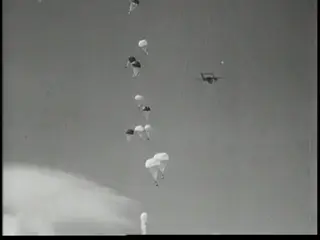
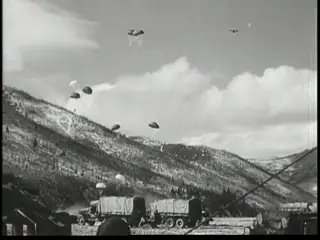
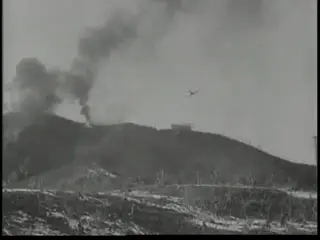
Beats

Passages cut at shot boundaries and annotated by a machine from four sampled frames and the transcript lines in them. Each beat says why it starts where it does and what was checked; sequences are visual groups, not scenes.
Sequence 1 from 0:00

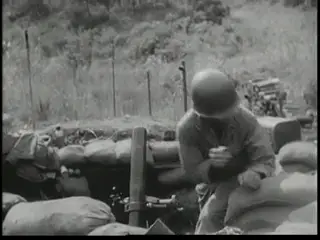
Frame at 0:55, shot 00:55Frame at 1:51, shot 11:51
2 of 2 shots sampled

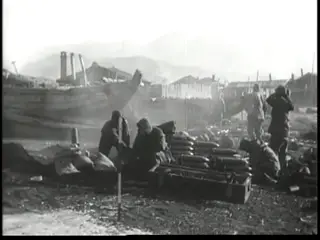
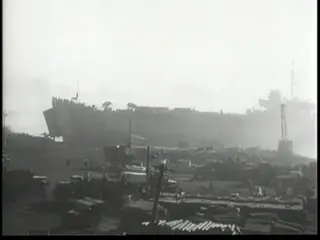
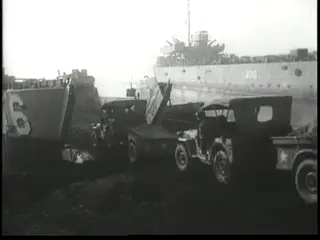
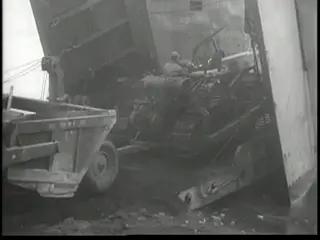
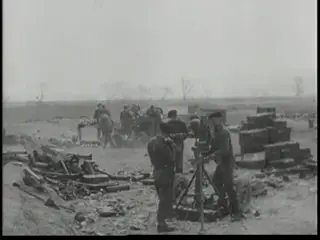
1. Private office

0:00–1:52 Machine checks passed (partial)

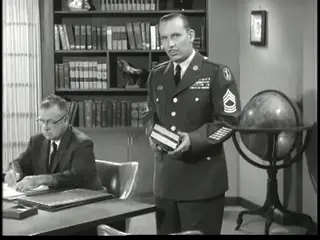
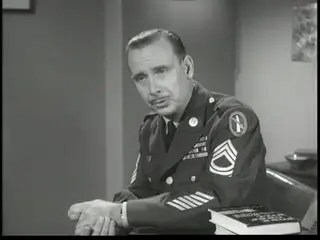
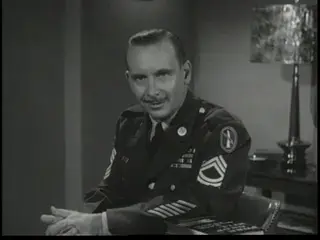
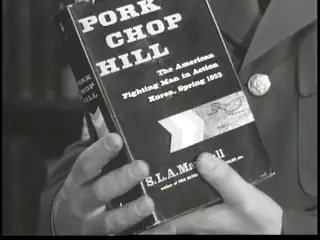
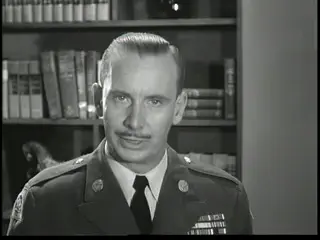
Model synopsis: A man in a U.S. Army uniform introduces a program called 'The Big Picture' about the Korean War, standing before bookshelves and holding a book titled 'Pork Chop Hill'. The transcript identifies him as Sergeant Stewart Queen and states the episode will cover the final chapter of the Korean War.

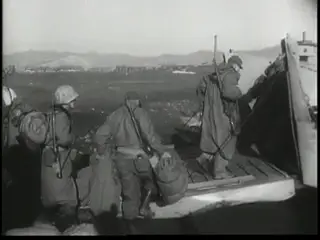
  • Man in Army uniform stands before bookshelves holding a book. [frame:1]
  • Book titled 'PORK CHOP HILL' is shown close-up. [frame:2]

Named: Sergeant Stewart Queen (t:1:30). 1 person observed.

“The United States Army presents The Big Picture.” 0:09 · “I'm Sergeant Stewart Queen, your host for The Big Picture.” 1:30

Evidence, details and a link to share

Frame at 1:56, shot 21:56Frame at 2:08, shot 32:08
2 of 2 shots sampled

2. Private office

1:52–2:16 Machine checks passed (partial)

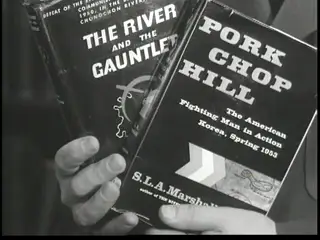
Model synopsis: A man in military uniform holds two books about the Korean War by Brigadier General S.L.A. Marshall, then appears seated before a bookshelf. The transcript identifies the books and their author, and states that Marshall recorded the war as he saw and analyzed it.

  • The man in uniform is shown seated in front of a bookshelf. [frame:2]

Named: Brigadier General S.L.A. Marshall (t:2:04). 1 person observed.

“These two books.” 1:52 · “They were written by a distinguished citizen soldier” 2:00

Evidence, details and a link to share

Sequence 2 from 2:16

Frame at 2:26, shot 42:26
1 of 1 shots sampled

3. Private office

2:16–2:37 Machine checks passed

Model synopsis: A man in a military uniform is shown in a medium close-up against a bookshelf background. The transcript mentions General Marshall's service in Korea and his qualifications to comment on the war.

1 person observed.

“In 1951, the Department of the Army sent General Marshall to Korea.” 2:16 · “the third major conflict in which he served as an army officer.” 2:21

Evidence, details and a link to share

Sequence 3 from 2:37

Frame at 2:44, shot 52:44
1 of 1 shots sampled

4. Private office

2:37–2:50 Machine checks passed (partial)

Model synopsis: A man in uniform stands holding books while another man sits at a desk writing. The transcript introduces Brigadier General S. L. A. Marshall and addresses him as 'General Marshal' while also mentioning 'Sergeant Quain.'

  • A man in uniform stands holding books while another man writes at a desk. [frame:1]

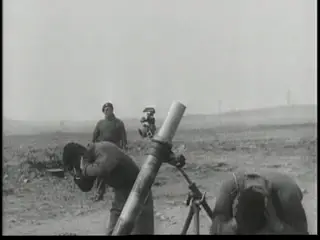
Named: S. L. A. Marshall (t:2:44), Quain (t:2:48). 2 people observed.

“The big picture presents this distinguished...” 2:39 · “Citizen Soldier.” 2:41

Evidence, details and a link to share

Frame at 2:56, shot 62:56Frame at 3:12, shot 73:12
2 of 2 shots sampled

5. Private office

2:50–3:23 Machine checks passed (partial)

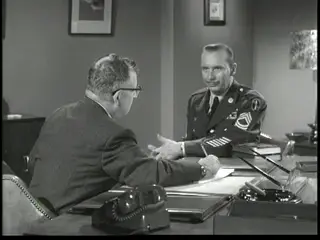
Model synopsis: A man in military uniform and another man in a suit are seated in an office setting, discussing the Korean War. The transcript indicates a question about General Marshall's observations on Korean War tactics, which he compares to World War II.

  • A man in military uniform is seated, listening or preparing to speak. [frame:1]
  • A man in a suit is seated at a desk, speaking. [frame:2]

2 people observed.

“General Marshall, against the background of your far-reaching experience in wars we fought,” 2:51 · “What are some of your observations and conclusions in regard to the Korean fighting?” 2:57

Evidence, details and a link to share

Frame at 3:30, shot 83:30Frame at 3:46, shot 93:46
2 of 2 shots sampled

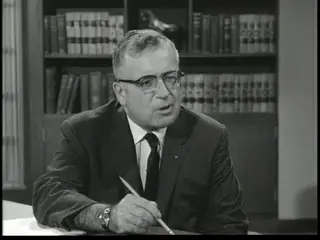
6. Private office

3:23–3:55 Machine checks passed

Model synopsis: Two men are seated at a desk in an office, discussing the ideological motivations behind the Korean War. One man, wearing glasses and a suit, speaks while the other, in uniform, listens.

2 people observed.

“In what respect, sir?” 3:23 · “Well, it was a total ideological war. That is to say, communist North Korea, governed and supported by the communist world,” 3:26

Evidence, details and a link to share
Frame at 4:35, shot 114:35Frame at 5:04, shot 125:04
2 of 2 shots sampled

8. Private office

4:28–5:26 Machine checks passed (partial)

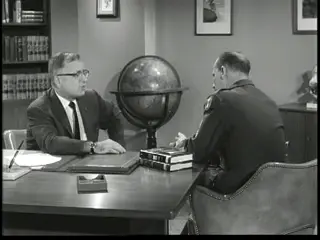
Model synopsis: Two men in a studio setting discuss the logistical timeline and secrecy of Chinese Communist troop movements during the Korean War. One man, in military uniform, is questioned by another man in civilian attire about how the operation remained undetected by UN forces.

  • The man in uniform is visible, seated at a desk, listening or preparing to respond. [frame:1]
  • The man in civilian attire is visible, seated at a desk, speaking about Chinese Communist concealment. [frame:2]

2 people observed.

“But it is a military fact, is it not, General?” 4:28 · “They are masters of concealment and deception.” 4:46

Evidence, details and a link to share

Sequence 4 from 5:38

Frame at 5:55, shot 145:55
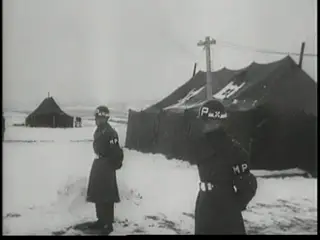
1 of 1 shots sampled

10. Private office

5:38–6:12 Machine checks passed

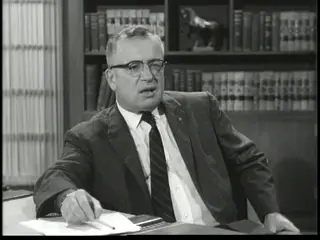
Model synopsis: A man in a suit speaks at a desk with bookshelves behind him. The transcript describes Chinese forces moving at night and hiding during daylight in buildings and huts, camouflaging equipment and using shadows to avoid detection.

1 person observed.

“The Chinese forces moved only at night” 5:42 · “During the daylight hours, they packed themselves into whatever buildings, houses, and huts they could find,” 5:45

Evidence, details and a link to share

Sequence 5 from 6:12

Frame at 6:37, shot 156:37
1 of 1 shots sampled

11. Other

6:12–7:03 Machine checks passed (partial)

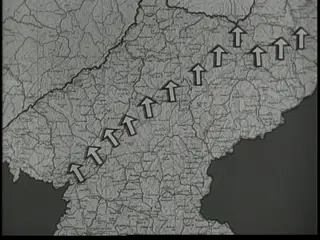
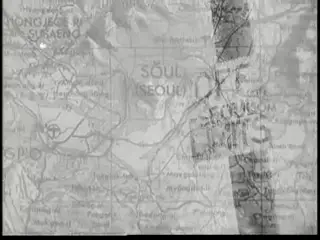
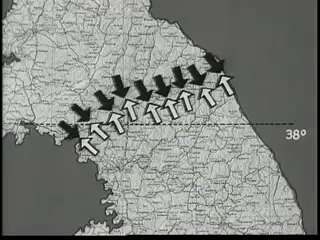
Model synopsis: The segment presents a photographic record of the Korean War, focusing on the 8th Army's offensive after Thanksgiving 1950. A map with arrows illustrates the Chinese advance that split Allied lines and isolated troops near the Chosin Reservoir.

  • A map shows arrows indicating the Chinese advance southward, splitting the Allied line. [frame:1]

Named: General Marshall (t:6:13). 1 person observed.

“It is at this point, General Marshall.” 6:13 · “that we're going to present the photographic record of the Korean War.” 6:15

Evidence, details and a link to share

Sequence 6 from 7:03

Frame at 7:04, shot 167:04
1 of 1 shots sampled

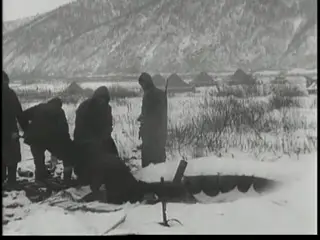
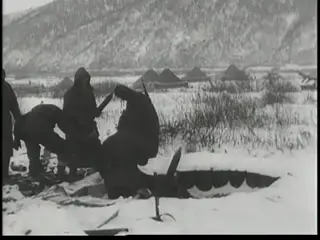
12. Field

7:03–7:06 Machine checks passed (partial)

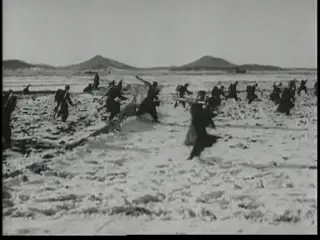
Model synopsis: A group of figures in heavy coats are gathered around a snow-covered object in a mountainous, open field. No dialogue or on-screen text is present in this beat.

  • Figures in heavy coats gather around a snow-covered object in a field. [frame:1]

3 people observed.

Evidence, details and a link to share
Sequence 7 from 7:06

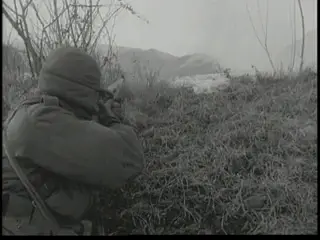
Frame at 7:11, shot 177:11
1 of 1 shots sampled

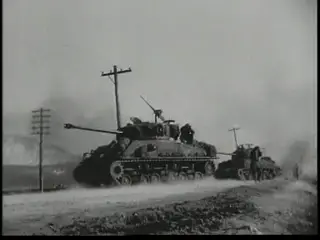
13. Battlefield

7:06–7:16 Machine checks passed (partial)

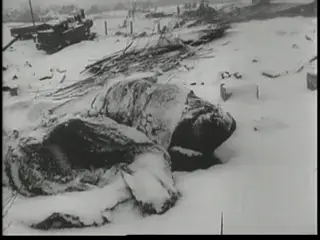
Model synopsis: A snowy battlefield scene shows a covered body and wreckage. The voiceover describes daytime sleeping due to cold nights and losses from freezing and enemy action.

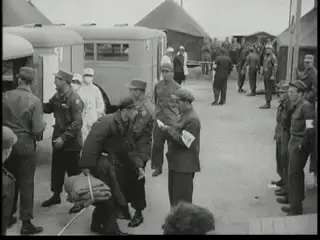
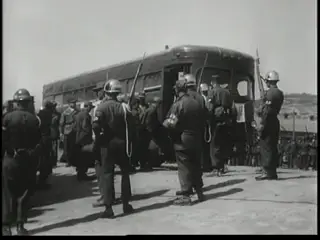
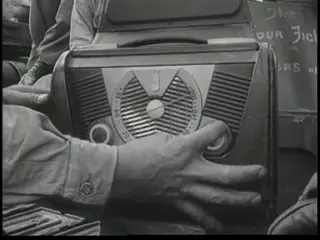
  • A covered body lies in snow near wreckage. [frame:1]

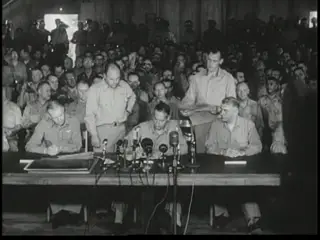
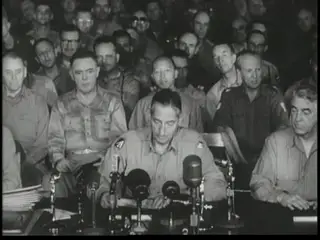
1 person observed.

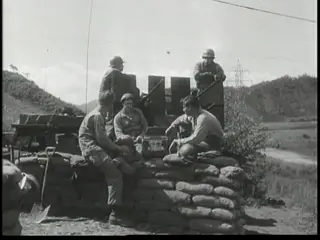
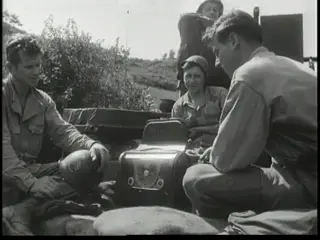
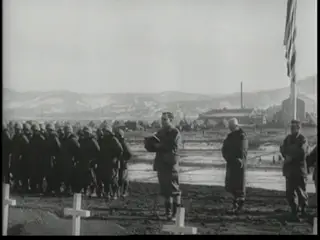
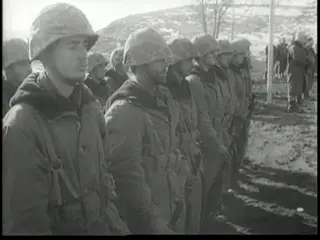
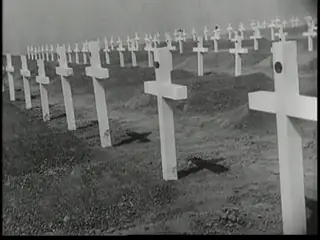
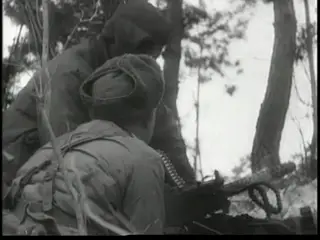
“We took turns sleeping in the daytime. It was too cold at night. I heard later we lost more people from freezing and from enemy action.” 7:07

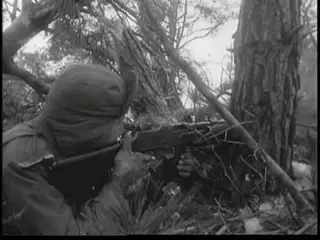
Evidence, details and a link to share

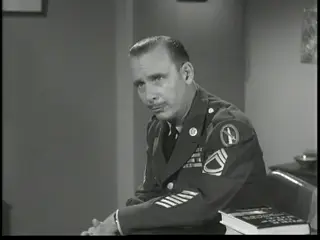
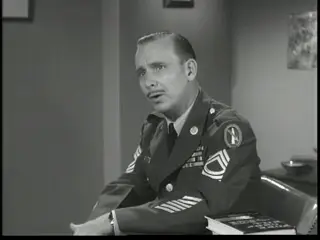
Sequence 8 from 7:16

Frame at 7:17, shot 187:17
1 of 1 shots sampled

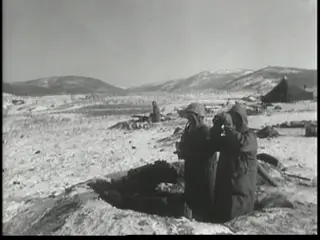
14. Field

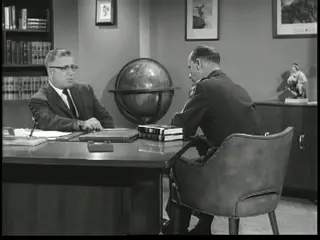
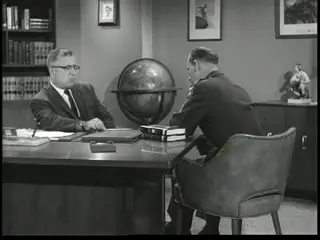
7:16–7:18 Machine checks passed

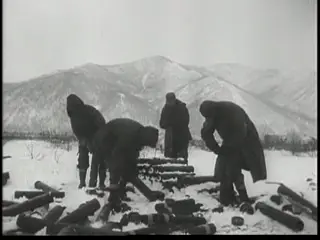
Model synopsis: A group of figures in heavy winter clothing are gathered around a dugout or trench in a snow-covered field with mountains in the background. No dialogue or on-screen text is present in this beat.

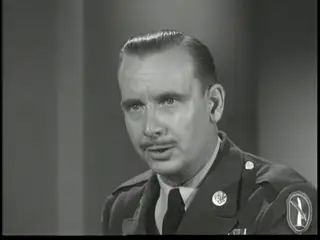
3 people observed.

Evidence, details and a link to share
Sequence 9 from 7:18

Frame at 7:25, shot 207:25
1 of 1 shots sampled

16. Field

7:24–7:26 Machine checks passed

Model synopsis: Two figures in heavy winter coats are visible in a snowy, open field with distant hills. No dialogue or on-screen text is present in this beat.

2 people observed.

Evidence, details and a link to share
Sequence 10 from 7:26

Sequence 11 from 7:31

Sequence 12 from 7:33

Frame at 7:35, shot 237:35
1 of 1 shots sampled

19. Mountain road

7:33–7:37 Machine checks passed (partial)

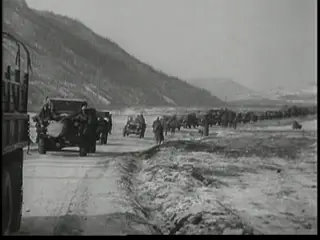
Model synopsis: A military convoy moves along a dirt road in a mountainous, snow-dusted landscape. Soldiers and vehicles are visible in a line extending into the distance.

  • A military convoy advances along a dirt road. [frame:1]

Evidence, details and a link to share

Sequence 13 from 7:37

Frame at 7:38, shot 247:38Frame at 7:41, shot 257:41Frame at 7:43, shot 267:43Frame at 7:50, shot 277:50
4 of 4 shots sampled

20. Battlefield

7:37–7:56 Machine checks passed (partial)

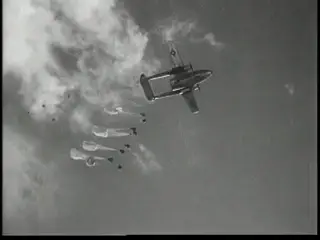
Model synopsis: Aircraft drop supplies and conduct air support over a mountainous battlefield. Smoke rises from a hillside as planes fly overhead, with transcript lines confirming air resupply and close air support from Marine and Air Force units.

  • Aircraft are dropping supplies by parachute. [frame:1]
  • Parachutes descend toward the ground. [frame:2]
  • Supplies land near military vehicles in a mountainous area. [frame:3]
  • 1 more under Evidence and details.

“All our resupply came by air. Without that, we never could have made it.” 7:39 · “Same goes for the close air support we got from the Marine Air Wing and the Air Force.” 7:45

Evidence, details and a link to share

Sequence 14 from 7:56

Frame at 8:06, shot 288:06
1 of 1 shots sampled

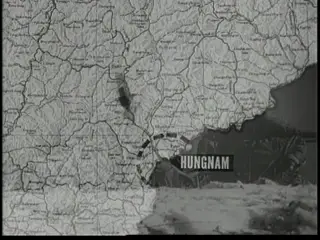
21. Map of Hungnam

7:56–8:16 Machine checks passed

Model synopsis: A map shows the location of Hungnam, with a dotted line indicating a route toward the sea. The transcript describes a military retreat through enemy forces, evacuation of wounded, and arrival at Hungnam on December 10th.

“They fought their way toward the sea through an enemy force which outnumbered them five to one.” 7:57 · “Pausing only to evacuate wounded by air from Hagaroo, they pushed on, reaching safety on December 10th. They found Hoongnam a busy town.” 8:03

Evidence, details and a link to share

Sequence 15 from 8:16

Frame at 8:16, shot 298:16
1 of 1 shots sampled

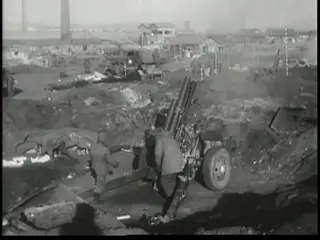
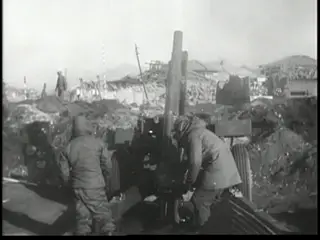
22. Battlefield

8:16–8:17 Machine checks passed

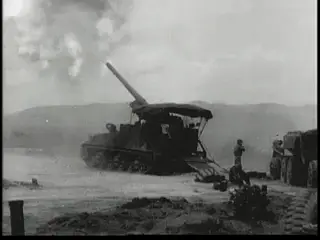
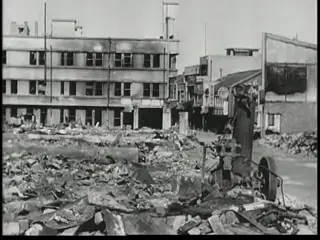
Model synopsis: A military vehicle with a mounted gun is parked on uneven, debris-strewn ground with a soldier standing beside it. In the background, damaged buildings and industrial structures are visible under an overcast sky.

1 person observed.

Evidence, details and a link to share

Frame at 8:18, shot 308:18
1 of 1 shots sampled

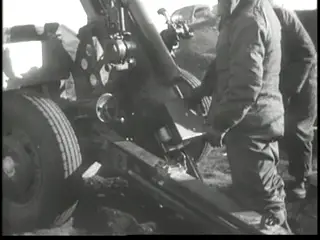
23. Mountain

8:17–8:19 Machine checks passed (partial)

Model synopsis: Two soldiers in heavy winter coats operate a large artillery piece outdoors in a snowy, mountainous landscape. No dialogue or on-screen text is present in this beat.

  • Two soldiers operate an artillery piece in a snowy landscape. [frame:1]

2 people observed.

Evidence, details and a link to share

Sequence 16 from 8:19

Frame at 8:20, shot 318:20
1 of 1 shots sampled

24. Field

8:19–8:21 Machine checks passed

Model synopsis: A person in heavy clothing stands beside a large artillery piece outdoors. The scene is in black and white, with no visible text or spoken dialogue.

1 person observed.

Evidence, details and a link to share

Frame at 8:24, shot 328:24Frame at 8:32, shot 348:32Frame at 8:37, shot 378:37Frame at 8:40, shot 398:40
4 of 8 shots sampled

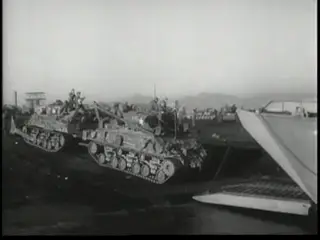
25. Harbor

8:21–8:41 Machine checks passed (partial)

Model synopsis: Military personnel and vehicles are shown at a harbor under overcast conditions, with heavy equipment being loaded or unloaded from ships. The transcript describes a large-scale amphibious operation occurring under continuous fire to prevent enemy advance.

  • Soldiers are positioned near stacked ammunition crates at a harbor. [frame:1]
  • A large ship is visible in the background with vehicles and equipment on the shore. [frame:2]
  • Military trucks and landing craft are parked near a ship, suggesting loading or unloading. [frame:3]
  • 1 more under Evidence and details.

3 people observed.

“Within the harbor's perimeter, heavy weapons worked around the clock, throwing up a curtain of fire through which the enemy divisions dared …” 8:22 · “a near miracle of planning, organization and teamwork was taking place. A massive amphibious landing in reverse.” 8:33

Evidence, details and a link to share

Frame at 8:42, shot 408:42
1 of 1 shots sampled

26. Ship

8:41–8:43 Machine checks passed

Model synopsis: A military tank is visible on a ship's deck, with personnel aboard. The background shows a distant shoreline and other vehicles.

  • A tank is positioned on the deck of a ship with personnel visible on and around it. [frame:1]

Evidence, details and a link to share

Frame at 8:44, shot 418:44
1 of 1 shots sampled

27. Ship

8:43–8:45 Machine checks passed

Model synopsis: Two men are on a ship's ramp loading a tank onto a vessel marked 742. The scene is in black and white and shows military equipment being handled.

2 people observed.

Evidence, details and a link to share

Frame at 8:46, shot 428:46Frame at 8:48, shot 438:48Frame at 8:50, shot 448:50Frame at 8:52, shot 458:52
4 of 4 shots sampled

28. Beach

8:45–8:52 Machine checks passed (partial)

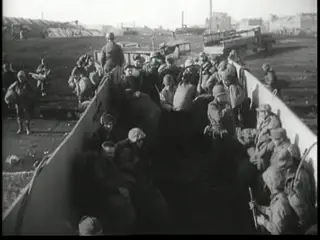
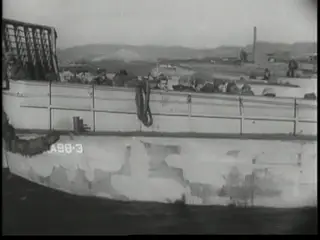
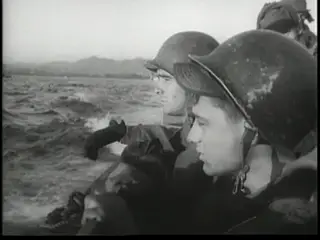
Model synopsis: Soldiers in helmets and uniforms board and ride in a landing craft on water, with a distant shoreline visible. The transcript states that over 100,000 fighting men were evacuated in ten days.

  • Soldiers board a landing craft from a beach. [frame:1]
  • Soldiers are seated inside a crowded landing craft. [frame:2]
  • The side of a landing craft is shown, with a distant shoreline and industrial structures. [frame:3]
  • 1 more under Evidence and details.

3 people observed.

“In the space of 10 days, more than 100,000 fighting men were evacuated.” 8:46

Evidence, details and a link to share

Frame at 8:54, shot 468:54Frame at 9:00, shot 489:00Frame at 9:07, shot 509:07Frame at 9:11, shot 529:11
4 of 7 shots sampled

29. Dock area

8:52–9:12 Machine checks passed (partial)

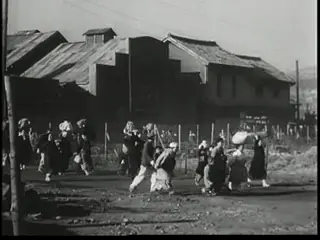
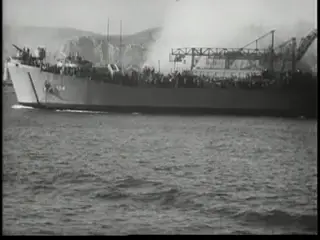
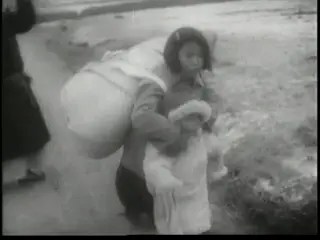
Model synopsis: People, including children, are seen moving on foot toward a dock area where a large ship is present. The transcript states that tens of thousands of North Koreans sought evacuation from this area to avoid returning to communist rule.

  • People are walking and running on a dirt road toward buildings. [frame:1]
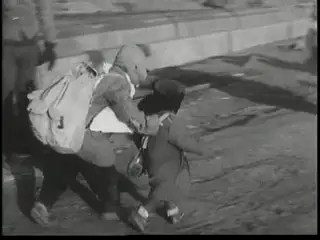
  • An adult helps a child walk while carrying a large bundle. [frame:2]
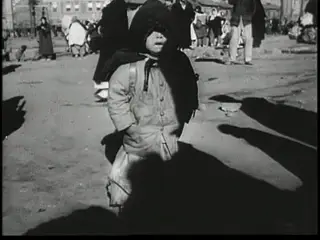
  • A child walks alone across an open area with a bundle on their back. [frame:3]
  • 1 more under Evidence and details.

3 people observed.

“North Koreans by the tens of thousands flocked to the dock area to plead for evacuation.” 8:53 · “From this one area, more than 90,000 North Koreans deserted their homes, rather than return to the life they had experienced under communism…” 9:03

Evidence, details and a link to share

Frame at 9:14, shot 539:14Frame at 9:17, shot 549:17Frame at 9:20, shot 559:20Frame at 9:24, shot 569:24
4 of 4 shots sampled

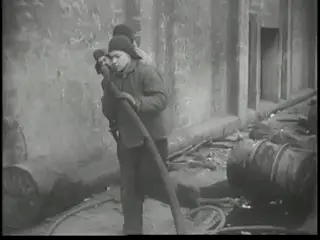
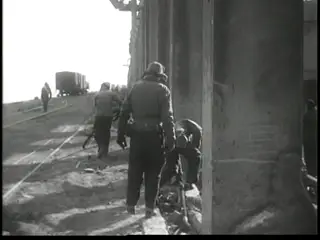
30. Harbor

9:12–9:25 Machine checks passed (partial)

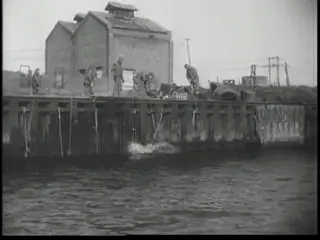
Model synopsis: Men in heavy coats work along a waterfront pier, placing explosives and hoses; a transcript line states they are the last to leave and will destroy the harbor. The scene includes a building on the pier, barrels, and a truck on a slope.

  • Men place explosives and hoses along a pier. [frame:1]
  • A man holds a hose near barrels on a pier. [frame:2]
  • Men work on a pier with a building and industrial structures in the background. [frame:3]
  • 1 more under Evidence and details.

3 people observed.

“We were the last to leave. When we were gone, the harbor would be too. We set blocks of TNT and laced hoses filled with jellied explosive a…” 9:13

Evidence, details and a link to share

Sequence 17 from 9:25

Frame at 9:27, shot 579:27
1 of 1 shots sampled

31. Factory

9:25–9:28 Machine checks passed

Model synopsis: Two people in workwear walk across an industrial yard carrying buckets. The setting includes a brick building and cranes in the background.

  • Two people walk across a yard carrying buckets. [frame:1]

2 people observed.

Evidence, details and a link to share

Sequence 18 from 9:28

Frame at 9:31, shot 589:31Frame at 9:39, shot 599:39Frame at 9:50, shot 609:50
3 of 3 shots sampled

32. Harbor

9:28–9:55 Machine checks passed (partial)

Model synopsis: A harbor is shown with smoke rising near a docked ship, followed by an explosion on a distant shoreline, then a map overlay showing coastal locations. The transcript describes the harbor as a 'ticking time bomb' and mentions an evacuation convoy heading to Pusan and Pohang.

  • Smoke rises from the water near a large docked ship. [frame:1]
  • An explosion erupts on a distant shoreline. [frame:2]
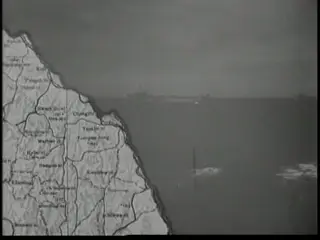
  • A map overlay shows a coastline with labeled towns and ships at sea. [frame:3]

“When we left, the harbor was one big ticking time bomb.” 9:28 · “The evacuation convoy steamed southward toward the free ports of Pusan and Pohang. Their troops would re-land, re-group, and move back to e…” 9:33

Evidence, details and a link to share

Sequence 19 from 9:55

Frame at 10:01, shot 6110:01Frame at 10:11, shot 6310:11Frame at 10:13, shot 6410:13Frame at 10:17, shot 6610:17
4 of 6 shots sampled

33. Road

9:55–10:19 Machine checks passed (partial)

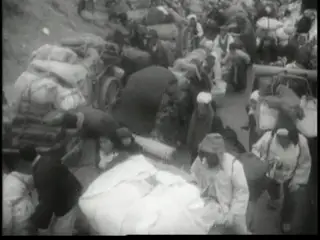
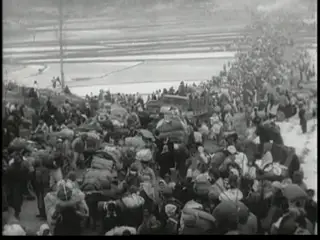
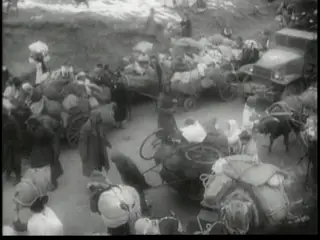
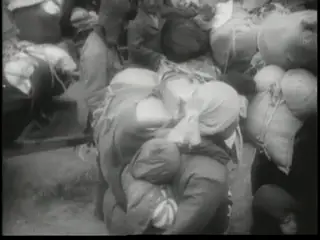
Model synopsis: A large group of civilians is shown moving along a road with carts and bundles, in a scene described by the transcript as a desperate flight southward from advancing communists. The setting is outdoors, with hills and a road visible, and the crowd appears dense and burdened.

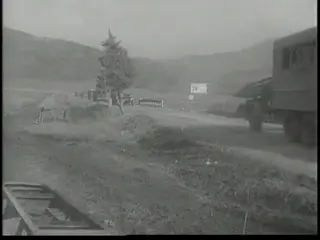
  • A military truck is visible on a road near a sign and a tree. [frame:1]
  • A dense crowd of civilians with bundles and carts is shown from above. [frame:2]
  • A long line of people and carts stretches along a road, viewed from a distance. [frame:3]
  • 1 more under Evidence and details.

1 person observed.

“But for hundreds of thousands of civilians trying desperately to outrun the advancing communists, the journey southward was a nightmare of c…” 10:03

Evidence, details and a link to share

Frame at 10:20, shot 6710:20Frame at 10:24, shot 6910:24Frame at 10:27, shot 7110:27Frame at 10:32, shot 7310:32
4 of 7 shots sampled

34. Road

10:19–10:33 Machine checks passed (partial)

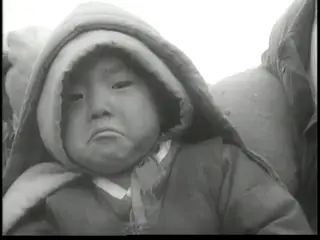
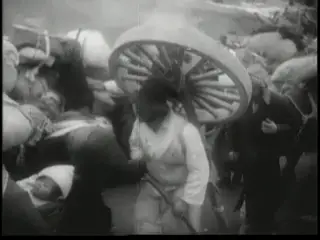
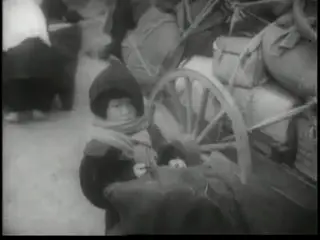
Model synopsis: A child in a hooded coat is shown among a crowd of displaced people carrying bundles and pulling carts. The transcript describes old people and children suffering from war's hardships.

  • A child in a hooded coat looks at the camera. [frame:1]
  • People pull carts and carry bundles through a crowd. [frame:2]
  • People carry large sacks on their backs. [frame:3]
  • 1 more under Evidence and details.

3 people observed.

“Old people pulled loads meant for oxen or carried their precious few belongings on their backs.” 10:21 · “Children who had no part in the causes of war received full measure of its hardships” 10:21

Evidence, details and a link to share

Frame at 10:34, shot 7410:34Frame at 10:42, shot 7710:42Frame at 10:54, shot 8110:54Frame at 11:00, shot 8411:00
4 of 11 shots sampled

35. Field

10:33–11:02 Machine checks passed (partial)

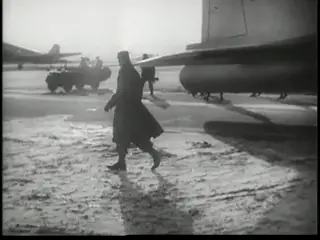
Model synopsis: A child sits in a cart near military vehicles; soldiers move near an aircraft; troops advance across snow; a wide shot shows a snowy field with distant figures. The transcript mentions General Ridgway replacing General Walker after a Jeep accident and an upcoming enemy offensive.

  • Child sits in cart near military equipment [frame:1]
  • Soldier walks near aircraft on snowy ground [frame:2]
  • Soldiers advance across snow-covered field [frame:3]
  • 1 more under Evidence and details.

4 people observed.

“same. On December 27th, General Ridgway arrived to replace General Walker, killed in a tragic Jeep accident. He was just in time for the ene…” 10:33

Evidence, details and a link to share

Frame at 11:03, shot 8511:03Frame at 11:06, shot 8611:06Frame at 11:09, shot 8711:09Frame at 11:16, shot 8811:16
4 of 4 shots sampled

36. Field

11:02–11:21 Machine checks passed (partial)

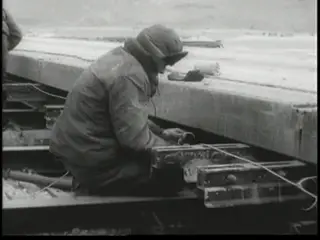
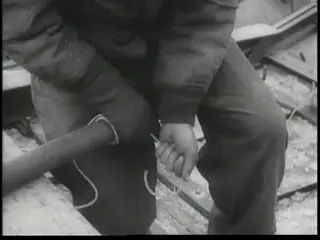
Model synopsis: A soldier prepares explosives on a bridge structure, followed by a distant explosion in a field, and an aerial view of a crowded port with ships. The transcript mentions evacuations from Seoul and Incheon and destroying infrastructure to deny its use to the enemy.

  • soldier handles wires and explosive device on bridge structure [frame:1]
  • soldier's hands tie wire to pipe [frame:2]
  • explosion erupts in open field with smoke and debris [frame:3]
  • 1 more under Evidence and details.

1 person observed.

“out of Seoul, blowing the Han River bridges behind them. Incheon, like Hoongnam, was evacuated by sea. Here, too, we took pains to leave not…” 11:03

Evidence, details and a link to share

Sequence 20 from 11:21

Frame at 11:26, shot 8911:26
1 of 1 shots sampled

37. Field

11:21–11:30 Machine checks passed (partial)

Model synopsis: A single frame shows a bright explosion at night with smoke rising. No people, dialogue, or on-screen text are visible.

  • An explosion occurs in a dark outdoor setting. [frame:1]

Evidence, details and a link to share

Sequence 21 from 11:30

Frame at 11:36, shot 9011:36Frame at 11:43, shot 9111:43Frame at 11:46, shot 9211:46Frame at 11:49, shot 9311:49
4 of 4 shots sampled

38. Field

11:30–11:51 Machine checks passed (partial)

Model synopsis: The beat shows soldiers in a field environment, some tending to equipment or resting near tents, while the transcript mentions regrouping after being taken off a beach. No named individuals appear, and the setting is outdoors under overcast or nighttime conditions.

  • Explosion or smoke plume visible over distant structures [frame:1]
  • Soldier in coat bends near tented area [frame:2]
  • Shirtless soldier kneels and works with hands in ground [frame:3]
  • 1 more under Evidence and details.

3 people observed.

“In the south, the troops which had been taken off the beach at Ong Nam were regrouped, and despite bitter weather, took advantage of a welco…” 11:39

Evidence, details and a link to share

Frame at 11:52, shot 9411:52
1 of 1 shots sampled

39. Forest

11:51–11:53 Machine checks passed (partial)

Model synopsis: A person in heavy clothing bends over a barrel in a snowy, wooded area with other figures visible in the background. No dialogue or on-screen text is present in this beat.

  • A person bends over a barrel in a snowy forest. [frame:1]

2 people observed.

Evidence, details and a link to share

Frame at 11:54, shot 9511:54
1 of 1 shots sampled

40. Snow

11:53–11:55 Machine checks passed

Model synopsis: A person in heavy clothing handles metal mess tins in snow. No names, dialogue, or place identifiers are visible or audible in this beat.

1 person observed.

Evidence, details and a link to share

Sequence 22 from 11:55

Frame at 11:56, shot 9611:56
1 of 1 shots sampled

41. Snowy field

11:55–11:57 Machine checks passed (partial)

Model synopsis: A person in heavy winter clothing and a hooded coat drinks from a metal cup in a snowy, outdoor setting. The scene is captured in a single, grainy, black-and-white frame with no visible text or spoken dialogue.

  • Person raises metal cup to mouth and drinks. [frame:1]

1 person observed.

Evidence, details and a link to share

Sequence 23 from 11:57

Sequence 24 from 12:08

Frame at 12:09, shot 9812:09Frame at 12:11, shot 9912:11Frame at 12:14, shot 10012:14Frame at 12:17, shot 10112:17
4 of 4 shots sampled

43. Field

12:08–12:18 Machine checks passed (partial)

Model synopsis: Soldiers in winter gear are shown moving through a snowy landscape with military vehicles; a voice-over mentions 'Operation Killer' and General Ridgeway's intent to counter enemy numerical advantage. No named individuals appear, and the setting is an open, snow-covered field with no visible structures.

  • Soldiers and military vehicles are visible in a snowy field. [frame:1]
  • Soldiers walk along a snow-covered road beside a military vehicle. [frame:2]
  • Soldiers are seated on a vehicle with a star insignia visible. [frame:3]
  • 1 more under Evidence and details.

1 person observed.

“High-powered thrusts called "Operation Killer." The enemy held a huge numerical advantage. Ridgeway was out to eliminate it.” 12:09

Evidence, details and a link to share

Sequence 25 from 12:18

Frame at 12:24, shot 10212:24
1 of 1 shots sampled

44. Field

12:18–12:29 Machine checks passed (partial)

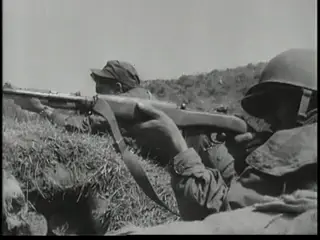
Model synopsis: Two soldiers in field gear are prone in tall grass, aiming rifles toward the left. The background shows bare trees and a hazy, overcast sky, suggesting an outdoor, open-field setting.

  • Two soldiers lie prone in tall grass, aiming rifles. [frame:1]

2 people observed.

Evidence, details and a link to share

Frame at 12:29, shot 10312:29
1 of 1 shots sampled

45. Field

12:29–12:30 Machine checks passed

Model synopsis: A soldier in winter gear aims a rifle from a prone position in a grassy, hilly field. No dialogue or on-screen text is present in this beat.

  • A soldier aims a rifle from a prone position. [frame:1]

1 person observed.

Evidence, details and a link to share

Sequence 26 from 12:30

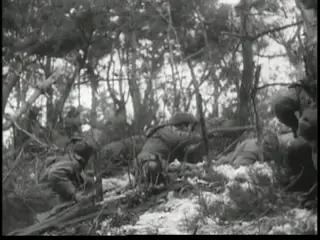
Frame at 12:31, shot 10412:31
1 of 1 shots sampled

46. Road

12:30–12:33 Machine checks passed

Model synopsis: A military tank and a smaller armored vehicle move along a dirt road, kicking up dust. The scene is outdoors with utility poles visible in the background.

  • A tank and an armored vehicle drive on a dirt road. [frame:1]

Evidence, details and a link to share

Sequence 27 from 12:33

Frame at 12:35, shot 10512:35
1 of 1 shots sampled

47. Forest

12:33–12:36 Machine checks passed

Model synopsis: Soldiers in helmets and uniforms are crouched among trees and underbrush in a wooded area. No dialogue or on-screen text is present in this beat.

3 people observed.

Evidence, details and a link to share
Sequence 28 from 12:36

Frame at 12:37, shot 10612:37
1 of 1 shots sampled

48. Forest

12:36–12:38 Machine checks passed

Model synopsis: Two soldiers in military uniforms are shown in a wooded area, one crouching and the other standing behind him. No dialogue or on-screen text is present in this beat.

2 people observed.

Evidence, details and a link to share

Frame at 12:40, shot 10712:40
1 of 1 shots sampled

49. Forest

12:38–12:40 Machine checks passed (partial)

Model synopsis: A soldier in a hooded uniform aims a rifle from a prone position among trees and brush. The scene is outdoors in a wooded area with no visible structures or other people.

  • soldier aims rifle from prone position [frame:1]

1 person observed.

Evidence, details and a link to share

Frame at 12:43, shot 10812:43Frame at 12:48, shot 11012:48Frame at 12:53, shot 11312:53Frame at 13:03, shot 11513:03
4 of 8 shots sampled

50. Forest

12:40–13:07 Machine checks passed (partial)

Model synopsis: Soldiers in winter gear are shown in a wooded, hilly terrain, operating weapons and resting on the ground. The transcript describes an offensive operation where enemy forces retreated under bombardment, and a soldier's comment on the discomfort of sleeping on frozen ground is quoted.

  • A soldier kneels in a wooded area holding a rifle. [frame:1]
  • A soldier lies prone aiming a weapon in a hilly, wooded area. [frame:2]
  • Two soldiers operate a large tube-like weapon in foggy, wooded terrain. [frame:3]
  • 1 more under Evidence and details.

4 people observed.

“Assault units moved up, expecting to meet great strength. They found surprising weakness. Under the pounding raids of Operation Killer, th…” 12:42 · “If anybody ever invents a mattress that feels half as good as a patch of frozen ground fell thin, you'll make a million dollars.” 13:00

Evidence, details and a link to share

Frame at 13:08, shot 11613:08Frame at 13:13, shot 11813:13Frame at 13:22, shot 12013:22Frame at 13:27, shot 12213:27
4 of 7 shots sampled

51. Battlefield

13:07–13:29 Machine checks passed (partial)

Model synopsis: A soldier is shown receiving medical attention, another aims a rifle from prone position, a close-up shows a soldier's face, and a soldier runs through rubble near a damaged structure. The transcript mentions Operation Killer and enemy casualties.

  • A soldier receives medical attention while lying down. [frame:1]
  • A soldier aims a rifle from a prone position in grassy terrain. [frame:2]
  • A soldier's face is shown in close-up, looking alert. [frame:3]
  • 1 more under Evidence and details.

4 people observed.

“Although destruction of enemy forces remained its prime objective, Operation Killer had evolved into a ground gaining operation.” 13:09 · “The way things were going, we couldn't stay outnumbered for long. The word was they were losing ten men to R1.” 13:20

Evidence, details and a link to share

Sequence 29 from 13:29

Frame at 13:33, shot 12313:33Frame at 13:37, shot 12413:37Frame at 13:43, shot 12613:43Frame at 13:45, shot 12713:45
4 of 5 shots sampled

52. Military map

13:29–13:47 Machine checks passed

Model synopsis: The beat shows a sequence of military maps overlaid with troop movements, accompanied by narration describing the 8th Army's advance and the destruction of an enemy stronghold east of Seoul. No people are visible; the focus is on cartographic visuals and strategic narration.

“For six weeks, the seasoned fighters of 8th Army scoured the countryside, inflicting fantastic losses on the retreating Reds.” 13:30 · “the enemy's main stronghold east of Seoul was smashed. The next step would be Seoul itself.” 13:39

Evidence, details and a link to share

Sequence 30 from 13:47

Sequence 31 from 13:49

Frame at 13:50, shot 12913:50Frame at 13:56, shot 13213:56Frame at 14:01, shot 13514:01Frame at 14:07, shot 13814:07
4 of 10 shots sampled

54. Battlefield

13:49–14:08 Machine checks passed (partial)

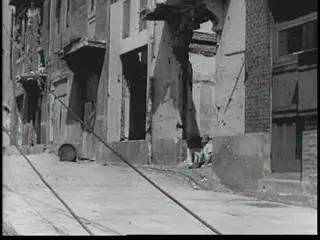
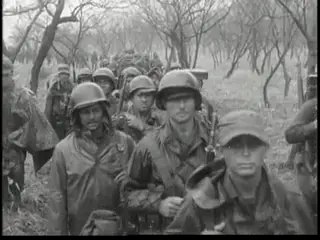
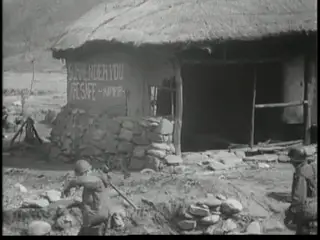
Model synopsis: The beat shows a war-torn urban area with rubble and damaged buildings, followed by soldiers advancing through a wooded area and a thatched hut with a surrender poster. The transcript describes Korean troops entering a city after communists fled and General Van Fleet taking command during a Communist offensive.

  • A destroyed urban street with rubble and damaged buildings is shown. [frame:1]
  • A damaged building with exposed brick and debris is visible. [frame:2]
  • Soldiers in helmets advance through a wooded area. [frame:3]
  • 1 more under Evidence and details.

1 person observed.

“On March 15th, Korean troops entered the city. They found a few old people and children. The communists had fled. Across the full width of t…” 13:50 · “In April, General James Van Fleet arrived to take over the 8th Army. A canny tactician, he replaced General Ridgeway, who had been appointed…” 14:08

Evidence, details and a link to share

Frame at 14:10, shot 13914:10Frame at 14:16, shot 14014:16Frame at 14:26, shot 14214:26Frame at 14:31, shot 14314:31
4 of 5 shots sampled

55. Field

14:08–14:33 Machine checks passed (partial)

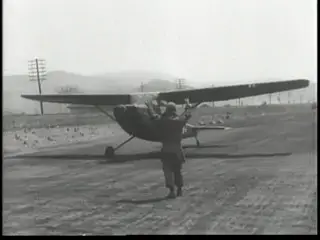
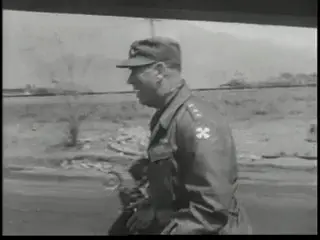
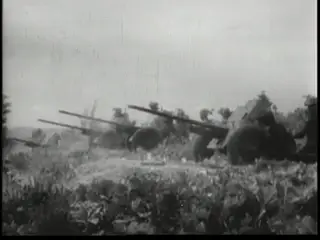
Model synopsis: A military officer is shown near an aircraft and in profile, followed by scenes of artillery and soldiers operating a mortar in a field. The transcript states that General James Van Fleet took command of the 8th Army in April and faced a Communist Spring Offensive.

  • A man in uniform stands near a small aircraft on a field. [frame:1]
  • A military officer in profile, wearing a cap and uniform with insignia, walks outdoors. [frame:2]
  • Artillery pieces fire in a field. [frame:3]
  • 1 more under Evidence and details.

Named: General James Van Fleet (t:14:08). 2 people observed.

“In April, General James Van Fleet arrived to take over the 8th Army.” 14:08 · “A canny tactician, he replaced General Ridgeway, who had been appointed Supreme Commander when General MacArthur returned to the United Stat…” 14:08

Evidence, details and a link to share

Frame at 14:35, shot 14414:35Frame at 14:40, shot 14614:40Frame at 14:46, shot 14814:46Frame at 14:51, shot 15014:51
4 of 7 shots sampled

56. Battlefield

14:33–14:53 Machine checks passed (partial)

Model synopsis: Soldiers in combat gear are shown operating weapons and observing terrain in an open field. The transcript mentions UN forces countering enemy human wave tactics.

  • Soldiers are positioned in a field with weapons. [frame:1]
  • A soldier loads a rocket launcher. [frame:2]
  • A soldier observes through binoculars. [frame:3]
  • 1 more under Evidence and details.

4 people observed.

“All available UN forces were needed to slow the enemy's human wave tactics.” 14:38

Evidence, details and a link to share

Frame at 14:54, shot 15114:54
1 of 1 shots sampled

57. Field

14:53–14:54 Machine checks passed (partial)

Model synopsis: A person is seen from behind aiming a weapon in an open field with military vehicles and bare trees in the background. No dialogue or on-screen text is present in this beat.

  • A person aims a weapon across a field toward military vehicles. [frame:1]

1 person observed.

Evidence, details and a link to share

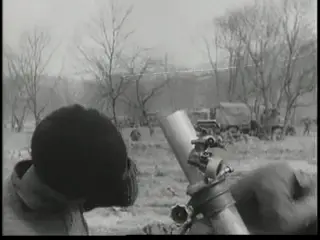
Frame at 14:55, shot 15214:55
1 of 1 shots sampled

58. Field

14:54–14:56 Machine checks passed

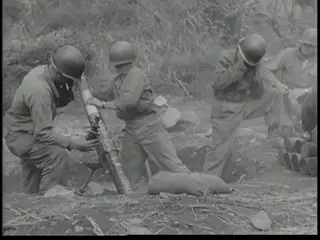
Model synopsis: A group of soldiers operates a mortar in an open field. One soldier aims the weapon while others assist or observe.

  • Soldiers are positioned around a mortar in a field. [frame:1]

3 people observed.

Evidence, details and a link to share

Frame at 14:56, shot 15314:56
1 of 1 shots sampled

59. Field

14:56–14:57 Machine checks passed

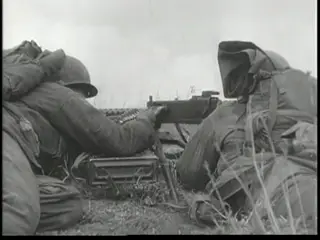
Model synopsis: Two soldiers in combat gear are positioned prone on grassy ground, one aiming a machine gun. The setting appears to be an open field during daylight, with no visible structures or other people.

2 people observed.

Evidence, details and a link to share

Frame at 14:58, shot 15414:58
1 of 1 shots sampled

60. Field

14:57–14:59 Machine checks passed (partial)

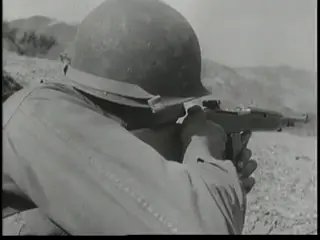
Model synopsis: A soldier in a helmet aims a rifle from a prone position in a barren, hilly landscape. No dialogue or on-screen text is present in this beat.

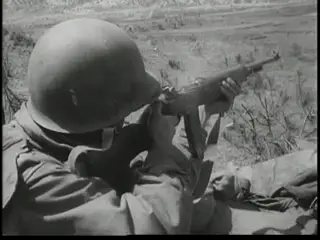
  • A soldier aims a rifle from a prone position. [frame:1]

1 person observed.

Evidence, details and a link to share

Frame at 15:01, shot 15515:01
1 of 1 shots sampled

61. Field

14:59–15:02 Machine checks passed (partial)

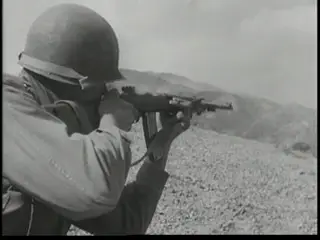
Model synopsis: A soldier in a helmet aims a rifle from a prone position in a barren, rocky landscape. No dialogue or on-screen text is present in this beat.

  • A soldier aims a rifle from a prone position. [frame:1]

1 person observed.

Evidence, details and a link to share

Sequence 32 from 15:02

Frame at 15:03, shot 15615:03
1 of 1 shots sampled

62. Mountain

15:02–15:04 Machine checks passed (partial)

Model synopsis: Two soldiers in helmets operate a machine gun from a high vantage point overlooking a valley. The scene is shot in black and white with no audible dialogue or on-screen text.

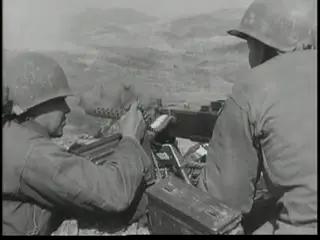
  • Two soldiers are positioned behind a machine gun overlooking a valley. [frame:1]

2 people observed.

Evidence, details and a link to share

Frame at 15:05, shot 15715:05
1 of 1 shots sampled

63. Field

15:04–15:06 Machine checks passed (partial)

Model synopsis: A soldier in a helmet aims a rifle from a prone position in an open field. The scene is shot in black and white with no visible text or dialogue.

  • soldier aims rifle from prone position [frame:1]

1 person observed.

Evidence, details and a link to share

Frame at 15:07, shot 15815:07
1 of 1 shots sampled

64. Battlefield

15:06–15:08 Machine checks passed (partial)

Model synopsis: A soldier in a helmet is seen from behind, aiming a machine gun in a barren, hilly landscape. No dialogue or on-screen text is present in this beat.

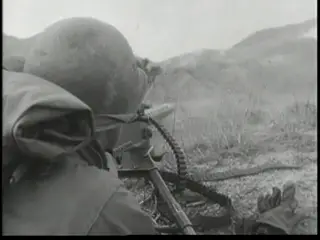
  • Soldier aims machine gun across a hilly terrain. [frame:1]

1 person observed.

Evidence, details and a link to share

Frame at 15:09, shot 15915:09Frame at 15:14, shot 16015:14
2 of 2 shots sampled

65. Battlefield

15:08–15:17 Machine checks passed (partial)

Model synopsis: Two soldiers are shown in a prone position aiming rifles in a field with distant hills; the scene cuts to a wide view of a battlefield with smoke rising. A voice describes a combat routine involving holding position until ammunition is exhausted, then calling for an airstrike.

  • Two soldiers are lying prone in a field aiming rifles. [frame:1]
  • A wide view shows a battlefield with smoke rising in the distance. [frame:2]

2 people observed.

“We had a routine. Hold till the ammo ran out, then pull back and call for an airstrike.” 15:08

Evidence, details and a link to share

Sequence 33 from 15:17

Frame at 15:19, shot 16115:19
1 of 1 shots sampled

66. Battlefield

15:17–15:20 Machine checks passed

Model synopsis: A soldier in a helmet and coat operates a mounted machine gun while another soldier stands nearby. The scene is outdoors under bright, overcast lighting.

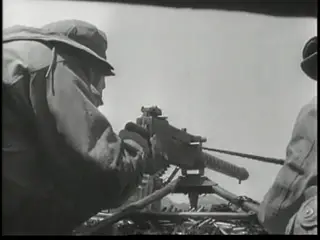
  • soldier aims machine gun [frame:1]

2 people observed.

Evidence, details and a link to share

Sequence 34 from 15:20

Frame at 15:22, shot 16215:22
1 of 1 shots sampled

67. Field

15:20–15:24 Machine checks passed (partial)

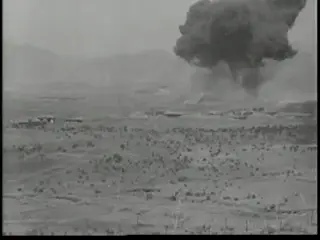
Model synopsis: A wide shot shows a large plume of dark smoke rising from a flat, barren landscape with scattered low vegetation. No people or vehicles are clearly visible in the frame.

  • A large plume of dark smoke rises from the ground in a barren landscape. [frame:1]

Evidence, details and a link to share
Sequence 35 from 15:24

Frame at 15:26, shot 16315:26Frame at 15:29, shot 16415:29Frame at 15:34, shot 16515:34
3 of 3 shots sampled

68. Bridge

15:24–15:37 Machine checks passed (partial)

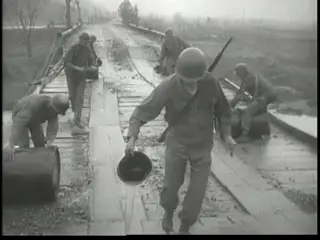
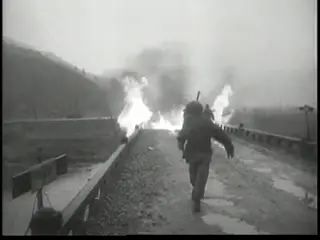
Model synopsis: Soldiers are shown on a bridge during foul weather; one carries a helmet while others work near barrels. An explosion occurs on the bridge as a soldier runs away from it.

  • Soldiers are on a bridge; one walks forward holding a helmet. [frame:1]
  • A soldier kneels beside a barrel, pouring liquid from it. [frame:2]
  • An explosion erupts on the bridge as a soldier runs away. [frame:3]

3 people observed.

“When foul weather grounded the Air Force, units north of Seoul were forced back across the Imjin River.” 15:25

Evidence, details and a link to share

Frame at 15:40, shot 16615:40Frame at 15:46, shot 16915:46Frame at 15:52, shot 17215:52Frame at 15:56, shot 17515:56
4 of 10 shots sampled

69. Field

15:37–15:57 Machine checks passed (partial)

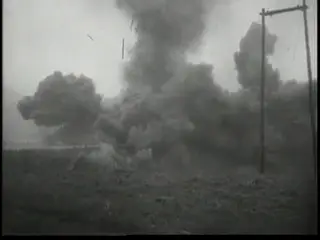
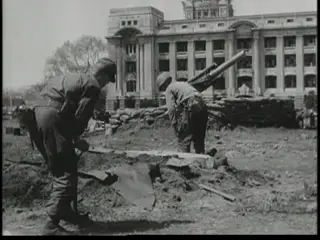
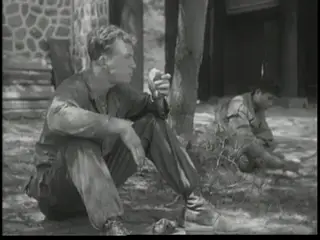
Model synopsis: Soldiers are shown in a fortified urban area near a large building and a stone bridge, with explosions visible in the distance. The transcript mentions Seoul being fortified against a Red Offensive and references waiting during war.

  • Explosion occurs in open field. [frame:1]
  • Soldiers dig near a large building. [frame:2]
  • Soldier sits and smokes near a tree. [frame:3]
  • 1 more under Evidence and details.

4 people observed.

“Seoul was fortified against the coming second wave of the Red Offensive.” 15:38 · “Van Fleet was determined not to lose the capital city again.” 15:38

Evidence, details and a link to share

Frame at 15:58, shot 17615:58
1 of 1 shots sampled

70. Forest

15:57–15:59 Machine checks passed

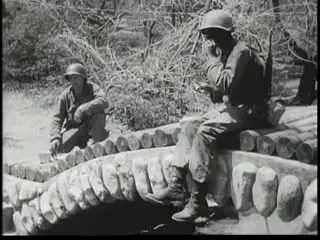
Model synopsis: Two soldiers in helmets sit on a stone structure in a wooded area. One soldier is seated on a higher level, looking down, while the other sits lower and appears to be writing or handling small objects.

2 people observed.

Evidence, details and a link to share
Sequence 36 from 15:59

Sequence 37 from 16:01

Frame at 16:01, shot 17816:01
1 of 1 shots sampled

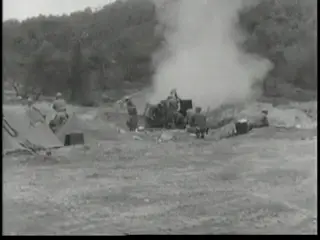
72. Field

16:01–16:02 Machine checks passed (partial)

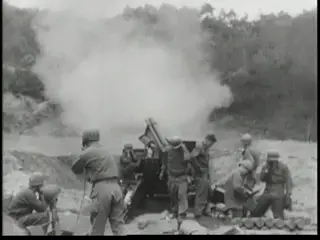
Model synopsis: A group of soldiers operates an artillery piece in a field, with smoke rising from the muzzle after firing. The setting is outdoors, with trees in the background and no visible structures.

  • Artillery fires, producing a large cloud of smoke. [frame:1]

5 people observed.

Evidence, details and a link to share
Frame at 16:03, shot 17916:03
1 of 1 shots sampled

73. Camp

16:02–16:03 Machine checks passed (partial)

Model synopsis: A military encampment is shown with soldiers near tents and a vehicle, with smoke rising in the background. No people are named or speaking in this beat.

  • Smoke rises from a vehicle or structure in a field with tents and soldiers nearby. [frame:1]

Evidence, details and a link to share

Frame at 16:06, shot 18116:06
1 of 1 shots sampled

75. Field

16:05–16:07 Machine checks passed

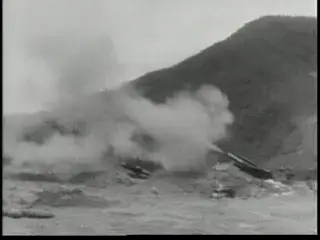
Model synopsis: A field artillery piece fires in an open, hilly landscape, producing smoke. No people are clearly visible, and no dialogue or on-screen text is present.

  • An artillery piece fires, producing smoke. [frame:1]

Evidence, details and a link to share

Frame at 16:11, shot 18216:11Frame at 16:17, shot 18416:17Frame at 16:21, shot 18616:21Frame at 16:27, shot 18816:27
4 of 7 shots sampled

76. Battlefield

16:07–16:28 Machine checks passed (partial)

Model synopsis: The beat shows a battlefield with explosions and military vehicles under smoke, as a voice describes enemy forces losing men while breaking through fire. No named individuals appear; the setting is an open field with hills, and no time of day or period is established.

  • Explosions and smoke are visible across a field with hills. [frame:1]
  • Military vehicles and figures are seen in a smoky field. [frame:2]
  • Tanks and smoke rise in a battlefield with hills in the background. [frame:3]
  • 1 more under Evidence and details.

“Every road, every valley approach had been zeroed in beforehand. The enemy lost thousands of men, breaking through the curtain of fire, then…” 16:08

Evidence, details and a link to share

Frame at 16:29, shot 18916:29Frame at 16:32, shot 19016:32
2 of 2 shots sampled

77. Field

16:28–16:35 Machine checks passed (partial)

Model synopsis: A soldier operates a mounted weapon in a hilly, vegetated outdoor setting while a voiceover describes military pursuit. The second frame shows a distant, tree-covered hillside with no visible people.

  • A soldier is operating a mounted weapon in a field. [frame:1]
  • A distant hillside with vegetation is shown. [frame:2]

1 person observed.

“As the enemy turned once again to retreat northward, Van Fleet followed with mobile firepower.” 16:29

Evidence, details and a link to share

Sequence 38 from 16:35

Frame at 16:35, shot 19116:35
1 of 1 shots sampled

78. Forest

16:35–16:36 Machine checks passed (partial)

Model synopsis: A tank is visible moving through a wooded area, kicking up dust and smoke. No people or spoken dialogue are present in this beat.

  • A tank moves through a wooded area, stirring up dust and smoke. [frame:1]

Evidence, details and a link to share

Frame at 16:36, shot 19216:36Frame at 16:38, shot 19316:38Frame at 16:40, shot 19416:40
3 of 3 shots sampled

79. Field

16:36–16:41 Machine checks flagged: visible event not seen

Model synopsis: A tank is shown in a hilly, grassy terrain, with smoke rising near it in one frame. The scene shifts to a wide view of a barren hillside and then to a damaged tank in a field.

  • A tank is visible on a grassy slope with smoke rising nearby. [frame:1]
  • A wide shot shows a barren, treeless hillside under an overcast sky. [frame:2]
  • A small dark object, possibly an aircraft, is visible in the sky. [frame:2]
  • 1 more under Evidence and details.

Flagged: visible event not seen (A wide shot shows a barren, treeless hillside under an overcast sky.)

Evidence, details and a link to share

Sequence 39 from 16:44

Frame at 16:46, shot 19616:46Frame at 16:49, shot 19816:49Frame at 16:54, shot 20016:54Frame at 16:59, shot 20216:59
4 of 7 shots sampled

81. Field

16:44–17:02 Machine checks passed (partial)

Model synopsis: Soldiers are shown moving on a dirt path and manning a position with sandbags and a weapon, while distant hills are visible. The transcript states that by June 2nd, forces had recrossed a parallel after the enemy expended 200,000 men with no gain, and Operation Killer continued.

  • A soldier walks forward on a dirt path with other soldiers behind. [frame:1]
  • A soldier crouches behind sandbags and handles a weapon. [frame:3]
  • A hillside covered in trees and brush is shown. [frame:2]
  • 1 more under Evidence and details.

2 people observed.

“By June 2nd, we had recrossed the parallel. The enemy had spent 200,000 men, a third of his entire force, and gained nothing but the knowled…” 16:46 · “Operation Killer continued without let-up.” 16:46

Evidence, details and a link to share

Frame at 17:07, shot 20317:07Frame at 17:16, shot 20417:16Frame at 17:25, shot 20617:25Frame at 17:29, shot 20717:29
4 of 5 shots sampled

82. Field

17:02–17:32 Machine checks passed (partial)

Model synopsis: Military personnel are shown near a helicopter and in a field setting during a segment discussing truce negotiations in Kaesong. The transcript names Vice Admiral Turner Joy and General Nam Il as negotiators, but no names are visually assigned to individuals in the frames.

  • A soldier crouches behind sandbags in a field. [frame:1]
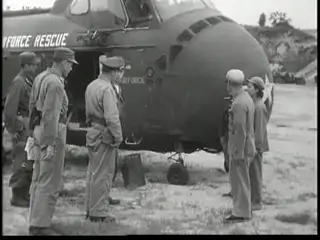
  • Military officers stand near a helicopter marked 'FORCE RESCUE'. [frame:2]
  • An officer in cap addresses a group near a helicopter. [frame:3]
  • 1 more under Evidence and details.

5 people observed.

“Within a month, truce feelers materialized into the first meetings at the red-held city of Kaesong. World peace hopes soared.” 17:08 · “The chief UN negotiator was Vice Admiral Turner Joy. His opposite number, North Korea's chain-smoking General Nam Il.” 17:22

Evidence, details and a link to share

Frame at 17:33, shot 20817:33Frame at 17:44, shot 21017:44Frame at 17:58, shot 21217:58Frame at 18:05, shot 21418:05
4 of 7 shots sampled

83. Other

17:32–18:06 Machine checks passed (partial)

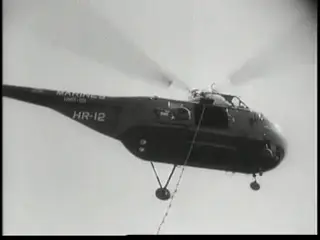
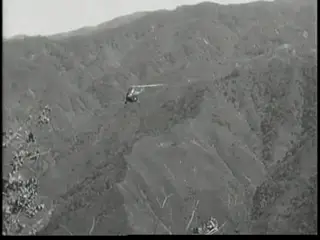
Model synopsis: The beat shows soldiers near a building, a map with arrows indicating troop movements, and helicopters in flight, including one labeled 'MARINES HR-12'. The transcript mentions truce negotiations, stabilized front lines, and a marine battalion using helicopters to secure a hill.

  • Soldiers stand in a group near a building and trees. [frame:1]
  • A map shows arrows indicating troop movements across a peninsula near the 38th parallel. [frame:2]
  • A helicopter flies low over trees with mountains in the background. [frame:3]
  • 1 more under Evidence and details.

2 people observed.

“Pessimistic correspondents predicted the talks would drag on for as long as six weeks.” 17:32 · “With the opening of truce negotiations, the line became stabilized. With minor fluctuations, it would remain much the same until the ceasefi…” 17:38

Evidence, details and a link to share

Frame at 18:08, shot 21518:08Frame at 18:10, shot 21618:10Frame at 18:14, shot 21818:14Frame at 18:18, shot 21918:18
4 of 5 shots sampled

84. Field

18:06–18:21 Machine checks passed (partial)

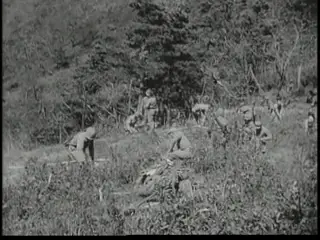
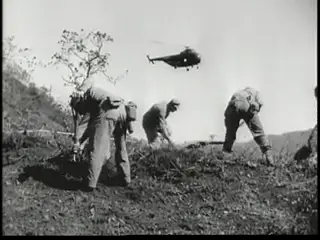
Model synopsis: Soldiers are shown in a field with a helicopter landing nearby; a voiceover states that the first copter load of aerial cavalry is arriving. The helicopter is marked with a U.S. star insignia and is seen hovering close to the ground.

  • Soldiers are digging or moving earth in a field. [frame:1]
  • A helicopter flies over a mountainous area. [frame:2]
  • Soldiers continue working as a helicopter approaches overhead. [frame:3]
  • 1 more under Evidence and details.

1 person observed.

“In a matter of minutes, the first copter load of aerial cavalry was arriving, fully equipped, fresh, ready for action.” 18:08

Evidence, details and a link to share

Frame at 18:24, shot 22018:24Frame at 18:33, shot 22318:33Frame at 18:48, shot 22718:48Frame at 18:55, shot 23018:55
4 of 11 shots sampled

85. Field

18:21–18:56 Machine checks passed

Model synopsis: Marines use helicopters to secure high ground and evacuate troops; truce talks in Kaesong are deadlocked. A soldier is shown with a weapon, and officers ride in a military jeep.

5 people observed.

“By using copters, the Marines secured commanding high ground within enemy territory without having to fight their way to it.” 18:22 · “In Kaesong, the truce talks were already bogging down, deadlocked over the issue of a ceasefire line.” 18:38

Evidence, details and a link to share

Frame at 18:58, shot 23118:58Frame at 19:04, shot 23219:04Frame at 19:10, shot 23319:10Frame at 19:17, shot 23419:17
4 of 4 shots sampled

86. Battlefield

18:56–19:23 Machine checks passed (partial)

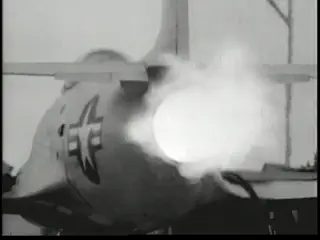
Model synopsis: A military officer is shown in uniform near a brick wall, followed by a shot of a jet firing its engine and then jets flying over a smoky battlefield. The transcript states that talks were broken off and UN jets dominated the skies with a high kill count against communist forces.

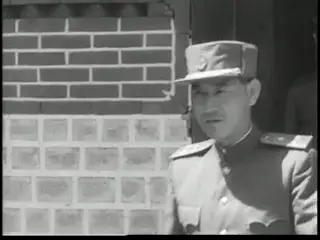
  • A man in uniform stands near a brick wall. [frame:1]
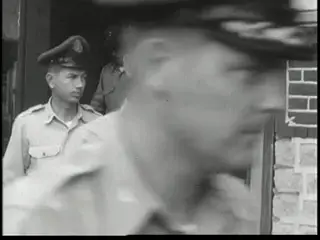
  • Another uniformed man is visible behind the first. [frame:2]
  • A jet engine emits a bright exhaust plume. [frame:3]
  • 1 more under Evidence and details.

2 people observed.

“Namil used the talks as a propaganda loudspeaker. The so-called neutral area was crawling with armed red soldiers.” 18:57 · “We broke off the talks.” 19:05

Evidence, details and a link to share

Sequence 40 from 19:23

Frame at 19:26, shot 23519:26
1 of 1 shots sampled

87. Beat 87

19:23–19:29 Machine checks passed

Model synopsis: A single frame shows a gray, grainy surface with vertical streaks and specks, likely film damage or rain on glass. No people, objects, or readable text are visible, and no events occur.

Evidence, details and a link to share
Frame at 19:31, shot 23619:31
1 of 1 shots sampled

88. Beat 88

19:29–19:33 Machine checks passed

Model synopsis: A single frame shows an abstract, grainy, high-contrast image with no identifiable place, people, or objects. No transcript lines are provided for this beat.

Evidence, details and a link to share

Sequence 41 from 19:33

Frame at 19:34, shot 23719:34
1 of 1 shots sampled

89. Ship

19:33–19:35 Machine checks passed

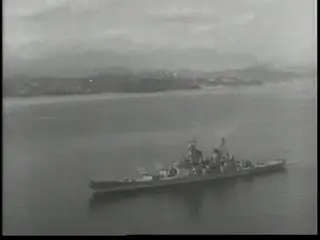
Model synopsis: A warship is visible on water with land in the background. No people, dialogue, or on-screen text are present in this beat.

Evidence, details and a link to share

Sequence 42 from 19:35

Frame at 19:37, shot 23819:37Frame at 19:41, shot 23919:41Frame at 19:47, shot 24019:47
3 of 3 shots sampled

90. Sea

19:35–19:51 Machine checks passed (partial)

Model synopsis: The beat shows a naval gun firing and an explosion at sea, with a transcript mentioning truce talks at Panmunjom in October 1951. No people are visible or named; the setting is maritime and the time period is established by the transcript.

  • A naval gun fires a shell. [frame:2]
  • An explosion occurs at sea. [frame:3]

“Near the end of October 1951, truce talks were resumed at the tiny farming village of Panmunjom.” 19:38 · “The UN delegates offered a compromise. They would accept the communists proposed cease fire along the present battle lines if all other prob…” 19:38

Evidence, details and a link to share

Sequence 43 from 19:51

Frame at 19:52, shot 24119:52Frame at 20:01, shot 24320:01Frame at 20:06, shot 24420:06Frame at 20:17, shot 24620:17
4 of 6 shots sampled

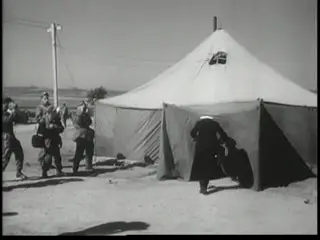
91. Camp

19:51–20:17 Machine checks passed (partial)

Model synopsis: The scene shows a military encampment with tents and soldiers moving around, and a soldier operating artillery. The transcript mentions that the war virtually stopped except for constant artillery fire.

  • Soldiers are standing near a tent in a camp. [frame:1]
  • Soldiers are walking and standing on a dirt road near tents. [frame:2]
  • Soldiers are entering and exiting a large tent. [frame:3]
  • 1 more under Evidence and details.

4 people observed.

“all bets were off. The war virtually stopped.” 20:08 · “except for the constant booming of artillery.” 20:12

Evidence, details and a link to share

Sequence 44 from 20:17

Sequence 45 from 20:19

Sequence 46 from 20:24

Frame at 20:25, shot 24920:25
1 of 1 shots sampled

94. Hillside

20:24–20:26 Machine checks passed

Model synopsis: A large plume of smoke rises from a hillside, viewed from a distance. No people or structures are visible in the frame.

  • A large plume of smoke rises from a hillside. [frame:1]

Evidence, details and a link to share
Sequence 47 from 20:26

Frame at 20:27, shot 25020:27
1 of 1 shots sampled

95. Mountain

20:26–20:28 Machine checks passed

Model synopsis: A military jeep is parked in a dusty, mountainous area with smoke rising in the background. No people are clearly visible, and no dialogue or on-screen text is present.

Evidence, details and a link to share

Sequence 48 from 20:28

Frame at 20:29, shot 25120:29
1 of 1 shots sampled

96. Mountain

20:28–20:30 Machine checks passed

Model synopsis: A tank advances through a dusty, mountainous valley while smoke rises from the ground. No people are visible or audible, and no text or dialogue is present.

  • A tank moves forward through a dusty valley with smoke rising in the background. [frame:1]

Evidence, details and a link to share

Sequence 49 from 20:30

Sequence 50 from 20:32

Frame at 20:32, shot 25320:32
1 of 1 shots sampled

98. Mountain

20:32–20:33 Machine checks passed

Model synopsis: A military vehicle with a large gun is positioned in a mountainous, dusty terrain. No people are clearly visible, and no dialogue or on-screen text is present.

Evidence, details and a link to share

Sequence 51 from 20:33

Frame at 20:33, shot 25420:33
1 of 1 shots sampled

99. Other

20:33–20:34 Machine checks passed

Model synopsis: A man in a sleeveless shirt and cap stands near a vehicle with another figure partially visible behind him. The scene is outdoors and appears to involve military or industrial equipment.

2 people observed.

Evidence, details and a link to share

Sequence 52 from 20:34

Frame at 20:35, shot 25520:35
1 of 1 shots sampled

100. Beach

20:34–20:36 Machine checks passed (partial)

Model synopsis: A military vehicle with a large gun is positioned on a beach with smoke in the background. No people are clearly visible or named, and no dialogue is present in this beat.

  • A military vehicle with a large gun is stationary on a beach with smoke rising in the background. [frame:1]

Evidence, details and a link to share

Sequence 53 from 20:36

Frame at 20:37, shot 25620:37
1 of 1 shots sampled

101. Wooded hillside

20:36–20:39 Machine checks passed

Model synopsis: A single frame shows an explosion on a wooded hillside, with smoke rising among trees. No people, objects, or text are visible, and no audio is provided for this beat.

  • An explosion occurs on a wooded hillside, producing smoke and debris. [frame:1]

Evidence, details and a link to share

Sequence 54 from 20:39

Frame at 20:40, shot 25720:40
1 of 1 shots sampled

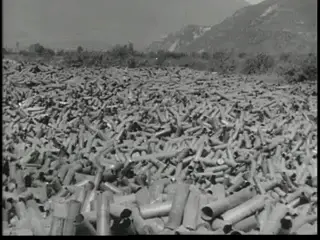
102. Field

20:39–20:41 Machine checks passed

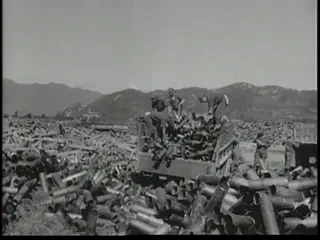
Model synopsis: A wide shot shows a large pile of artillery shells in an open field with mountains in the background. No people are visible in the frame, and no dialogue or on-screen text is present.

Evidence, details and a link to share

Sequence 55 from 20:41

Frame at 20:50, shot 25820:50Frame at 21:00, shot 25921:00Frame at 21:06, shot 26121:06Frame at 21:10, shot 26221:10
4 of 5 shots sampled

103. Military camp

20:41–21:12 Machine checks passed

Model synopsis: The scene shows a snowy military camp with tents and artillery shells, while the transcript discusses the deadlock over prisoner repatriation during wartime. No named individuals appear, and the setting is clearly winter.

2 people observed.

“Winter came, the deadline was passed, the war was on again.” 20:46 · “The deadlock issue now was the right of prisoners to free choice in the matter of repatriation.” 20:46

Evidence, details and a link to share
Sequence 56 from 21:12

Frame at 21:13, shot 26321:13
1 of 1 shots sampled

104. Field

21:12–21:14 Machine checks passed (partial)

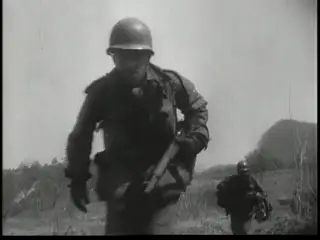
Model synopsis: A soldier in helmet and uniform runs forward across open terrain with another soldier visible behind him. The setting appears to be an outdoor field or battlefield with low vegetation and a hill in the background.

  • A soldier runs forward across open ground. [frame:1]
  • Another soldier follows behind the first. [frame:1]

2 people observed.

Evidence, details and a link to share
Frame at 21:15, shot 26421:15
1 of 1 shots sampled

105. Field

21:14–21:16 Machine checks passed

Model synopsis: A soldier in helmet and uniform holds a rifle in a barren, hilly landscape with leafless trees; another soldier is visible in the background. No dialogue or on-screen text is present in this beat.

2 people observed.

Evidence, details and a link to share

Frame at 21:17, shot 26521:17Frame at 21:19, shot 26621:19Frame at 21:21, shot 26721:21Frame at 21:23, shot 26821:23
4 of 4 shots sampled

106. Forest

21:16–21:24 Machine checks passed (partial)

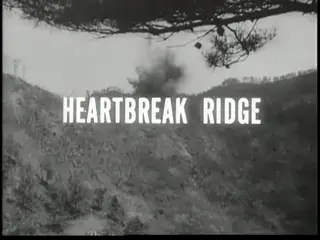
Model synopsis: A soldier runs through a wooded area while an explosion occurs on a ridge labeled 'HEARTBREAK RIDGE'; a bird is seen flying overhead. The transcript mentions battle names being difficult to remember.

  • soldier runs through forest [frame:1]
  • bird flies in sky above trees [frame:2]
  • explosion occurs on ridge labeled 'HEARTBREAK RIDGE' [frame:3]
  • 1 more under Evidence and details.

1 person observed.

“battle names not difficult nor pleasant to remember.” 21:16

Evidence, details and a link to share

Sequence 57 from 21:24

Sequence 58 from 21:26

Sequence 59 from 21:28

Frame at 21:30, shot 27121:30
1 of 1 shots sampled

109. Outdoor

21:28–21:32 Machine checks passed

Model synopsis: A single frame shows an overcast sky with a small portion of foliage visible at the top left. No people, objects, or text are present, and no events occur.

Evidence, details and a link to share

Sequence 60 from 21:32

Sequence 61 from 21:35

Frame at 21:36, shot 27321:36
1 of 1 shots sampled

111. Battlefield

21:35–21:37 Machine checks passed (partial)

Model synopsis: A tank is visible on uneven ground with smoke in the background. No people, dialogue, or on-screen text are present in the frame.

  • A tank is positioned on rough terrain with smoke rising behind it. [frame:1]

Evidence, details and a link to share
Sequence 62 from 21:37

Frame at 21:38, shot 27421:38
1 of 1 shots sampled

112. Battlefield

21:37–21:38 Machine checks passed (partial)

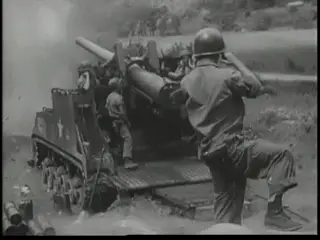
Model synopsis: A soldier in helmet and uniform operates a large artillery piece mounted on a tracked vehicle. The scene is outdoors, with smoke visible, suggesting recent firing.

  • A soldier adjusts his helmet while standing on an artillery vehicle. [frame:1]

2 people observed.

Evidence, details and a link to share
Sequence 63 from 21:38

Frame at 21:41, shot 27521:41
1 of 1 shots sampled

113. Field

21:38–21:43 Machine checks passed

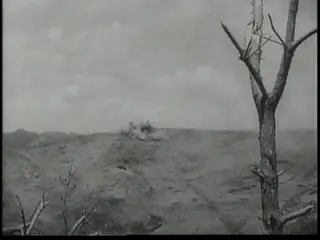
Model synopsis: A barren, hilly landscape with a leafless tree in the foreground and a small vehicle visible on a distant ridge. No people or dialogue are present in this beat.

Evidence, details and a link to share
Sequence 64 from 21:43

Frame at 21:47, shot 27621:47
1 of 1 shots sampled

114. Hillside

21:43–21:50 Machine checks passed

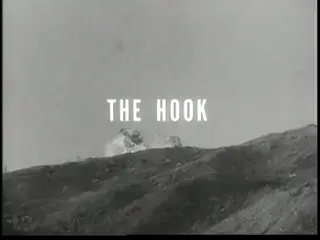
Model synopsis: A title card reading 'THE HOOK' appears over a distant shot of two figures on a barren hillside. No people are clearly visible, and no dialogue or action is recorded in this beat.

Evidence, details and a link to share
Sequence 65 from 21:50

Frame at 21:52, shot 27821:52
1 of 1 shots sampled

116. Mountain

21:51–21:52 Machine checks passed (partial)

Model synopsis: A soldier in helmet and uniform moves across a rocky, grassy slope with tents and other soldiers visible in the background. The setting is a mountainous outdoor area with no clear indication of time of day or specific location beyond the terrain.

  • A soldier walks across a rocky slope with tents and other soldiers in the background. [frame:1]

2 people observed.

Evidence, details and a link to share
Sequence 66 from 21:52

Frame at 21:54, shot 27921:54
1 of 1 shots sampled

117. Battlefield

21:52–21:55 Machine checks passed (partial)

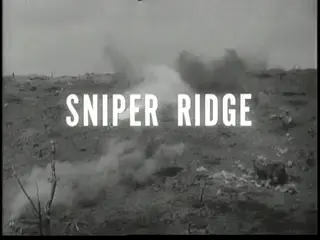
Model synopsis: A battlefield scene with smoke rising from the ground and the text 'SNIPER RIDGE' overlaid. No people or spoken dialogue are visible or audible in this beat.

  • Smoke rises from the ground in a barren landscape. [frame:1]

Evidence, details and a link to share

Sequence 67 from 21:55

Frame at 21:56, shot 28021:56
1 of 1 shots sampled

118. Battlefield

21:55–21:57 Machine checks passed (partial)

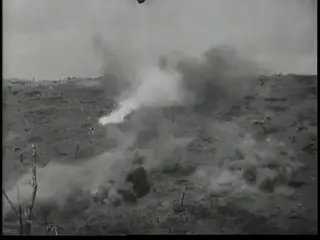
Model synopsis: A single frame shows a battlefield scene with smoke rising from the ground and a figure partially visible in the foreground. No people are named or audible, and no on-screen text or specific time of day is indicated.

  • Smoke rises from the ground in an open field, suggesting recent explosion or gunfire. [frame:1]

1 person observed.

Evidence, details and a link to share
Sequence 68 from 21:57

Frame at 22:00, shot 28122:00
1 of 1 shots sampled

119. Hillside

21:57–22:03 Machine checks passed (partial)

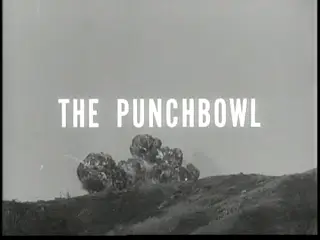
Model synopsis: A title card reading 'THE PUNCHBOWL' appears over a landscape showing multiple explosions on a hillside. No people or dialogue are present in this beat.

  • Multiple explosions occur on a hillside. [frame:1]

Evidence, details and a link to share

Sequence 69 from 22:03

Frame at 22:06, shot 28222:06
1 of 1 shots sampled

120. Field

22:03–22:09 Machine checks passed

Model synopsis: Three soldiers in helmets and uniforms are positioned in a field with foliage; one kneels holding a weapon while another crouches nearby. No dialogue or on-screen text is present in this beat.

3 people observed.

Evidence, details and a link to share
Sequence 70 from 22:09

Sequence 71 from 22:15

Frame at 22:17, shot 28422:17Frame at 22:21, shot 28522:21Frame at 22:32, shot 28722:32Frame at 22:34, shot 28822:34
4 of 5 shots sampled

122. Battlefield

22:15–22:35 Machine checks passed (partial)

Model synopsis: The frames show a barren, cratered battlefield with soldiers in trenches and on exposed slopes. The transcript describes the terrain as devastated and compares the warfare to 1914 trench combat.

  • A barren, pitted hillside is shown with a winding path. [frame:1]
  • A rocky, cratered hilltop with dug-in positions is visible. [frame:2]
  • Soldiers are seen on a scarred slope with trenches and debris. [frame:3]
  • 1 more under Evidence and details.

3 people observed.

“Wooded slopes were laid bare, pitted almost beyond believing.” 22:16 · “This war had reverted to the style of 1914, opposing trench lines facing one another, night patrolling and local attacks across the no-man'…” 22:23

Evidence, details and a link to share

Sequence 72 from 22:35

Frame at 22:36, shot 28922:36Frame at 22:49, shot 29322:49Frame at 22:59, shot 29622:59Frame at 23:12, shot 30023:12
4 of 12 shots sampled

123. Field

22:35–23:14 Machine checks passed (partial)

Model synopsis: The beat shows soldiers in a field and at a transport site, with a close-up of a hand on a radio, while the transcript describes a 1953 political shift and prisoner exchange that resumed truce talks in Korea. No named individuals appear; the setting is outdoors during daylight, with military personnel and vehicles present.

  • Soldiers are seen in a field, some carrying a stretcher. [frame:1]
  • Soldiers gather around a vehicle in a camp-like setting. [frame:2]
  • Soldiers board or stand near a bus or transport vehicle. [frame:3]
  • 1 more under Evidence and details.

2 people observed.

“It was costly, but there was no clear way out.” 22:35 · “The big break came in April 1953 with little switch.” 22:40

Evidence, details and a link to share

Frame at 23:16, shot 30123:16Frame at 23:21, shot 30223:21Frame at 23:37, shot 30323:37Frame at 23:51, shot 30423:51
4 of 4 shots sampled

124. Military camp

23:14–23:54 Machine checks passed (partial)

Model synopsis: General Clark signs ceasefire documents at a UN base camp in Munsan while surrounded by military personnel; later, soldiers are shown at an outdoor artillery position. The transcript states the signing occurred as communists signed at Panmunjom and that the moment calls for prayer rather than celebration.

  • General Clark signs a document at a table surrounded by military personnel. [frame:1]
  • A man stands behind General Clark and hands him a document while others observe. [frame:2]
  • General Clark speaks into microphones at the table while seated. [frame:3]
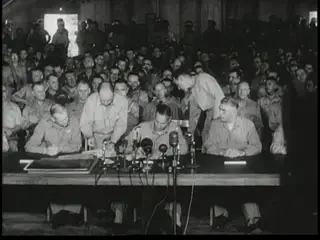
  • 1 more under Evidence and details.

Named: General Clark (t:23:16). 6 people observed.

“While the communists signed at Panmunjom, General Clark, in ceremonies at the UN base camp in Munsan, signed six copies of the document whic…” 23:16 · “to heal. Therefore, I am thankful. The task now is to put the ceasefire agreement into full effect and get down to working out an enduring s…” 23:46

Evidence, details and a link to share

Sequence 73 from 23:54

Frame at 23:55, shot 30523:55Frame at 24:01, shot 30724:01Frame at 24:08, shot 30924:08Frame at 24:14, shot 31124:14
4 of 7 shots sampled

125. Field

23:54–24:16 Machine checks passed (partial)

Model synopsis: A group of soldiers is shown in a field, first gathered around a radio, then standing in formation near a flag, and finally in a line with a cemetery of white crosses in the background. No dialogue or on-screen text is present in the frames.

  • Soldiers gather around a portable radio in a field. [frame:1]
  • Soldiers stand in formation near a flagpole in a field. [frame:2]
  • Soldiers stand in a line in a field, facing forward. [frame:3]
  • 1 more under Evidence and details.

6 people observed.

Evidence, details and a link to share
Frame at 24:17, shot 31224:17
1 of 1 shots sampled

126. Field

24:16–24:19 Machine checks passed

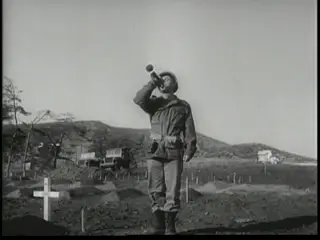
Model synopsis: A soldier in uniform stands outdoors holding a megaphone to his mouth. A white cross and distant hills are visible in the background.

  • A soldier holds a megaphone to his mouth. [frame:1]

1 person observed.

Evidence, details and a link to share
Sequence 74 from 24:19

Frame at 24:27, shot 31324:27
1 of 1 shots sampled

127. Private office

24:19–24:34 Machine checks passed (partial)

Model synopsis: A man in a U.S. Army uniform is seated indoors, speaking about the end of hostilities and the cessation of military burials in Korea. The transcript references the truce and white crosses in Korean cemeteries.

  • A man in uniform sits at a desk and speaks. [frame:1]

1 person observed.

“Yes, the free world was happy to see the truce concluded.” 24:25 · “The need ended for more white crosses.” 24:28

Evidence, details and a link to share

Sequence 75 from 24:34

Frame at 24:42, shot 31424:42
1 of 1 shots sampled

128. Private office

24:34–24:49 Machine checks passed (partial)

Model synopsis: Two men sit at a desk in an office; one in civilian attire speaks to a man in military uniform. The transcript indicates the civilian is asking the general about his views on the Korean War.

  • A civilian man speaks to General Marshall across a desk. [frame:1]

Named: General Marshall (t:24:34). 2 people observed.

“General Marshall, few of us possess your extensive background from which to draw when evaluating military affairs.” 24:34 · “In the light of your experience,” 24:41

Evidence, details and a link to share

Sequence 76 from 24:49

Frame at 25:15, shot 31525:15
1 of 1 shots sampled

129. Private office

24:49–25:41 Machine checks passed (partial)

Model synopsis: A man in a suit and glasses sits at a desk speaking, with bookshelves behind him. The transcript discusses Mao Zedong's 1945 doctrine and its application in Korean truce negotiations.

  • A man in a suit sits at a desk speaking, holding a pen. [frame:1]

1 person observed.

“One of the most unusual is what might be called our psychological experience.” 24:50 · “These things could have been foreseen by us.” 25:01

Evidence, details and a link to share

Sequence 77 from 25:41

Frame at 25:44, shot 31625:44Frame at 26:08, shot 31726:08
2 of 2 shots sampled

130. Private office

25:41–26:29 Machine checks passed

Model synopsis: A man in a military uniform speaks about American troops' lack of ideological training during the Korean War and the resulting vulnerability to psychological warfare in prisoner-of-war camps. He states that corrective training measures have since been implemented.

2 people observed.

“General, were there any other aspects of our psychological experience in Korea?” 25:42 · “They had no training in the ideological aspects of war.” 26:00

Evidence, details and a link to share

Frame at 26:32, shot 31826:32Frame at 26:38, shot 31926:38Frame at 26:45, shot 32026:45
3 of 3 shots sampled

131. Private office

26:29–26:49 Machine checks passed (partial)

Model synopsis: A man in military uniform is interviewed in an office setting about the armed forces code of conduct and its connection to the Korean War. The interviewer, wearing a suit and glasses, sits across a desk with a globe and books visible.

  • A man in military uniform sits at a desk and looks toward the interviewer. [frame:1]
  • The interviewer and the uniformed man face each other across a desk with a globe and books. [frame:2]
  • The uniformed man speaks while seated, hands clasped on the desk. [frame:3]

2 people observed.

“The relatively new code of conduct for the armed forces is one of the results, is it not, General?” 26:30 · “Yes?” 26:36

Evidence, details and a link to share
Sequence 78 from 26:49

Frame at 27:14, shot 32127:14
1 of 1 shots sampled

132. Private office

26:49–27:38 Machine checks passed

Model synopsis: A man in a suit and glasses speaks at a desk in an office setting. He discusses the role of reservists and National Guard in Korea during 1950-51, emphasizing their contribution to military survival.

  • The speaker is visible seated at a desk in an office, speaking. [frame:1]

1 person observed.

“We learned again in Korea that a trained reserve and ready National Guard are essential to our scheme for survival.” 26:52 · “These citizen soldiers had been suddenly lifted from their homes” 27:07

Evidence, details and a link to share

Sequence 79 from 27:38

Frame at 28:06, shot 32228:06
1 of 1 shots sampled

133. Private office

27:38–28:34 Machine checks passed (partial)

Model synopsis: A man in a military uniform is seated and speaking. The transcript identifies him as Sergeant Stewart Queen, host of 'The Big Picture,' an official Army report.

  • Sergeant Stewart Queen speaks to camera in a studio setting. [frame:1]

Named: Sergeant Stewart Queen (t:28:00). 1 person observed.

“Now, this is Sergeant Stewart Queen, your host for The Big Picture.” 28:00 · “The Big Picture is an official report for the armed forces and the American people.” 28:10

Evidence, details and a link to share

Transcript

Machine transcription of the Archive copy's audio with Whisper large-v3-turbo (temperature 0); the model heard it as en. 214 segments kept, 11 dropped as the kind of hallucination the model produces over music and silence. Each timestamp links to the Archive's player at that second. This has not been checked against the film and can be wrong.

  1. 0:09 The United States Army presents The Big Picture.
  2. 0:15 An official report produced for the armed forces and the American people.
  3. 0:44 Come on.
  4. 0:49 one of the finest tributes to the military stature of any country
  5. 0:53 may be indicated by the number and variety of published works on its military history.
  6. 0:59 books reflecting the entire spectrum of opinion,
  7. 1:02 on the experience, achievements,
  8. 1:05 and merits of wars fought.
  9. 1:08 Our country has been fortunate to have produced so many capable military critics and historians.
  10. 1:13 to chronicle every major action,
  11. 1:16 of every major war we have engaged in.
  12. 1:19 The Korean War has been no exception.
  13. 1:22 Many volumes have been written about this ideological conflict.
  14. 1:27 Many more will be written to be sure.
  15. 1:30 I'm Sergeant Stewart Queen, your host for The Big Picture.
  16. 1:34 In two previous big picture issues,
  17. 1:37 We presented the Korean War from its start in the summer of 1950.
  18. 1:42 through Thanksgiving Day of that year.
  19. 1:45 In this issue,
  20. 1:47 we will present the final chapter of the Korean War.
194 more segments
  1. 1:52 These two books.
  2. 1:55 contain some penetrating thoughts about the Korean War.
  3. 2:00 They were written by a distinguished citizen soldier
  4. 2:04 Brigadier General S.L.A. Marshall.
  5. 2:08 In these books,
  6. 2:09 And in other documents he has written, General Marshall recorded the Korean War as he saw and analyzed the conflict.
  7. 2:16 In 1951, the Department of the Army sent General Marshall to Korea.
  8. 2:21 the third major conflict in which he served as an army officer.
  9. 2:26 The result of his experiences in Korea
  10. 2:29 and his long and valuable experience with our military establishment.
  11. 2:33 make him eminently qualified to comment on the Korean War.
  12. 2:37 And now...
  13. 2:39 The big picture presents this distinguished...
  14. 2:41 Citizen Soldier.
  15. 2:44 Brigadier General S. L. A. Marshall.
  16. 2:48 General Marshal? Sergeant Quain.
  17. 2:51 General Marshall, against the background of your far-reaching experience in wars we fought,
  18. 2:57 What are some of your observations and conclusions in regard to the Korean fighting?
  19. 3:02 Basically, the tactics of the Korean War taught us a lot about mountain fighting,
  20. 3:07 defense against night attacks and the like,
  21. 3:10 But the fighting was essentially the same as World War II.
  22. 3:14 That is, the battles were won by the infantry with the usual support from the other arms and services.
  23. 3:20 But in one sense, the Korean War was different.
  24. 3:23 In what respect, sir?
  25. 3:26 Well, it was a total ideological war. That is to say, communist North Korea, governed and supported by the communist world,
  26. 3:33 He estimated that South Korea was
  27. 3:36 ripe for the taking.
  28. 3:38 In an ideological sense,
  29. 3:40 the opportunity could not be overlooked to seize the territory and to extend Communism
  30. 3:46 over more ovation.
  31. 3:48 Obviously, the Communist world planned to benefit from the quick victory in South Korea,
  32. 3:53 at our expense.
  33. 3:55 Does this in any way explain the entry of the Chinese Communist into the Korean War?
  34. 4:02 In part, yes.
  35. 4:03 Primarily, I believe it was because our advancing United Nations forces came within tactical reach
  36. 4:09 of red china
  37. 4:11 Our forces have become overstretched and vulnerable to the attack.
  38. 4:15 And they grabbed the opportunity.
  39. 4:17 Before the Red Chinese attacked,
  40. 4:19 The United Nations Command believed that Communist China would not enter the war
  41. 4:24 if we can find our advance to the area south of the Yalu River.
  42. 4:28 But it is a military fact, is it not, General?
  43. 4:31 that it takes time
  44. 4:33 Lots of time.
  45. 4:34 organize and
  46. 4:35 Move an army into position to attack?
  47. 4:38 How did the Chinese communists do this without revealing their plans to us?
  48. 4:44 Give them their due.
  49. 4:46 They are masters of concealment and deception.
  50. 4:50 It took them 60 to 90 days to organize their so-called volunteer army.
  51. 4:55 and it required another two weeks or more to move the army into a position to attack.
  52. 5:02 Before the Red Chinese sprung the trap,
  53. 5:05 They had moved 80,000 troops across the Yalu and into positions deep into North Korea.
  54. 5:12 There was a total of 120,000 Chinese Communist troops ready
  55. 5:17 when they attacked
  56. 5:18 And all of this accomplished without the United Nations command
  57. 5:23 realizing the intent of Red China.
  58. 5:26 Deception or not, General,
  59. 5:28 How did the Chinese communists keep our air reconnaissance from spotting the large concentrations of troops, vehicles, and equipment?
  60. 5:36 moving into North Korea.
  61. 5:39 before they entered the war full length,
  62. 5:42 The Chinese forces moved only at night
  63. 5:45 During the daylight hours, they packed themselves into whatever buildings, houses, and huts they could find,
  64. 5:51 They were jammed in like sardines.
  65. 5:54 Their vehicles and equipment were camouflaged expertly,
  66. 5:58 They were not highly mobile, however. They advanced at the marching pace of a man.
  67. 6:03 But their columns stayed concealed in day, and the few who walked abroad made expert use of shadows.
  68. 6:10 to foil their reconnaissance.
  69. 6:13 It is at this point, General Marshall.
  70. 6:15 that we're going to present the photographic record of the Korean War.
  71. 6:19 starting with the 8th Army's offensive the day after Thanksgiving in 1950.
  72. 6:24 An operation beginning with high hopes.
  73. 6:27 but one which was quickly changed...
  74. 6:30 in its tactical complexion.
  75. 6:33 8th Army's end-of-the-war offensive was launched the day after Thanksgiving in 1950. It started out smoothly, but by nightfall of the second day, the UN was facing a new enemy in Korea, and a new war had begun. The Chinese rolled swiftly southward, splitting the Allied line and cutting off Marine and 7th Division troops in the east near the Chosin Reservoir.
  76. 7:07 We took turns sleeping in the daytime. It was too cold at night. I heard later we lost more people from freezing and from enemy action.
  77. 7:19 Even the mortar rounds froze through the caissons.
  78. 7:27 The Chinese had an awful lot of people between us and the beach.
  79. 7:39 All our resupply came by air. Without that, we never could have made it.
  80. 7:45 Same goes for the close air support we got from the Marine Air Wing and the Air Force.
  81. 7:57 They fought their way toward the sea through an enemy force which outnumbered them five to one.
  82. 8:03 Pausing only to evacuate wounded by air from Hagaroo, they pushed on, reaching safety on December 10th. They found Hoongnam a busy town.
  83. 8:22 Within the harbor's perimeter, heavy weapons worked around the clock, throwing up a curtain of fire through which the enemy divisions dared not pass.
  84. 8:33 a near miracle of planning, organization and teamwork was taking place. A massive amphibious landing in reverse.
  85. 8:46 In the space of 10 days, more than 100,000 fighting men were evacuated.
  86. 8:53 North Koreans by the tens of thousands flocked to the dock area to plead for evacuation.
  87. 9:03 From this one area, more than 90,000 North Koreans deserted their homes, rather than return to the life they had experienced under communism.
  88. 9:13 We were the last to leave. When we were gone, the harbor would be too. We set blocks of TNT and laced hoses filled with jellied explosive all along the waterfront.
  89. 9:28 When we left, the harbor was one big ticking time bomb.
  90. 9:33 The evacuation convoy steamed southward toward the free ports of Pusan and Pohang. Their troops would re-land, re-group, and move back to engage the enemy.
  91. 10:03 parallel. But for hundreds of thousands of civilians trying desperately to outrun the advancing communists, the journey southward was a nightmare of cold, weariness, and confusion.
  92. 10:21 Old people pulled loads meant for oxen or carried their precious few belongings on their backs. Children who had no part in the causes of war received full measure of its hardships
  93. 10:33 same. On December 27th, General Ridgway arrived to replace General Walker, killed in a tragic Jeep accident. He was just in time for the enemy's New Year's Eve offensive. Once again,
  94. 11:03 out of Seoul, blowing the Han River bridges behind them. Incheon, like Hoongnam, was evacuated by sea. Here, too, we took pains to leave nothing behind which the enemy could use.
  95. 11:39 In the south, the troops which had been taken off the beach at Ong Nam were regrouped, and despite bitter weather, took advantage of a welcome opportunity to catch up with themselves.
  96. 12:09 High-powered thrusts called "Operation Killer." The enemy held a huge numerical advantage. Ridgeway was out to eliminate it.
  97. 12:42 Assault units moved up, expecting to meet great strength. They found surprising weakness. Under the pounding raids of Operation Killer, the enemy fell back. Ridgway pressed the advantage. No rest for the enemy, and not much more for 8th Army.
  98. 13:00 If anybody ever invents a mattress that feels half as good as a patch of frozen ground fell thin, you'll make a million dollars.
  99. 13:09 Although destruction of enemy forces remained its prime objective, Operation Killer had evolved into a ground gaining operation.
  100. 13:20 The way things were going, we couldn't stay outnumbered for long. The word was they were losing ten men to R1.
  101. 13:30 For six weeks, the seasoned fighters of 8th Army scoured the countryside, inflicting fantastic losses on the retreating Reds.
  102. 13:39 the enemy's main stronghold east of Seoul was smashed. The next step would be Seoul itself.
  103. 13:50 On March 15th, Korean troops entered the city. They found a few old people and children. The communists had fled. Across the full width of the peninsula, the enemy was retreating. Figure this one out. We're chasing them and they're leaving surrender posters behind for us.
  104. 14:08 In April, General James Van Fleet arrived to take over the 8th Army. A canny tactician, he replaced General Ridgeway, who had been appointed Supreme Commander when General MacArthur returned to the United States. Within a week of Big Jim's arrival, he was fighting off the Communist Spring Offensive. The Communists concentrated their barrages on the East Central Front, probing for a weak spot into which to pour their tides of humanity.
  105. 14:38 All available UN forces were needed to slow the enemy's human wave tactics.
  106. 15:08 We had a routine. Hold till the ammo ran out, then pull back and call for an airstrike.
  107. 15:25 When foul weather grounded the Air Force, units north of Seoul were forced back across the Imjin River.
  108. 15:38 Seoul was fortified against the coming second wave of the Red Offensive. Van Fleet was determined not to lose the capital city again. Whoever said the worst part about war is the waiting was right.
  109. 15:55 Still, we didn't have to wait long.
  110. 16:08 Every road, every valley approach had been zeroed in beforehand. The enemy lost thousands of men, breaking through the curtain of fire, then faltered and lost his advantage.
  111. 16:29 As the enemy turned once again to retreat northward, Van Fleet followed with mobile firepower.
  112. 16:46 By June 2nd, we had recrossed the parallel. The enemy had spent 200,000 men, a third of his entire force, and gained nothing but the knowledge that numbers were not enough. Operation Killer continued without let-up.
  113. 17:08 Within a month, truce feelers materialized into the first meetings at the red-held city of Kaesong. World peace hopes soared.
  114. 17:22 The chief UN negotiator was Vice Admiral Turner Joy. His opposite number, North Korea's chain-smoking General Nam Il.
  115. 17:32 Pessimistic correspondents predicted the talks would drag on for as long as six weeks.
  116. 17:38 With the opening of truce negotiations, the line became stabilized. With minor fluctuations, it would remain much the same until the ceasefire. New battle techniques were developed. In the eastern sector, a marine battalion made history by securing a hill and no man's land from the air by helicopter. The first wave landed a shore party which would clear the small landing area needed.
  117. 18:08 In a matter of minutes, the first copter load of aerial cavalry was arriving, fully equipped, fresh, ready for action.
  118. 18:22 By using copters, the Marines secured commanding high ground within enemy territory without having to fight their way to it. Copters supplied the operation and evacuated troops at its completion, opening the way to a new concept in tactical troop movement.
  119. 18:38 In Kaesong, the truce talks were already bogging down, deadlocked over the issue of a ceasefire line.
  120. 18:49 We didn't like the setup in Kaesong. It was the enemy's home ground and he knew it.
  121. 18:57 Namil used the talks as a propaganda loudspeaker. The so-called neutral area was crawling with armed red soldiers.
  122. 19:05 We broke off the talks.
  123. 19:08 Air Force Sabre jets ruled the skies. At this point in the fighting, the UN had lost less than 80 aircraft. Verified kills on communist lanes numbered 510.
  124. 19:38 unchallenged. Near the end of October 1951, truce talks were resumed at the tiny farming village of Panmunjom. The UN delegates offered a compromise. They would accept the communists proposed cease fire along the present battle lines if all other problems could be ironed out within 30 days. If not,
  125. 20:08 all bets were off. The war virtually stopped.
  126. 20:12 except for the constant booming of artillery.
  127. 20:46 Winter came, the deadline was passed, the war was on again. The deadlock issue now was the right of prisoners to free choice in the matter of repatriation. Both sides were adamant.
  128. 21:16 battle names not difficult nor pleasant to remember.
  129. 22:16 Wooded slopes were laid bare, pitted almost beyond believing.
  130. 22:23 This war had reverted to the style of 1914, opposing trench lines facing one another, night patrolling and local attacks across the no-man's land which lay between.
  131. 22:35 It was costly, but there was no clear way out.
  132. 22:40 The big break came in April 1953 with little switch.
  133. 22:46 march, and Malenkov had taken over. Immediately, he launched his worldwide peace offensive, and the Chinese agreed unconditionally to General Clark's standing proposal to exchange sick and wounded prisoners. The exchange went smoothly, and truce talks were resumed. Encouraged, the world listened for news of the final signing that would mean ceasefire in Korea.
  134. 23:16 While the communists signed at Panmunjom, General Clark, in ceremonies at the UN base camp in Munsan, signed six copies of the document which would end the bloodshed. There was excitement, but little rejoicing.
  135. 23:46 to heal. Therefore, I am thankful. The task now is to put the ceasefire agreement into full effect and get down to working out an enduring settlement of the Korean problem. I cannot find it in me to exult in this hour. Rather, it is a time for prayer, that we may succeed in our difficult endeavor to turn this armistice to the advantage of mankind.
  136. 24:25 Yes, the free world was happy to see the truce concluded.
  137. 24:28 The need ended for more white crosses.
  138. 24:31 in those faraway military cemeteries in Korea.
  139. 24:34 General Marshall, few of us possess your extensive background from which to draw when evaluating military affairs.
  140. 24:41 In the light of your experience,
  141. 24:43 Would you tell us some of your thoughts and conclusions with regard to our country's participation in the Korean War?
  142. 24:50 One of the most unusual is what might be called our psychological experience.
  143. 24:55 The long truce negotiations, the seemingly interminable haggling by the communists,
  144. 25:01 These things could have been foreseen by us.
  145. 25:04 Red China's leader Mao Zedong
  146. 25:07 published in 1945 his outline of Communist doctrine.
  147. 25:12 In it Mao stated clearly that if he ever had to negotiate with a capitalist country,
  148. 25:17 he would use the same delaying and demoralizing tactics used by Trotsky for Lenin
  149. 25:23 at Brest-Litovsk in 1917 and 1918,
  150. 25:27 when the Bolsheviks were negotiating with the Germans for an armistice.
  151. 25:31 Now these same techniques were used by the Chinese communists in Korea
  152. 25:36 The negotiating table was employed as another battlefield
  153. 25:39 to demoralize us.
  154. 25:42 General, were there any other aspects of our psychological experience in Korea?
  155. 25:47 Well, indeed there were.
  156. 25:49 American troops were the best fighting men the United States has ever delivered to a battlefield.
  157. 25:55 and they fought better than any troops before them.
  158. 25:59 but
  159. 26:00 They had no training in the ideological aspects of war.
  160. 26:04 And so when American troops were captured,
  161. 26:07 They were not prepared for the psychological warfare techniques of communist prison camps.
  162. 26:13 We now know that they don't observe a civilized code,
  163. 26:17 and will resort to anything to break a prisoner of war.
  164. 26:21 As a result of this experience,
  165. 26:24 We have taken positive steps to correct this area of training the American soldier.
  166. 26:30 The relatively new code of conduct for the armed forces is one of the results, is it not, General?
  167. 26:36 Yes?
  168. 26:37 A direct result of the Korean War.
  169. 26:40 We all know how important that code is today.
  170. 26:44 Now, General, what are some of your other conclusions with regard to the war in Korea?
  171. 26:50 One other point.
  172. 26:52 We learned again in Korea that a trained reserve and ready National Guard are essential to our scheme for survival.
  173. 26:58 I saw hundreds of reservists flown in and fitted into broken units.
  174. 27:03 in the great emergency of the 1950-51 winter,
  175. 27:07 These citizen soldiers had been suddenly lifted from their homes
  176. 27:10 But they kept their chins up.
  177. 27:12 They fought bravely.
  178. 27:14 The Eighth Army couldn't have rebounded otherwise.
  179. 27:18 At one time in Korea,
  180. 27:20 Our forces were about 50% reserve and National Guard.
  181. 27:25 There's a great payoff in these civilian component programs.
  182. 27:29 And why not?
  183. 27:31 Men fight well because they're Americans.
  184. 27:34 And of course,
  185. 27:35 The heart of the training
  186. 27:37 the better the product.
  187. 27:46 for your noteworthy comments on the Korean War.
  188. 27:49 and your timely recognition of the continuing importance...
  189. 27:52 of the Reserve and National Guard programs.
  190. 27:55 which are today an important segment of our military establishment.
  191. 28:00 Now, this is Sergeant Stewart Queen, your host for The Big Picture.
  192. 28:10 The Big Picture is an official report for the armed forces and the American people.
  193. 28:17 Produced by the Army Pictorial Center.
  194. 28:24 Presented by the Department of the Army in cooperation with this station.
Also from 1959

Every free film of 1959 with a copy

Similar frames

By the average clip vector of the keyframes; a measurement, not a judgement