Unique War (1966)
US Government work A work of the United States Government, which US copyright does not cover (17 U.S.C. 105). Record.
How this page was made
210 shots over 24:16, read from the Internet Archive copy gov.ntis.ava17237vnb1 (ava17237vnb1_512kb.mp4, 320×240, 29.97 fps). Shot boundaries by PySceneDetect's adaptive detector; each frame links to the Archive's player at that second. Government-works dossier: Unique War US Government work. JSON
Measurements: colour film on its keyframes (207 of 210 shots judged colour), average shot 6.9s long, a frontal face detected in 17% of keyframes. Shots are detected automatically and each is represented by its midpoint frame.
Released 1966 (Internet Archive).
81 beats in sequences, cut automatically at shot boundaries scored on picture change, pauses in speech, topic shifts, on-screen text and cutting rhythm (each beat says why it starts where it does). Each is annotated by a vision-language model from four sampled frames and the transcript lines in it, as observations with evidence; anything the frames and lines do not support is left null. Machine annotation (Qwen/Qwen3-VL-235B-A22B-Instruct), checked automatically: quotes must be verbatim, names must be spoken, "visible" events are sampled to a second model.
Beats
Passages cut at shot boundaries and annotated by a machine from four sampled frames and the transcript lines in them. Each beat says why it starts where it does and what was checked; sequences are visual groups, not scenes.
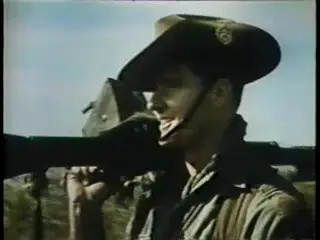
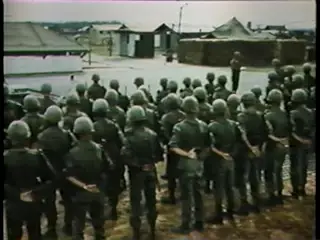
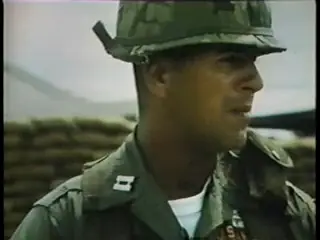
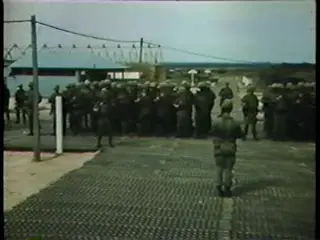
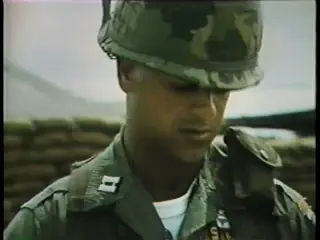
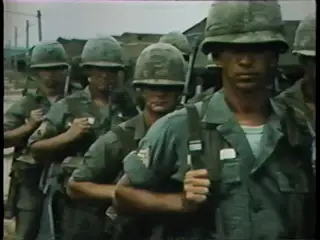
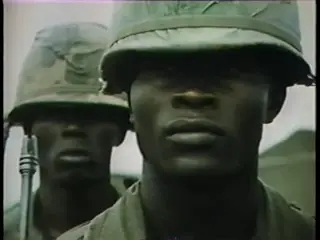
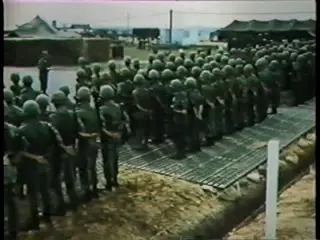
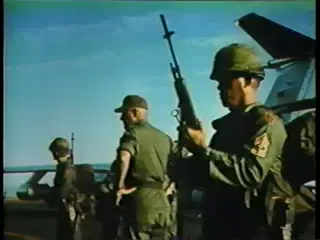
Model synopsis: Two soldiers in helmets are shown in close-up, one writing; a third soldier in a wide-brimmed hat aims a rifle; a formation of soldiers stands at attention in a camp. A voice mentions a letter from the commanding general to all personnel.
- Two soldiers sit together, one writing. [frame:1]
- A soldier aims a rifle. [frame:2]
- A formation of soldiers stands at attention in a camp. [frame:3]
5 people observed.
“Marvin?” 0:17 · “Australian or New Zealander.” 0:18
Evidence, details and a link to share
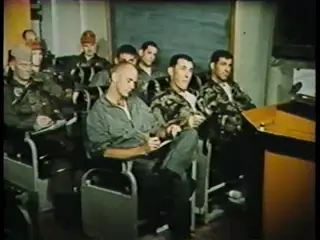
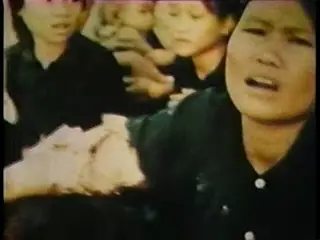
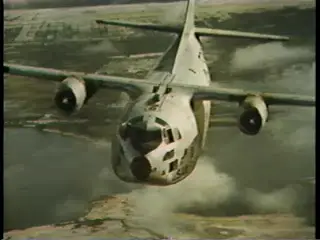
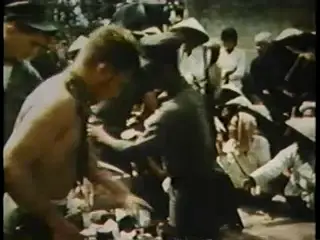
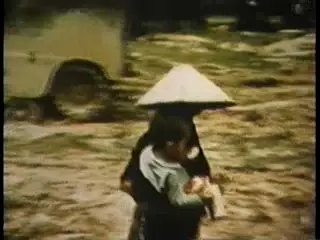
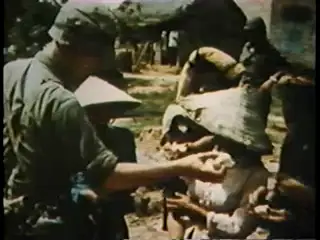
Model synopsis: The beat shows a classroom of soldiers listening, aerial views of a rural landscape, and close-ups of Vietnamese civilians, including a child and a woman. The voiceover explains that the Vietnam War is a battle for the hearts and minds of the people, contrasting it with past wars like Korea.
- Soldiers are seated in a classroom setting, listening. [frame:1]
- An aerial view shows a rural landscape with scattered structures. [frame:2]
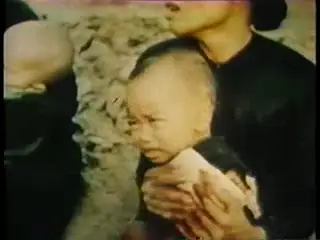
- A woman holds a child close to her chest. [frame:3]
- 1 more under Evidence and details.
7 people observed.
“in the villages.” 2:19 · “This is the battleground in Vietnam.” 2:21
Evidence, details and a link to share
 3:27
3:271 of 1 shots sampled
 4:33
4:331 of 1 shots sampled
 7:14
7:141 of 1 shots sampled
 7:19
7:191 of 1 shots sampled
 7:24
7:241 of 1 shots sampled
 7:28
7:281 of 1 shots sampled
 7:33
7:331 of 1 shots sampled
 8:09
8:091 of 1 shots sampled
 8:11
8:111 of 1 shots sampled
 10:02
10:021 of 1 shots sampled
 10:10
10:101 of 1 shots sampled
 10:17
10:171 of 1 shots sampled
 10:20
10:201 of 1 shots sampled
 10:22
10:221 of 1 shots sampled
 10:23
10:231 of 1 shots sampled
 10:26
10:261 of 1 shots sampled
 10:31
10:311 of 1 shots sampled
 11:31
11:311 of 1 shots sampled
 12:03
12:031 of 1 shots sampled
 12:08
12:081 of 1 shots sampled
 12:14
12:141 of 1 shots sampled
 12:20
12:201 of 1 shots sampled
 12:23
12:231 of 1 shots sampled
 16:28
16:281 of 1 shots sampled
 16:33
16:331 of 1 shots sampled
 17:23
17:231 of 1 shots sampled
 17:39
17:391 of 1 shots sampled
 17:47
17:471 of 1 shots sampled
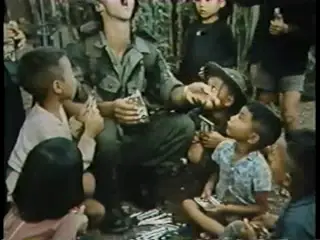 17:50
17:501 of 1 shots sampled
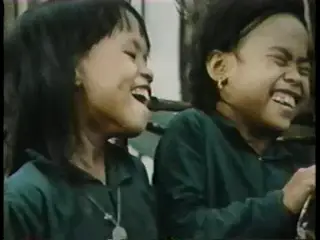 17:53
17:531 of 1 shots sampled
 17:56
17:561 of 1 shots sampled
 18:01
18:011 of 1 shots sampled
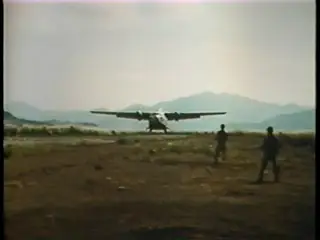 19:13
19:131 of 1 shots sampled
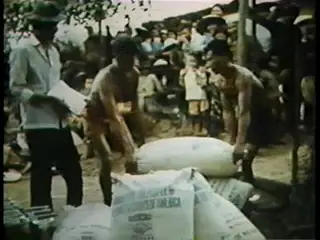 19:26
19:261 of 1 shots sampled
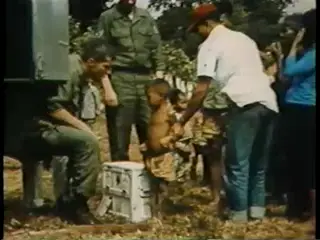 20:21
20:211 of 1 shots sampled
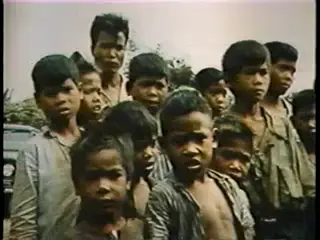 20:30
20:301 of 1 shots sampled
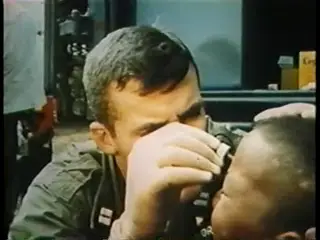 20:32
20:321 of 1 shots sampled
 21:01
21:011 of 1 shots sampled
 21:46
21:461 of 1 shots sampled
 24:02
24:021 of 1 shots sampled
Transcript
Machine transcription of the Archive copy's audio with Whisper large-v3-turbo (temperature 0); the model heard it as en. 322 segments kept, 65 dropped as the kind of hallucination the model produces over music and silence. Each timestamp links to the Archive's player at that second. This has not been checked against the film and can be wrong.
- 0:02 The war in Vietnam.
- 0:04 is a combined and joint effort
- 0:06 Whatever you are.
- 0:07 Soldier.
- 0:09 Sailor, Marine, or Airman, American,
- 0:14 Come on.
- 0:15 Korean.
- 0:17 Marvin?
- 0:18 Australian or New Zealander.
- 0:20 You already know this well. A message read to this unit illustrates the challenges faced and met by units of all services.
- 0:28 I have a letter addressed to all personnel of this command from the commanding general.
- 0:34 During our tour...
- 0:35 In the Republic of Vietnam, we have all seen what communism can do to a struggling nation in our world community.
- 0:43 It is therefore most important that we conduct our affairs with the people
- 0:47 of the republic of vietnam in a manner that will show the vietnamese citizen that we are his friends
- 0:53 and that we are here to assist him in the improvement as well as the security of his country.
- 0:59 It is then with great pride that I note the fine work done by the soldiers of this command...
- 1:05 During the recent operations,
- 1:07 It is with pleasure that I say...
- 1:09 A job well done.
302 more segments
- 1:11 These men have just emerged from many long days of combat, during which they faced and fought the Viet Cong.
- 1:18 drove him from areas which he had heretofore controlled.
- 1:22 opened roads for travel which he had dominated.
- 1:25 and thereby contributed
- 1:26 substantially to the turning of the tide.
- 1:28 in Vietnam.
- 1:30 Yet it is not for their military accomplishments alone.
- 1:34 Important though they are.
- 1:35 that they are commended by their commanders.
- 1:37 It is for other activities.
- 1:39 more subtle
- 1:41 less easy to grasp and define. Yet every bit as indispensable to the final decision in the war that is being fought in Vietnam today.
- 1:49 A war unique in the long history of armed conflict between men and nations.
- 2:03 This is the story of the fighting man and his unit in Vietnam. Defending against aggression, but more than that, this is the story of their special task.
- 2:14 helping to build a nation
- 2:16 at the grassroots level, among the people,
- 2:19 in the villages.
- 2:21 This is the battleground in Vietnam.
- 2:25 the varied and changing face of the land.
- 2:42 But this too is the battlefield. The villages and hamlets which dot the countryside.
- 2:48 the communities across the land where four-fifths of the people live.
- 2:52 And it is in this battlefield...
- 2:54 that the issue of victory or defeat
- 2:56 will ultimately be decided.
- 2:58 The reason is rooted in the special nature of the war that is being fought here. For this is a war whose objective is to win the hearts and the minds of the people. To understand why this is so,
- 3:09 It is necessary to contrast this war with those we have fought in the past.
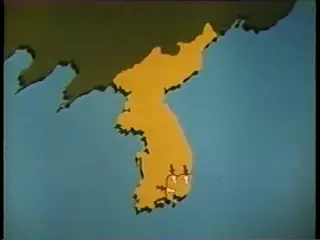
- 3:14 Take Korea, for example. As in all the wars before it, it had a battle on.
- 3:20 When the war was going against us,
- 3:22 The battle line pushed in on us.
- 3:29 When we were on the offensive,
- 3:30 The movement of the battle line described the progress of our victory in this normal kind of military situation.
- 3:37 The other side of that line was known to be enemy territory.
- 3:40 And tragic though it was, it was a fact to be accepted that cities and towns lying in areas controlled by the enemy
- 3:47 often had to suffer the cost of victory's advance.
- 3:56 But the war in Vietnam is different.
- 3:59 Although we do engage in conventional combat with well-organized North Vietnamese,
- 4:04 military units who support the Viet Cong guerrillas,
- 4:07 Our enemy here is active over most of the countryside.
- 4:10 and rarely is there a conventional battle line.
- 4:14 Our job here is to search him out wherever he hides however he travels and supplies his forces
- 4:20 to seek him along all the avenues through which he infiltrates the Republic of Vietnam, carrying the weapons of his aggression.
- 4:36 Amen.
- 4:37 Our job is to find him,
- 4:47 And then destroy him.
- 4:48 But because the enemy over here is fighting basically an unconventional war,
- 4:54 He does not rely on holding terrain, but...
- 4:57 More importantly,
- 4:58 the people.
- 4:59 The foundation of unconventional war rests on the need for their support.
- 5:05 In this kind of struggle, whoever has the people
- 5:08 wins the war.
- 5:10 So we must deny the enemy the popular support he has to have in order to survive. And more than that, we must enlist that popular support behind our own effort.
- 5:20 and behind the government of the Republic of Vietnam.
- 5:23 whose cars we represent to the people through whose villages we travel and fight.
- 5:29 So the issue turns on the people.
- 5:32 in their villages and hamlets.
- 5:34 And these become the ultimate battlefields of the war, as we and the enemy both endeavor to win their support.
- 5:41 As the war thus ebbs and flows through their lives and villages, the people themselves have little control over that constant movement.
- 5:48 Nor, ironically, is the grave issue of the war
- 5:53 the threat to freedom which communist aggression poses
- 5:56 Always clear to the people whose support will determine the ultimate decision.
- 6:00 Their lives are lived at the edge of fundamental experiences.
- 6:05 and it is the fundamentals with which they are concerned.
- 6:09 poverty
- 6:10 Hunger.
- 6:11 disease
- 6:12 and a deep yearning to live in peace without fear.
- 6:16 for they have known the trials of war now for many long years.
- 6:20 Their allegiance will go, inevitably, to the side which most clearly demonstrates a sympathetic interest
- 6:26 in those fundamental problems.
- 6:29 The winning of their support then.
- 6:31 will take other weapons beyond those in our arsenal of firepower.
- 6:35 It will take the intangible weapons of
- 6:37 compassion
- 6:39 and goodwill.
- 6:40 In the early phase of the war,
- 6:42 The Viet Cong proved themselves adept at using those weapons.
- 6:46 simply by persuading the people that they were their friends and protectors.
- 6:50 would help to bring them a better life.
- 6:52 The real objectives of communism were always underplayed.
- 6:56 or obscured entirely.
- 6:57 They're still doing that as much as they can.
- 7:00 But one factor has changed the direction of the war significantly.
- 7:03 The big buildup of American forces.
- 7:41 With the buildup.
- 7:42 The Viet Cong's hold on the countryside started to loosen.
- 7:46 And as that has happened,
- 7:48 the enemy has turned more and more to the use of terror and murder as a way of maintaining his grip on the people.
- 7:54 hoping to intimidate them into support
- 7:56 as the voluntary support weakens.
- 8:00 It has been his greatest mistake.
- 8:02 For although it can have immediate effect,
- 8:05 This long-term result can only work against him.
- 8:17 The enemy's mistakes, of course, work to our advantage.
- 8:20 But there is an obvious and urgent lesson.
- 8:22 We must never duplicate those mistakes.
- 8:25 Not to be sure.
- 8:26 that there is any danger about ever using terrorism as a weapon.
- 8:31 But to the people in the villages,
- 8:33 There might well be little difference between the calculated cruelty of communist forces
- 8:38 and fire which rains on them and their families from an American rifle.
- 8:42 or an American plane.
- 8:43 These special demands of this special war place a particular responsibility on every American overhead.
- 8:51 Commanders at all levels are obliged to consider the psychological
- 8:55 as well as the military objectives of each operation.
- 8:59 And because the circumstances call for an exercise of restraint beyond that normally
- 9:03 on the battlefield.
- 9:06 They must strike a balance between the force essential to accomplish their mission
- 9:10 and the necessity of inflicting
- 9:12 as few casualties as possible on the civilian population.
- 9:16 This does not mean
- 9:18 that the rules of safety and security can or should ever be relaxed.
- 9:22 Every commander must always be able to accomplish his mission
- 9:25 with the least lost to his own troops.
- 9:28 and the fewest possible restrictions on his planning
- 9:31 and his freedom to fire and maneuver.
- 9:36 Nor does it mean that men going into battle should ever place their own lives
- 9:40 or those of their buddies in jeopardy through excessive caution.
- 9:44 Every man must take with him into combat a certain knowledge that he has the inherent right always to defend himself against hostile action.
- 9:51 wherever
- 9:52 and whenever it is.
- 10:35 But this special responsibility does mean that firepower of all kinds
- 10:40 as to be employed with care taken in so far as humanly possible.
- 10:44 to avoid unnecessary damage to the lives and property of the civilian population.
- 10:48 For the blunt truth is,
- 10:51 that death or injury to helpless civilians
- 10:54 even when it is unavoidable.
- 10:56 works against us.
- 10:57 This knowledge is simply one of the conditions of war which we must accept and work with as best we can.
- 11:03 This special responsibility extends all the way along the chain of command, on every level and in every service.
- 11:16 And it very specifically includes the man on the ground.
- 11:19 must face his personal responsibility through the sights of his
- 11:23 personal weapon.
- 11:33 Well, this man's job carries him into...
- 11:35 the very heart of this unique battlefield.
- 11:41 Precautions to eliminate needless casualties.
- 11:45 Should be taken whenever possible.
- 11:48 One example of how this can effectively be accomplished
- 11:51 is the Air Force's practice of carefully marking targets so they can be hit with pinpoint accuracy.
- 11:56 I'm going to go.
- 12:11 Another is the dropping of leaflets to warn civilians of the military vulnerability of their area.
- 12:16 or of impending airstrikes.
- 12:24 And still another?
- 12:25 is the use of broadcasts.
- 12:27 to warn villagers of ground operations.
- 12:30 All such warnings, of course, must always be made with due regard given to the security and success of the mission.
- 12:39 Yes, that's right, right?
- 12:41 It's a bad guy.
- 12:42 Yes, in the waiting room, please stay in the house and there will be a message for the community.
- 12:50 Just, thông cáo.
- 12:52 The villages have to be entered.
- 12:54 They have to be searched and made safe.
- 12:56 This remains an inescapable duty of war.
- 12:59 but with careful plans made and executed.
- 13:02 with every precaution taken that can be within the bounds of safety.
- 13:05 and with every man aware of his own increased responsibility
- 13:09 It can be done.
- 13:10 with the least possible damage and danger.
- 13:13 Come on.
- 13:29 I'm
- 13:31 Operations planned in coordination with the country's province or district chiefs
- 13:36 helps smooth the path the rest of the way.
- 13:39 For they can explain better than anyone else, at least in the beginning.
- 13:43 that the Americans are here as friends.
- 13:46 We will come here to help our friends.
- 13:50 Um...
- 13:52 I'm going to try.
- 13:53 I think it's worth it.
- 13:57 As friends.
- 14:00 That's how we come to the villages of Vietnam. How we must come.
- 14:04 if we're going to win this war.
- 14:06 Now, I'll pack you up.
- 14:07 I'm going to go.
- 14:08 I'm going to go to the house.
- 14:09 Friendship is one of the most basic gifts a man can offer. It is built on the desire really to know people.
- 14:17 Look around you and look deeply to understand what Vietnam and its people are like.
- 14:22 Vietnam is an old country with a recorded history that goes back more than 2,000 years.
- 14:29 its traditions,
- 14:31 and its customs are ancient and deeply cherished.
- 14:39 The Vietnamese himself, humble peasant though he may be, is the inheritor of this old tradition.
- 14:47 And anyone who would claim his friendship must understand that about him.
- 14:53 He must know and respect the fact that he looks on the world in a very set way.
- 14:58 defined and shaped by long tradition.
- 15:02 It is a world that lies always close to the soil and the elements.
- 15:09 His village is more than his home.
- 15:11 It is his universe.
- 15:13 and he seldom if ever leaves it.
- 15:15 The values which shape his code of behavior
- 15:18 are his most precious possessions, and they are honored ones. Dignity,
- 15:23 self-control,
- 15:25 Respect for elders.
- 15:26 His family is all important to him. All his family. Not only those immediately close to him, but distant relatives as well.
- 15:36 those living,
- 15:37 Those dead...
- 15:39 and those in generations yet to come
- 15:41 Regard for the family is the center of his religion.
- 15:46 Although many villages in Vietnam like this one are Christian, the majority are Buddhist.
- 15:51 Whichever it is.
- 15:53 The place of worship in the village is the focal point of community life.
- 15:58 Knowing these things about the Vietnamese people
- 16:01 and understanding the importance they have in their lives, will help in establishing the friendship that is so crucial to our mission.
- 16:09 since knowledge is the foundation of friendship.
- 16:38 But beyond endeavoring to know and understand the Vietnamese,
- 16:42 There is much more we can do.
- 16:47 You ready?
- 16:48 One again, okay?
- 16:49 One, two, three.
- 16:50 What?
- 16:51 - Two. - Jump. - Three. - Six.
- 16:55 - Four. - Four. - Airborne! - Airborne! - Airborne!
- 17:02 Airpods!
- 17:03 The ease with which the American fighting man establishes rapport with the children
- 17:08 in the lands through which he travels.
- 17:11 is an enduring part of his legend.
- 17:14 There is no mystery about it. For the hungry language of childhood is universal.
- 17:19 and men at war have known for generations that candy and chewing gum bring smiles
- 17:24 and warm the hearts of children in any land.
- 17:33 But there is more to this legend than candy.
- 17:35 and color.
- 17:37 And every man knows it who has watched happiness brighten the eyes of a child as the result of his own effort.
- 17:52 - Okay.
- 18:03 It does not always happen quickly. Even a child's friendship is sometimes slow to come. And how much more true this is
- 18:14 of people who have known bitterly only the brutality of war.
- 18:18 and warriors.
- 18:19 and who can escape only behind thick walls of silence and suspicion.
- 18:23 Their friendship is not obtained easily, but with patience and
- 18:27 and effort.
- 18:28 It can be won.
- 18:30 A civic action plan supports every military operation.
- 18:35 Not because we believe that friendship has a price which we can pay with giveaways and handouts.
- 18:41 But because...
- 18:42 We thus have the opportunity to show in a definite, tangible way
- 18:46 that our interests really lie with the people
- 18:48 and their problems.
- 18:49 I'm sorry.
- 19:19 And...
- 19:21 food and sometimes clothing supplied by the various aid agents.
- 19:25 are often as important to take on combat operations
- 19:28 as any other kind of cargo.
- 19:31 They are not lightly given.
- 19:33 nor are they lightly received.
- 19:36 to people who live always on the edge of want, whose days blend into a continuing challenge to rest enough from the earth to still their children's hunger.
- 19:45 Such gifts are deeply important.
- 19:47 and the gesture of giving becomes deeply
- 19:50 meaningful.
- 19:52 I'm sorry.
- 19:59 to people whose lives are shadowed and haunted by disease, who must suffer pain and illness because no help for suffering is available to them.
- 20:07 whose health and well-being are doomed to the harsh conditions of a harsh life.
- 20:12 to such a people
- 20:14 the attentions of a military medical team
- 20:16 Our powerful system.
- 20:18 of a desire for friendship.
- 20:20 I'm not sure what you're doing.
- 20:40 Even soap in a community which has none
- 20:46 and therefore is vulnerable to the ravages that such a simple item can prevent.
- 20:50 becomes a weapon with almost magic powers.
- 21:08 Every military unit has the capability of helping to improve a community in some way
- 21:13 Simple construction materials.
- 21:16 And a little...
- 21:17 and a few hours' work.
- 21:18 can pay rich and lasting dividends.
- 21:22 particularly work done side by side with the people themselves.
- 21:27 for the Vietnamese people are both proud and industrious.
- 21:31 They welcome our assistance.
- 21:33 And together we can accomplish much.
- 21:36 A new community meeting center.
- 21:49 A place for the children to go to school.
- 21:53 A new face for the house of worship.
- 21:55 A well, a bridge.
- 21:59 These can work for us with wonderful effect.
- 22:04 helping the people to gather in their precious rice crop and protect it from the Viet Cong, as these Marines are doing.
- 22:11 can be as important as any military engagement.
- 22:14 For all this is evidence which will stand as lasting reminders
- 22:18 that the Americans who came this way
- 22:20 as allies of their government.
- 22:22 came as friends
- 22:31 establishing friendships in the villages of Vietnam.
- 22:34 can also produce tangible results.
- 22:37 Intelligence information, for instance.
- 22:40 which could save your life.
- 22:41 The war we wage in Vietnam today is slow
- 22:45 And hard.
- 22:46 I'm grinding.
- 22:48 From the storehouse of our nation's power, we are bringing to it the might with which we can eventually destroy the enemy's strength.
- 22:57 From reservoirs of compassion and generosity, we bring a spirit and a demonstration of friendship.
- 23:05 And these two become weapons.
- 23:06 - I wish.
- 23:07 as powerful as any other in this war.
- 23:10 which is a contest for the hearts
- 23:12 and the minds of the people of Vietnam.
- 23:15 They are weapons that will touch and stir the hopes of those through whose villages we travel.
- 23:20 And when we pass on, we'll leave it at positive, warm feelings behind.
- 23:25 A demonstration of the people's new appreciation for us in any one village.
- 23:30 cannot perhaps be taken too seriously.
- 23:33 It may not mean that the village has been secured forever.
- 23:37 The war is not that simple.
- 23:39 But we must not falter.
- 23:41 We must continue until the enemy is convinced his aggression will not pay.
- 23:47 and hand in hand with the fighting in Vietnam.
- 23:50 We must press ahead with the crucial task of helping to build a nation.
- 23:54 all the way to the heart
- 23:55 and soul of the smallest hamlet.
Similar frames
By the average clip vector of the keyframes; a measurement, not a judgement



 The General
  The Snows of Kilimanjaro
  War's End