Village
Machine annotation by Qwen/Qwen3-VL-235B-A22B-Instruct, cut beats-0.2, prompt beats-0.2. Machine checks passed (partial). 4 quotes checked against the transcript; 2 names checked for a spoken or on-screen source; 0 of 4 visible events checked against a frame. Not human-reviewed. Observations and transcript may still be wrong.
Play from 8:12 on the Internet Archive This passage on the film's page
Evidence and details
Starts here: pause in speech. Sequence 13 · shots 68–72. Observations cite a frame (frame:n) or a time (t:m:ss); frames are the sampled ones above.
- Place
- village (other, exterior) evidence: frame:1, frame:2, frame:3, frame:4
- Time of day
- night evidence: frame:1
- People
- unidentifiable figure behind bars, wearing light-colored shirt visible
- bodies on ground, clothing indistinct visible
- Seen happening
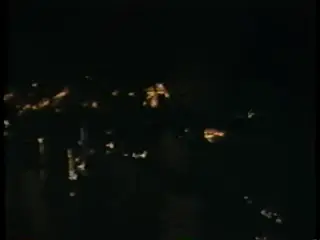
- Village is shown at night with scattered lights and burning structures. [frame:1]
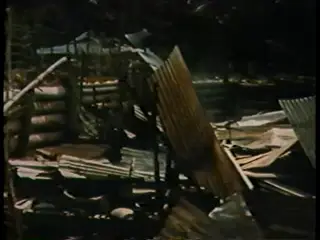
- Ruined wooden structures and debris are visible in a village setting. [frame:2]
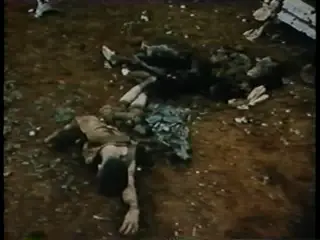
- Multiple bodies lie on the ground in a dirt area. [frame:3]
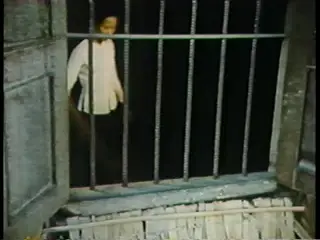
- A person stands behind metal bars in a doorway. [frame:4]
- Also said
- “There might well be little difference between the calculated cruelty of communist forces and fire which rains on them and their families from an American rifle.” 8:38 · “These special demands of this special war place a particular responsibility on every American overhead.” 8:43
- Seen
- burning structures [frame:1], wooden debris and ruined buildings [frame:2], bodies on ground [frame:3], metal bars and doorway [frame:4]
- Interpretation
- Model opinion, not evidence: mood: somber and cautionary; themes: moral ambiguity in warfare, civilian suffering, responsibility of military power; style notes: dark, grainy night shots; static framing; emphasis on destruction and human cost
The beat shows nighttime scenes of a village under attack, including burning structures, bodies on the ground, and a person behind bars, while the voiceover warns against duplicating enemy mistakes and using terrorism as a weapon. The transcript emphasizes the moral responsibility of American forces in a war where civilian suffering blurs the distinction between enemy and allied violence.
“The enemy's mistakes, of course, work to our advantage.” 8:17 · “We must never duplicate those mistakes.” 8:22 automatic transcript, may be wrong
The record
US Government work The record names a federal body as the creating agency. A work prepared by an officer or employee of the United States Government as part of that person's official duties has no US copyright (17 U.S.C. 105; before 1978, section 8 of the 1909 Act). This says nothing about copyright outside the United States, or about music, stock footage or other material the film may incorporate. Evidence dossier. The finding concerns the US copyright record for the film; it is not clearance for any use, and this page's annotation is machine output.
Share
Paste the permalink anywhere that shows link previews and it carries the frame, the time and the finding. The card image can be saved and used with a credit.

- Permalink
- always the current cut
- Permalink to this version
- warns if the beats are recut later
- Card image
- https://publicreel.org/cards/moment/gov.ntis.ava17237vnb1/b23.png
- Figure for a newsletter or page
- Cite