The story of Hoover Dam
US Government work A work of the United States Government, which US copyright does not cover (17 U.S.C. 105). Record.
How this page was made
231 shots over 27:37, read from the Internet Archive copy gov.archives.arc.37058 (gov.archives.arc.37058_512kb.mp4, 320×240, 29.97 fps). Shot boundaries by PySceneDetect's adaptive detector; each frame links to the Archive's player at that second. Government-works dossier: The story of Hoover Dam US Government work. JSON
Measurements: colour film on its keyframes (231 of 231 shots judged colour), average shot 7.2s long, a frontal face detected in 3% of keyframes. Shots are detected automatically and each is represented by its midpoint frame.
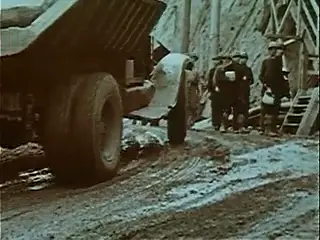
66 beats in 33 sequences, cut automatically at shot boundaries scored on picture change, pauses in speech, topic shifts, on-screen text and cutting rhythm (each beat says why it starts where it does). Each is annotated by a vision-language model from four sampled frames and the transcript lines in it, as observations with evidence; anything the frames and lines do not support is left null. Machine annotation (Qwen/Qwen3-VL-235B-A22B-Instruct), checked automatically: quotes must be verbatim, names must be spoken, "visible" events are sampled to a second model. 66 of 66 beats annotated, 64 passed the checks, 2 flagged.
Beats
Passages cut at shot boundaries and annotated by a machine from four sampled frames and the transcript lines in them. Each beat says why it starts where it does and what was checked; sequences are visual groups, not scenes.
 0:06
0:061 of 1 shots sampled
 0:28
0:281 of 1 shots sampled
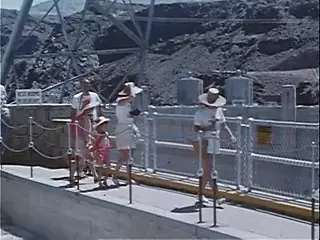
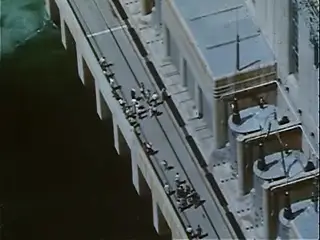
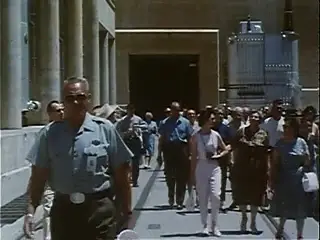
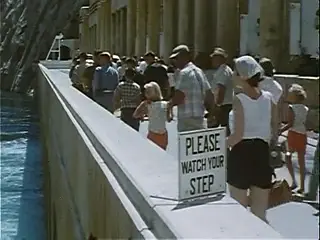
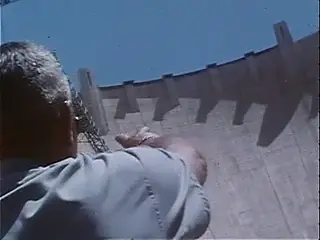
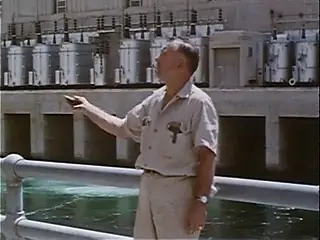
Model synopsis: A group of tourists is on a guided tour at Hoover Dam, standing on a ramp 560 feet below the dam's top, with a guide speaking about the location. The setting is Black Canyon, at the border of Nevada and Arizona, under bright daylight.
- Tourists walk along a concrete ramp next to the dam structure. [frame:1]
- Tourists look upward at the dam wall, some pointing or shielding eyes from sun. [frame:4]
2 people observed.
“Ladies and gentlemen...” 1:26 · “We're now standing on the powerhouse ramp” 1:27
Flagged: time_of_day without evidence (day)
Evidence, details and a link to share
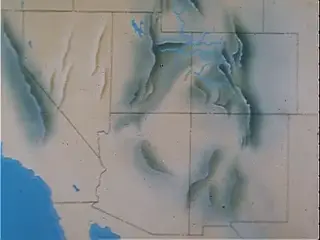
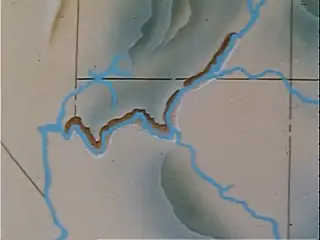
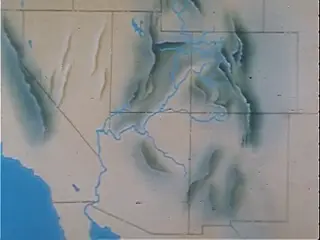
Model synopsis: A group of people observes a dam site while a narrator describes the Colorado River's history and the human effort to control it. Maps illustrate the river's course and the surrounding geography.
- A man holds a megaphone while addressing a group of people at a dam site. [frame:1]
- A map shows the Colorado River basin and surrounding states. [frame:2]
- A close-up map highlights the course of the Colorado River through a canyon. [frame:3]
- 1 more under Evidence and details.
3 people observed.
“Here is where man conquered this mighty river.” 1:41 · “placing a concrete yoke about his neck.” 1:44
Evidence, details and a link to share
 3:31
3:311 of 1 shots sampled
 5:40
5:401 of 1 shots sampled
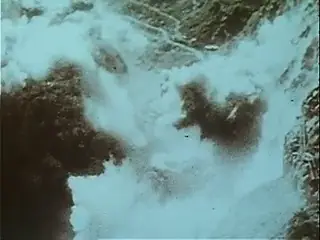
Model synopsis: A single frame shows a shadowy figure on a textured surface near a window and a wheel-like object. No people are named, no dialogue is present, and the time of day or period is not established.
Evidence, details and a link to share
 5:55
5:551 of 1 shots sampled
 6:28
6:281 of 1 shots sampled
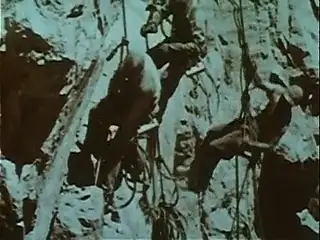
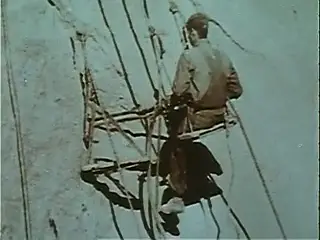
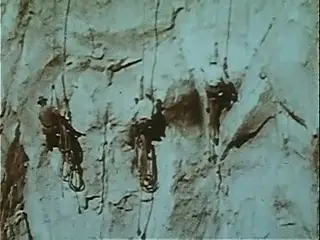
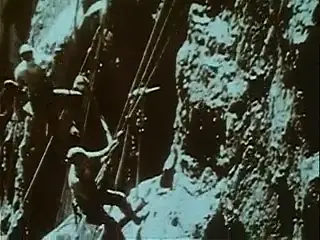
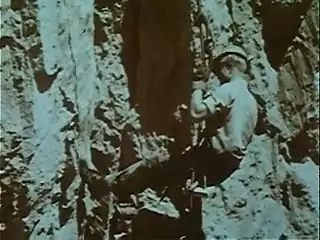
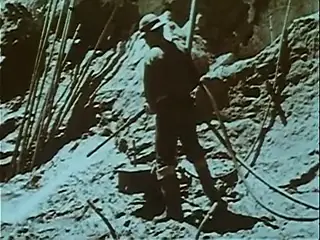
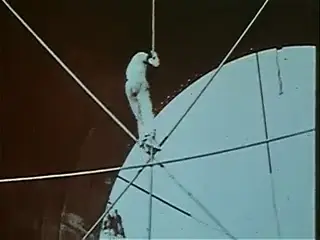
Model synopsis: Two figures are climbing a rocky cliff using ropes. The scene is shot in a grainy, low-resolution style with muted colors.
- two climbers ascend a rocky cliff using ropes [frame:1]
2 people observed.
Evidence, details and a link to share
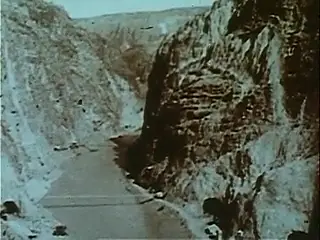
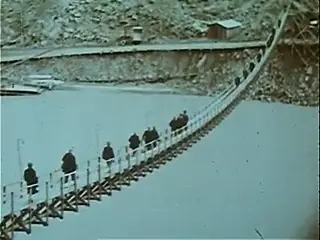
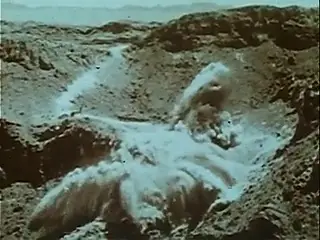
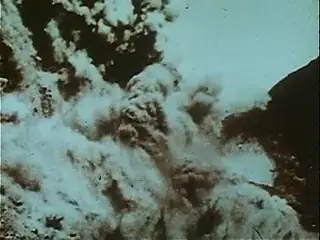
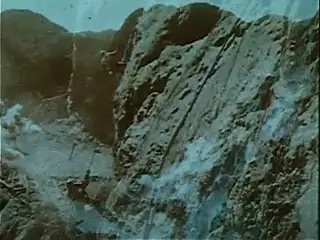
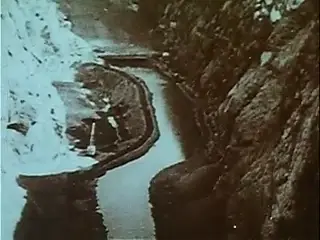
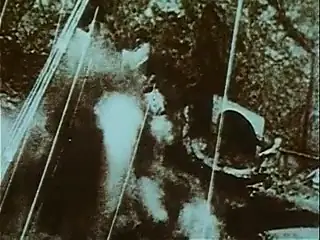
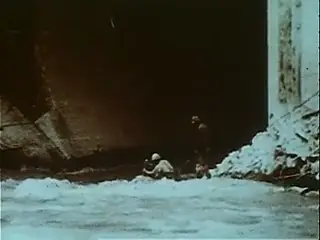
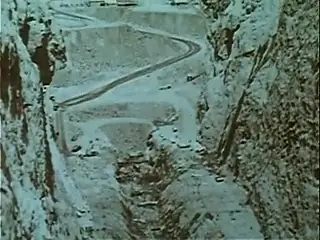
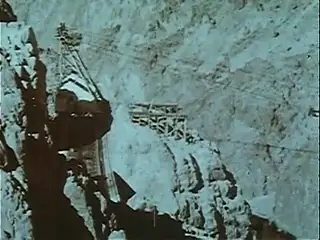
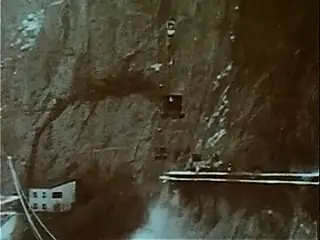
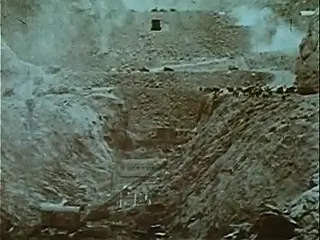
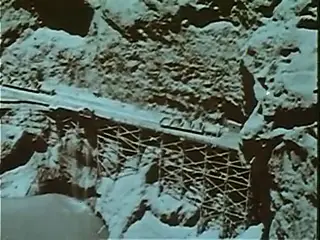
Model synopsis: A person is shown on a rocky cliff face, followed by aerial views of a river diverted through a canyon and a construction site with smoke, ending with figures near rushing water under a structure. The transcript mentions the Colorado River being diverted under control for the first time in November 1932.
- A person is seen on a rocky cliff face. [frame:1]
- An aerial view shows a river diverted through a canyon. [frame:2]
- Smoke rises from a construction site viewed from above. [frame:3]
- 1 more under Evidence and details.
2 people observed.
“Oh, my God.” 6:32 · “In November 1932,” 6:35
Evidence, details and a link to share
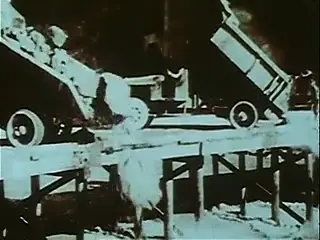
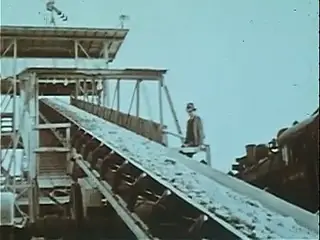
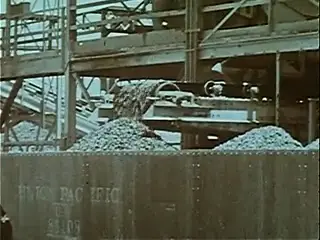
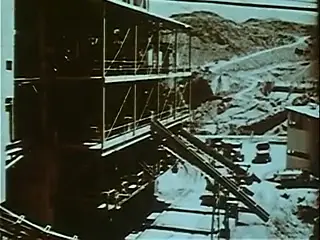
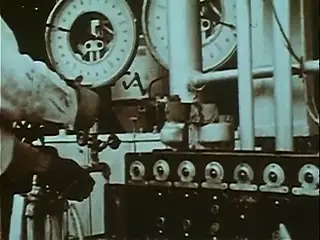
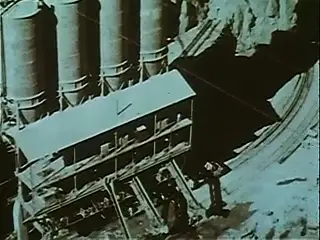
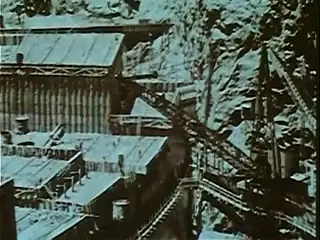
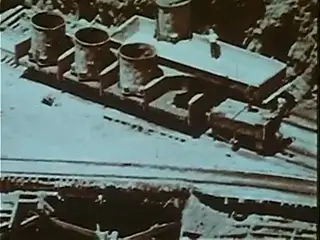
Model synopsis: The segment shows industrial machinery processing aggregate and mixing materials for concrete at a dam construction site, with narration describing the flow to mixing plants and the blending of sand, gravel, and cement. No people are clearly visible or named, and the setting is an outdoor industrial facility with heavy equipment.
- Aggregate is dumped from a railcar onto a pile. [frame:1]
- A large industrial structure with conveyors and a canyon in the background is shown. [frame:2]
- A close-up of machinery with moving parts and structural beams is shown. [frame:3]
- 1 more under Evidence and details.
“This processed aggregate moved as called for in a steady flow over the railroad” 8:28 · “to two mixing plants” 8:33
Evidence, details and a link to share
 8:53
8:531 of 1 shots sampled
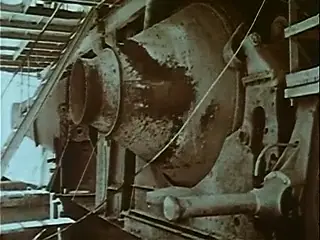
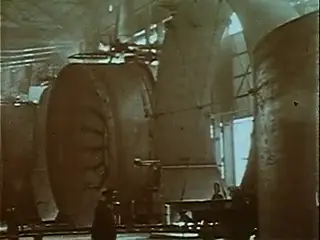
Model synopsis: A close-up of a large, rusted industrial machine with visible gears and pipes, shown in a single frame. No people or spoken dialogue are present in this beat.
Evidence, details and a link to share
 8:55
8:551 of 1 shots sampled
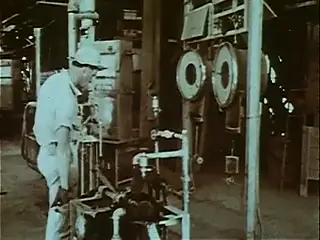
Model synopsis: A man in white overalls stands beside industrial machinery in a dimly lit interior space. No dialogue or on-screen text is present in this beat.
1 person observed.
Evidence, details and a link to share
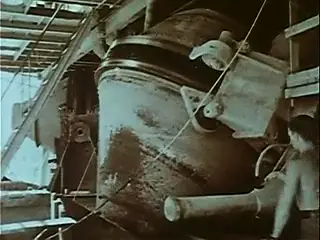 8:57
8:571 of 1 shots sampled
Model synopsis: A large industrial machine is shown in an interior setting with a person partially visible beside it. No dialogue or on-screen text is present in this beat.
1 person observed.
Evidence, details and a link to share
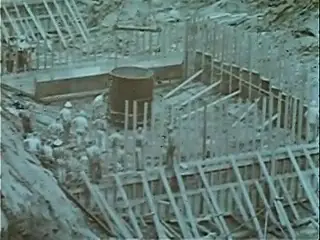
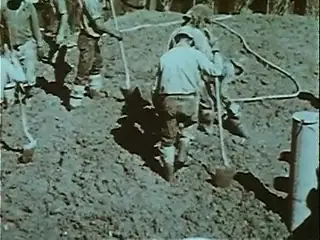
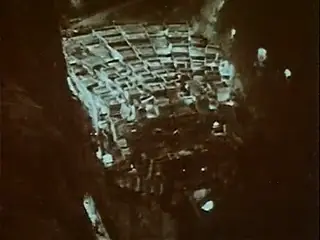
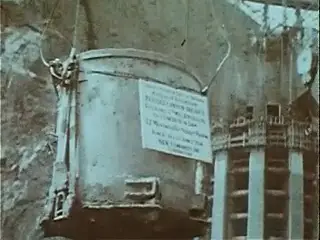
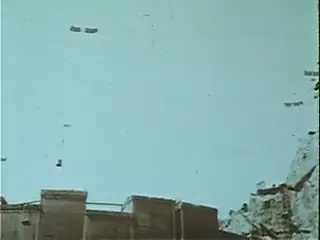
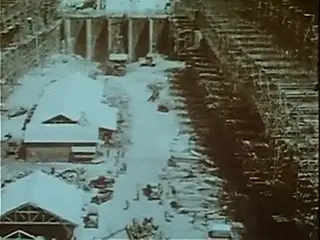
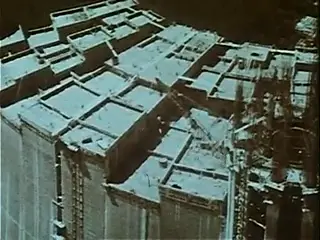
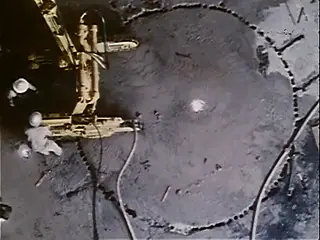
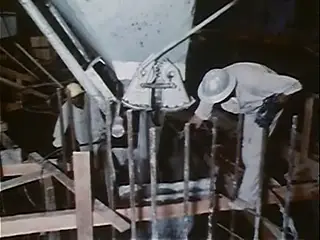
Model synopsis: Workers are shown at a construction site handling concrete, with aerial and close-up shots of equipment and labor. The narration states that crews worked continuously through all seasons and conditions, and notes that one year had passed since the first concrete pour by June 1934.
- Workers are seen shoveling and handling wet concrete on the ground. [frame:1]
- A hose and bucket are visible on the ground, part of the concrete delivery system. [frame:2]
- An aerial view shows a large, grid-like structure being built with many workers present. [frame:3]
- 1 more under Evidence and details.
1 person observed.
“The crews vibrated and compacted the fresh pores” 10:08 · “while buckets returned again and again to the mixing plants.” 10:12
Evidence, details and a link to share
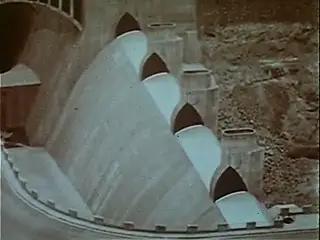
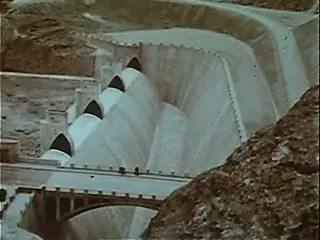
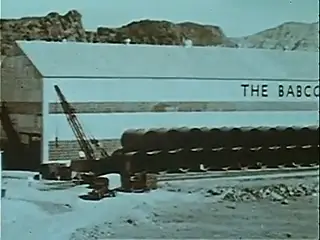
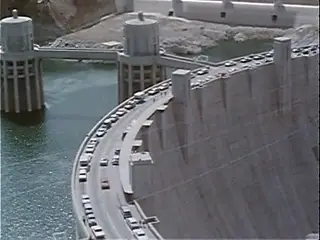
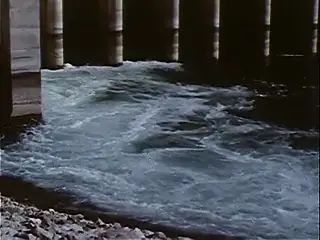
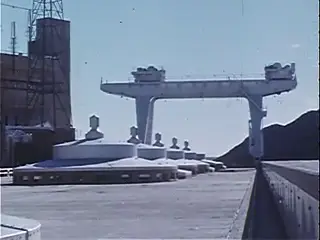
Model synopsis: The beat shows exterior shots of Hoover Dam's spillway and penstock system, including large pipes and construction activity. A narrator describes the engineering specifications of the dam's components, such as drum gates and steel pipes, and mentions logistical challenges in transporting them.
- Water flows through spillway tunnels at Hoover Dam. [frame:1]
- Wide view of dam structure with spillway gates and bridge. [frame:2]
- Large steel pipes stored near a building labeled 'THE BABCO'. [frame:3]
- 1 more under Evidence and details.
“plunges downward through the spillway tunnels.” 11:46 · “100 foot long drum gates on the spillway's crests” 11:51
Evidence, details and a link to share
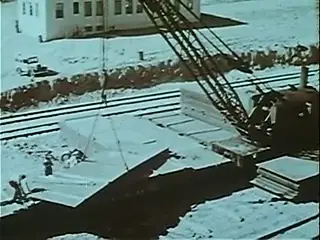
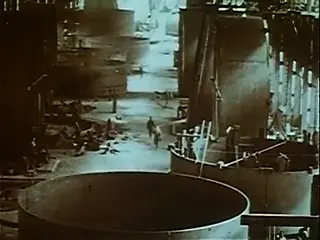
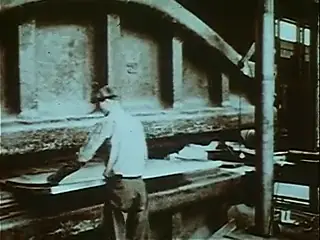
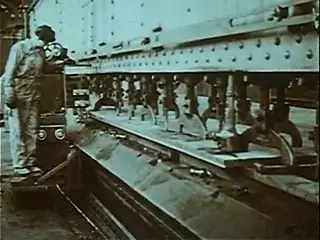
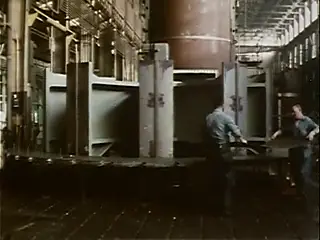
Model synopsis: The beat shows industrial scenes of large steel pipe sections being fabricated and handled at a construction site near a dam, with workers and machinery visible. The transcript explains the pipes were made for the Hoover Dam project and required special equipment.
- A crane lifts a large steel pipe section at an outdoor fabrication site. [frame:1]
- Workers move around large pipe sections inside a factory building. [frame:2]
- A man in a hat works on a pipe section on a workbench. [frame:3]
- 1 more under Evidence and details.
2 people observed.
“was brought from Eastern Rolling Mills.” 12:25 · “a steel fabrication plant” 12:27
Evidence, details and a link to share
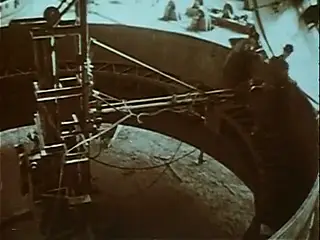
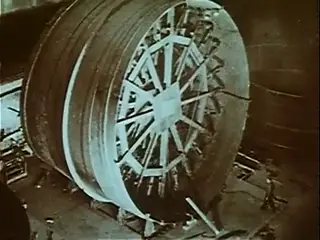
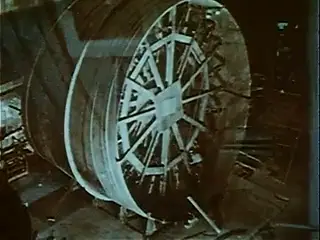
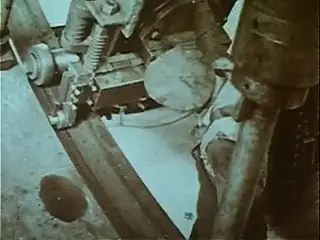
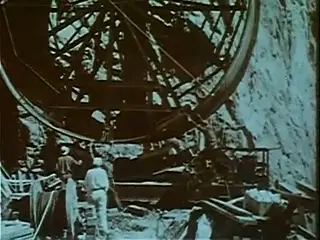
Model synopsis: A large metal ring is shown being machined on a vertical lathe; the transcript describes joining sections to form penstocks weighing 150 to 184 tons. No people are visible or named, and the location is an industrial workshop.
- A large metal ring is positioned on a machine. [frame:1]
- The ring remains on the machine, viewed from a different angle. [frame:2]
- A close-up shows a cutting tool machining the edge of the ring. [frame:3]
“two of these rings joined” 13:16 · “weighing 150 to 184 tons.” 13:19
Evidence, details and a link to share
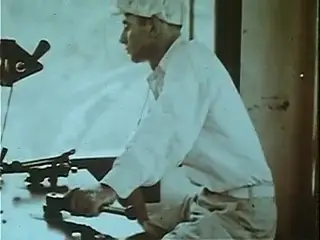 14:10
14:101 of 1 shots sampled
Model synopsis: A man in a white shirt and cap sits at a table, handling a mechanical device. The setting appears to be an indoor workspace with plain walls and a window.
- man sits at table and manipulates a mechanical device [frame:1]
1 person observed.
Evidence, details and a link to share
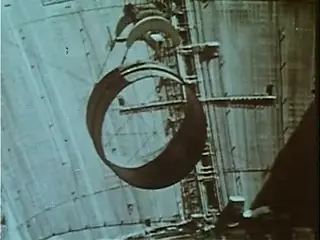 14:12
14:121 of 1 shots sampled
Model synopsis: A close-up shot shows a large, dark, circular metal object mounted on a metallic structure. The surrounding surface is textured and appears industrial, with no people or text visible.
Evidence, details and a link to share
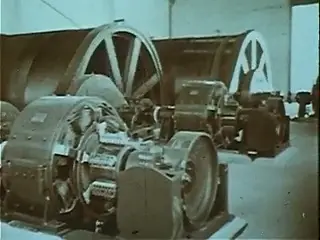 14:14
14:141 of 1 shots sampled
Model synopsis: A large industrial machine with exposed gears and wheels is shown in a warehouse-like space. No people or spoken dialogue are visible or audible in this beat.
Evidence, details and a link to share
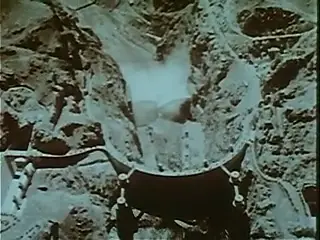
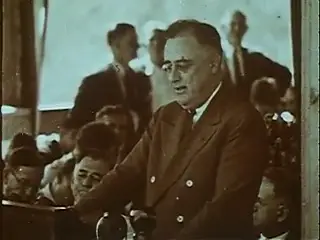
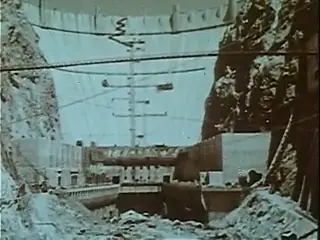
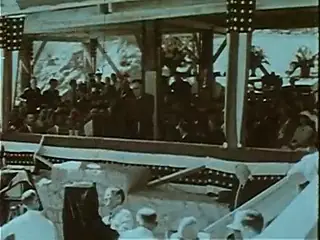
Model synopsis: The Hoover Dam is shown under construction, followed by a public dedication ceremony where President Franklin Delano Roosevelt speaks. The transcript states the dam was completed ahead of schedule and dedicated on September 30, 1935.
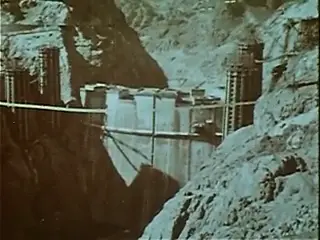
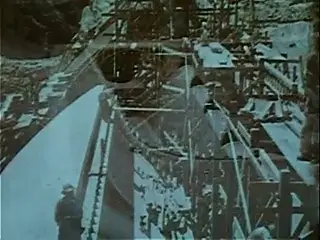
- The Hoover Dam is shown under construction with scaffolding and rock faces. [frame:1]
- A crowd is seated on a decorated platform overlooking the dam site. [frame:2]
- Franklin Delano Roosevelt stands at a podium speaking to the crowd. [frame:3]
Named: Franklin Delano Roosevelt (t:15:24). 2 people observed.
“this modern civil engineering wonder stood completed” 15:12 · “two and one half years” 15:16
Evidence, details and a link to share
 15:45
15:451 of 1 shots sampled
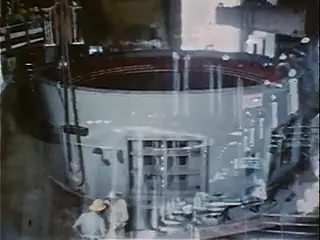
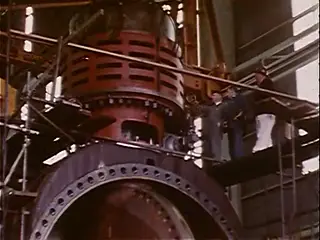
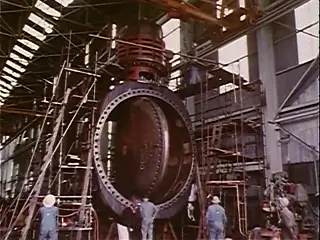
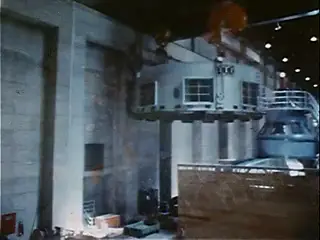
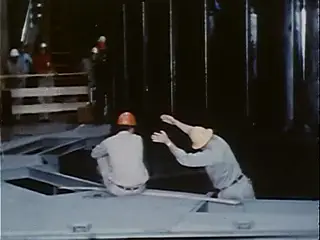
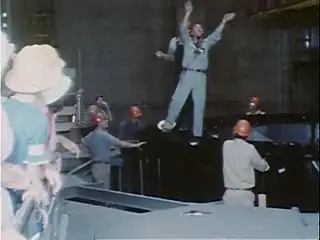
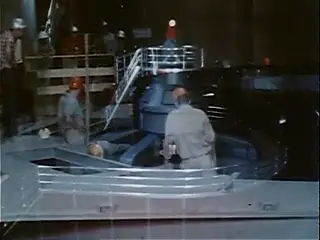
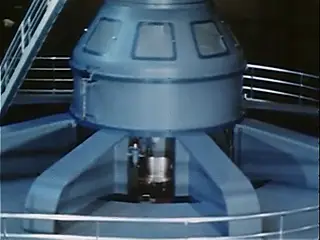
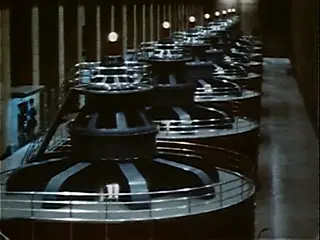
Model synopsis: The beat shows workers assembling a massive turbine and butterfly valve inside a power plant, with narration describing the generator's specifications and water control mechanism. No names are spoken, and the setting is industrial machinery within a large hall.
- Workers stand near a large turbine assembly in a factory hall. [frame:1]
- Men on scaffolding inspect or work on the upper section of the turbine. [frame:2]
- Workers gather around a massive butterfly valve being installed. [frame:3]
3 people observed.
“It is a 95,000 kilowatt” 17:09 · “60 cycle” 17:12
Evidence, details and a link to share
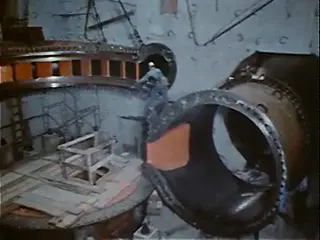
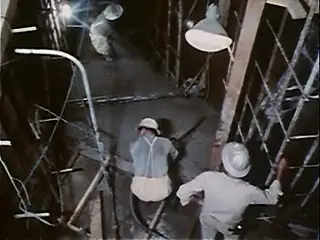
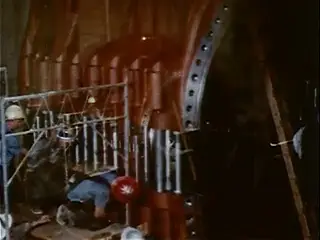
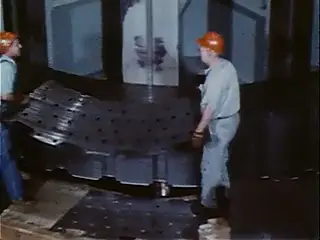
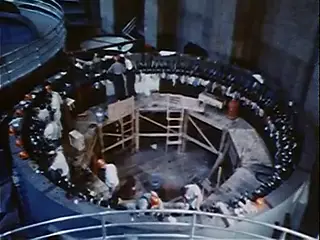
Model synopsis: Workers in hard hats assemble large turbine and generator components inside an industrial facility. The transcript describes installing a water wheel, butterfly valve, and stacking steel laminations for rotor and stator parts.
- Workers walk through a scaffolded industrial space with large pipes and machinery. [frame:1]
- Workers assemble large curved metal components near a turbine scroll case. [frame:2]
- Two workers stand beside a large circular metal component with bolt holes. [frame:3]
5 people observed.
“Later, the turbine's water wheel” 19:06 · “The butterfly valve was assembled on the generator floor” 19:15
Evidence, details and a link to share
 21:31
21:311 of 1 shots sampled
 22:21
22:211 of 1 shots sampled
 22:39
22:391 of 1 shots sampled
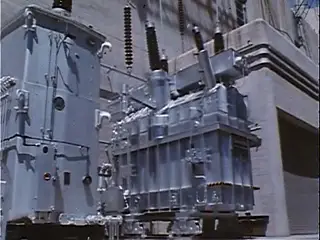
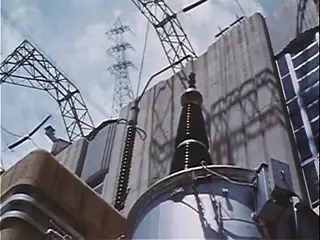
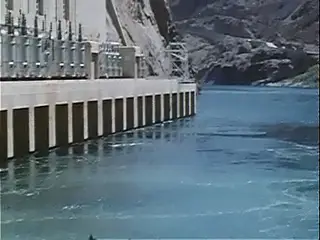
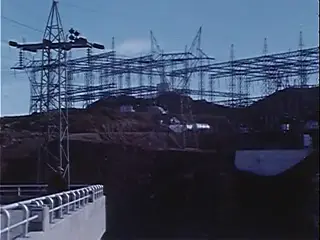
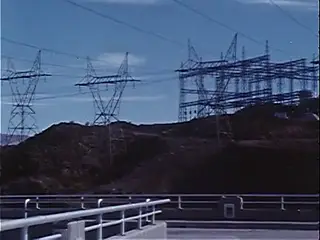
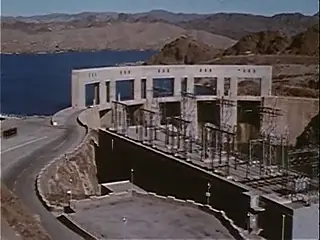
Model synopsis: The segment shows infrastructure related to the Colorado River, including a dam structure, transmission towers, and an irrigation canal, while the voiceover describes the interconnected power system and its use for agriculture. No people are visible or named, and the setting is industrial and rural.
- A large dam structure with generators is shown. [frame:1]
- Transmission towers and power infrastructure are visible on a hillside. [frame:2]
- More transmission towers and power lines are shown against a blue sky. [frame:3]
- 1 more under Evidence and details.
“Davis Dam generators interconnect with those at Hoover Dam upstream” 23:32 · “and those at Parker Dam downstream.” 23:36
Evidence, details and a link to share
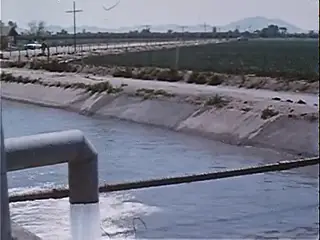
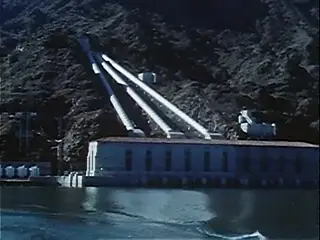
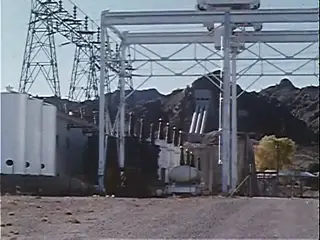
Model synopsis: The beat shows exterior shots of Parker Dam and associated infrastructure, including power lines and a forebay, while the voiceover describes it as one of America's modern civil engineering wonders and mentions electrical energy from Parker and Hoover power plants. No people are visible or named, and the setting is a desert landscape with mountains and water.
- Parker Dam is shown with a road and water in front of it. [frame:1]
- A building with large pipes extending up a hillside is shown. [frame:2]
- A power substation with transmission towers and a dirt road is shown. [frame:3]
“Parker Dam provides a forebay for the District's Colorado River Aqueduct.” 24:05 · “Another one of America's seven” 24:09
Evidence, details and a link to share
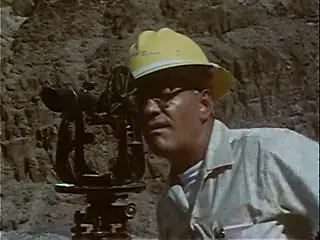 26:53
26:531 of 1 shots sampled
 27:33
27:331 of 1 shots sampled
Model synopsis: A still frame shows the seal of the U.S. Department of the Interior against a blue background. No people, actions, or spoken lines are present in this beat.
Evidence, details and a link to share
Transcript
Machine transcription of the Archive copy's audio with Whisper large-v3-turbo (temperature 0); the model heard it as en. 409 segments kept, 40 dropped as the kind of hallucination the model produces over music and silence. Each timestamp links to the Archive's player at that second. This has not been checked against the film and can be wrong.
- 0:08 This is the story of Hoover Dam.
- 0:11 one of America's seven modern civil engineering wonders.
- 0:37 Build a dam in the wilderness and the world will beat a path to it.
- 0:42 For many centuries,
- 0:43 This was a lonely canyon, unseen and untouched by man.
- 0:47 scorched by a desert sun.
- 0:50 Scolded by an angry river slashing its way to the Mother Sea,
- 0:55 Now it lies peaceful and silent.
- 0:58 except for the gentle hum of a hydroelectric power plant.
- 1:01 The bubbling up of water as it leaves mighty turbines
- 1:05 the cheerful sounds of America and the world on the move.
- 1:09 to see this pioneer multipurpose reclamation project
- 1:13 Man built in Black Canyon.
- 1:17 Millions come to this once desolate spot
- 1:20 to see this engineering wonder.
- 1:23 to hear the story of Hoover Dam.
- 1:26 Ladies and gentlemen...
- 1:27 We're now standing on the powerhouse ramp
- 1:30 560 feet below the top of the dam.
- 1:34 This is Black Canyon.
389 more segments
- 1:35 where Nevada and Arizona meet.
- 1:38 where the Colorado River once flowed uncontrolled.
- 1:41 Here is where man conquered this mighty river.
- 1:44 placing a concrete yoke about his neck.
- 1:46 to harness its tremendous water and power resources.
- 1:50 The water that flows through the canyon...
- 1:53 Through the ages, the river has gathered to its bed the snow-fed rivulets of the Rockies
- 1:58 Flowing southwestward in its wild, 1400-mile descent to the Pacific Ocean,
- 2:04 gouging great canyons,
- 2:06 piling up great deltas of silt in the valleys.
- 2:11 Early settlers were at the mercy of this untamed giant.
- 2:16 Melted snow from the mountains each spring swelled the Colorado River into a raging torrent.
- 2:24 flooding fertile valleys along its banks.
- 2:27 destroying farmlands.
- 2:30 poems.
- 2:31 and cities.
- 2:34 In 1905, the Colorado cut through its banks below the Mexican border
- 2:40 and for two years poured unchecked into the Salton sink, forming an inland sea.
- 2:46 After each spring's flood,
- 2:49 When the river had spent its fury,
- 2:51 It dried to a trickle.
- 2:53 Crops withered and died. Man and his livestock thirsted.
- 2:59 all living things suffered.
- 3:02 Settlers along the river were discouraged.
- 3:05 and aroused
- 3:06 Some gave up and went elsewhere.
- 3:09 Others stayed to fight.
- 3:12 The river had to be regulated
- 3:14 controlled in a year-round flow if they were to succeed.
- 3:18 No more floods.
- 3:19 No more droughts.
- 3:22 Arthur Powell Davis, first reclamation director and chief engineer, understood their problem. For years he had traveled up and down the river
- 3:32 Survey, study, build a high dam in a deep canyon upstream to control the river, he reasoned.
- 3:41 In 1918...
- 3:43 Davis reported his findings and proposals to Congress.
- 3:47 Congress responded in 1928.
- 3:49 passed the Boulder Canyon Project Act.
- 3:52 authorizing construction of Hoover Dam to control and regulate the Colorado River
- 3:57 and the All-American Canal System.
- 4:00 to deliver water to farmlands on the lower river.
- 4:03 In 1930,
- 4:04 President Herbert Hoover
- 4:06 for whom the dam is named,
- 4:08 signed the appropriation bill to begin construction.
- 4:11 Under a contract awarded in March 1931 to six companies incorporated, a combine of six major construction firms,
- 4:21 Men and machines went to work to build this dam of unprecedented size.
- 4:26 this modern,
- 4:27 Civil engineering wonder.
- 4:30 Reclamation engineers rushed to completion specifications and design drawings.
- 4:36 Crews at the dam site completed their surveys and investigations.
- 4:43 The thunder of man's determination to conquer the Colorado
- 4:47 reverberated between the sheer cliffs of Black Canyon as construction got underway.
- 4:53 The first major task was to divert the river around the dam site.
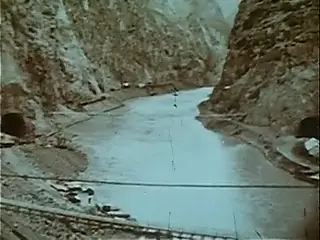
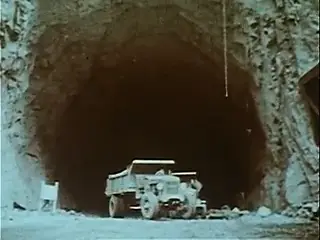
- 4:57 To do this, four tunnels, two on each side, were drilled through the canyon walls. Each 56 feet in diameter, they averaged 4,000 feet in length.
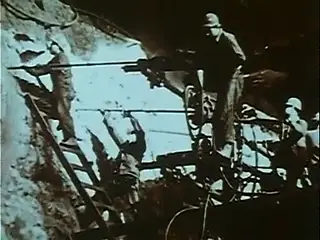
- 5:08 Drill holes were packed with dynamite and blasted.
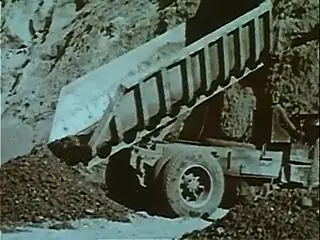
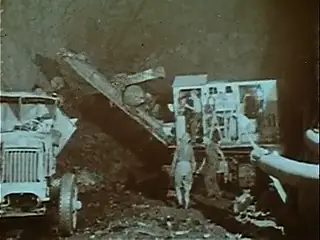
- 5:12 After each explosion, shovels and trucks entered the tunnels
- 5:15 mucked off the shattered rock.
- 5:17 and dumped it in nearby gulch.
- 5:20 Workman excavated over one and a half million cubic yards of plaster
- 5:25 rock material from the four tunnels.
- 5:27 in 13 months.
- 5:30 Oh
- 5:32 The tunnels then were lined with
- 5:34 concrete three feet thick.
- 5:47 Explosions rocked the canyon almost daily for two years.
- 5:51 before actual placing of concrete in the dam began.
- 5:54 Oh, my God.
- 5:55 I'm going to go.
- 6:03 Acrobatic workmen called high scalers prepared the canyon walls for each blast.
- 6:09 Suspended on ropes, they drilled holes in the rock and loaded them with dynamite.
- 6:18 After each explosion, these daredevils swarmed over the cliffs.
- 6:22 Prying loose rock
- 6:24 and clearing the walls of debris.
- 6:32 Oh, my God.
- 6:35 In November 1932,
- 6:37 The Colorado River was diverted
- 6:40 under control for the first time in its history
- 6:44 the river flowed around and past the site.
- 6:48 Men and trucks dumped an earthen rock embankment across the canyon below the tunnel openings
- 6:54 forcing the river from its age old
- 6:57 through the huge diversion to
- 7:00 A second earth and rock dam was thrown across the river above the tunnel outlets downstream
- 7:06 keeping water from backing into the foundation area.
- 7:10 isolated and protected from the river by the two coffer dams,
- 7:14 The site was pumped dry.
- 7:16 Men and machines dug 135 feet below the old river level.
- 7:21 to reach bedrock for the dam's foundation.
- 7:24 excavating over two million cubic yards of rock
- 7:27 earth and sand.
- 7:30 As cleanup of the dam site exposed the ancient bed of the Colorado River,
- 7:35 Geologists read the history of what happened ages ago.
- 7:40 Workmen cleaned and prepared bedrock surfaces to receive the first concrete
- 7:45 assuring utmost stability for Hoover Dam's foundation.
- 7:50 12 miles upstream
- 7:52 drag lines, excavated sand and gravel for the dam's concrete
- 7:57 from an old stream bed deposit on the Arizona side
- 8:03 A train hauled this raw material to an aggregate plant across the river, a few miles above the dam site.
- 8:10 Here the sand and gravel pass through various processes of screening, grading and washing
- 8:16 until it emerged as unexcelled aggregate.
- 8:21 Then it was stockpiled according to sizes
- 8:24 to await its trip to the dam site.
- 8:28 This processed aggregate moved as called for in a steady flow over the railroad
- 8:33 to two mixing plants
- 8:35 One in the canyon bottom
- 8:36 and the other on the Nevada Rim.
- 8:39 There, sand and gravel were blended with cement
- 8:42 into a uniform mix.
- 8:44 meeting rigid specifications for the 4.5 million cubic yards of concrete to be placed in the dam structures.
- 9:01 From the mixing plants,
- 9:02 Concrete was dispatched to all points of construction.
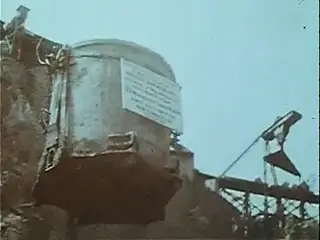
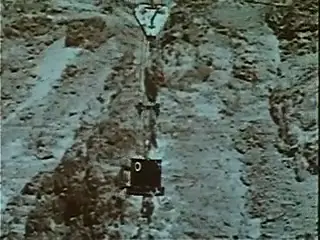
- 9:06 Nine anchored aerial cableways spanning the canyon from rim to rim
- 9:12 lowered the concrete into the forms.
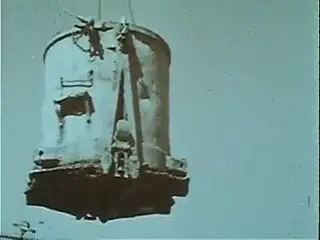
- 9:15 and handled other supplies and equipment as well.
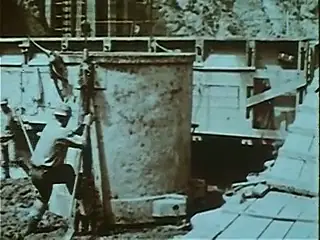
- 9:18 As the first bucket of concrete settled into its foundation on June 6, 1933, Hoover Dam began its rise from the depths of Black Canyon.
- 9:29 as cableways dumped load after load of concrete into the forms. The dam soon reached its full 660 foot thickness at its base.
- 9:39 poured in five foot layers of concrete.
- 9:42 The structure's keyed or interlocking columns climb skyward as crews set new records daily.
- 9:50 Bucketful after bucketful ran the continuous cycle.
- 9:54 Mixing plant to canyon rim, out into mid-air over the gorge,
- 9:58 and down into the forms.
- 10:00 dumping its load of 16 times.
- 10:08 The crews vibrated and compacted the fresh pores
- 10:12 while buckets returned again and again to the mixing plants.
- 10:16 to be filled with more concrete
- 10:18 or other waiting forms.
- 10:21 Crews worked under all conditions, all seasons of the year without cessation.
- 10:26 Rain or shine,
- 10:28 day and night.
- 10:30 By June 1934,
- 10:32 One year after the first pour,
- 10:35 Two-thirds of the dam's concrete had been placed in the forms. Hoover Dam had risen to an impressive height
- 10:42 Already taking its place is one of the world's wonders.
- 10:46 As Hoover Dam climbed between its abutments,
- 10:49 Related structures also took form.
- 10:52 at the toe of the dam.
- 10:54 the U-shaped power plant to house generating equipment, control and maintenance facilities
- 10:59 was built in twin wings
- 11:01 one along each side of the canyon walls.
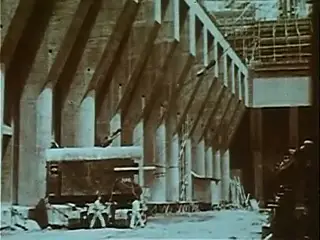
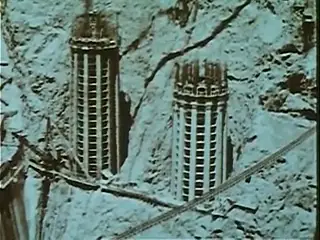
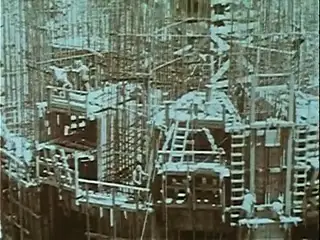
- 11:04 Intake towers, two on each side, for the power plant's penstock system, climbed as a maze of reinforcing steel and concrete.
- 11:14 perched on shelves hewn in the canyon walls
- 11:17 These graceful columns rose 403 feet
- 11:21 well above the dam's crest.
- 11:23 and the canyon rims.
- 11:26 Two giant spillways were set against the canyon walls on each side of the reservoir just above the dam.
- 11:32 These high-level controls
- 11:34 each capable of bypassing 200,000 cubic feet of water per second,
- 11:39 Assure that no water will ever overtop the dam.
- 11:43 Water flowing into the basins
- 11:46 plunges downward through the spillway tunnels.
- 11:49 to enter the river below the dam.
- 11:51 100 foot long drum gates on the spillway's crests
- 11:55 rise during flood stage.
- 11:57 to give the reservoir an additional 16 feet of storage.
- 12:03 Hoover Dam's Pennstock system.
- 12:06 called for pipes of unprecedented size.
- 12:09 ranging from eight and one half to thirty feet in diameter.
- 12:13 and five-eighths
- 12:15 to two and three quarters inches in thickness.
- 12:19 As it was not possible to ship units of this size across country, steel plate
- 12:25 was brought from Eastern Rolling Mills.
- 12:27 a steel fabrication plant
- 12:30 Erected especially for this job near the dam site
- 12:33 rolled and assembled the nearly three miles of pipe
- 12:36 installed in the canyon wall tunnels.
- 12:39 As in all unprecedented phases of Hoover Dam's construction,
- 12:43 Fabrication of the pipe sections required special machinery and equipment.
- 12:48 Edges of the dimension plates were shaped on a planing machine to assure precision and accuracy of later steps in their manufacture.
- 12:56 Then...
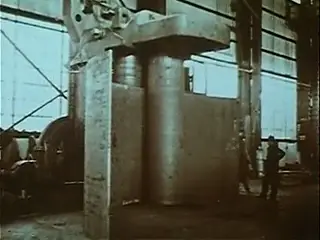
- 12:57 They were bent on a giant press
- 12:59 and rolled into circular form.
- 13:02 one such plate
- 13:03 equaled one third the complete circumference of a finished pipe. Three of the largest curved plates welded together
- 13:11 formed a ring 30 feet in diameter
- 13:13 and 11 feet long.
- 13:16 two of these rings joined
- 13:18 Meet up a section.
- 13:19 weighing 150 to 184 tons.
- 13:24 A vertical lathe.
- 13:26 machined the edges
- 13:27 so the sections would fit precisely when joined into continuous penstocks inside the canyon walls.
- 13:35 A train passing through one of the 30-foot sections
- 13:39 reveals their comparative size.
- 13:42 When the intake towers and their connected tunnels were ready to receive the pen stops,
- 13:47 a specially designed trailer, all the sections one at a time
- 13:51 down the highway from the plant to the dam site.
- 13:55 At the canyon rim.
- 13:56 A 150-ton cableway relieved the trailer of its tremendous burdens
- 14:02 swung the pipe sections out over the gorge.
- 14:05 and lowered them under absolute control.
- 14:15 Trailers waiting at portals of the access tunnels
- 14:18 carried them to their permanent connections inside the main tunnels.
- 14:23 The five sections were hoisted into location with cables
- 14:27 and joined end-to-end pressure pins to form continuous conduits between the intake towers, turbines and outlet valves.
- 14:37 While this and other work on the pertinent features was going on,
- 14:41 a continuous stream of concrete had been pouring into the dam for him.
- 14:46 The structure neared its full height of 726 feet.
- 14:50 far above the crest of any other dam yet built by man.
- 14:58 On May 29th, 1935,
- 15:01 Two years after they had begun pouring,
- 15:03 Cruz placed the last concrete in Hoover Dam.
- 15:07 a total of three and one quarter million cubic yards.
- 15:12 this modern civil engineering wonder stood completed
- 15:16 two and one half years
- 15:18 ahead of schedule.
- 15:21 On September 30, 1935,
- 15:24 President Franklin Delano Roosevelt dedicated to Hoover Dam.
- 15:28 to the nation's progress.
- 15:30 He praised its designers and builders.
- 15:33 The dam stood like a sentinel
- 15:36 white and beautiful in the desert sunlight.
- 15:39 guarding the river and its downstream wealth.
- 15:42 Flood waters lapped helplessly against its arched back
- 15:45 as the reservoir fills.
- 15:47 This man-made inland sea spread into the valleys and canyons among the colorful hills and mountains.
- 15:55 Hoover Dam
- 15:56 had conquered the Colorado.
- 16:02 Turbine pits to hold Hoover Dam's 17 big hydroelectric units were built into the powerhouse.
- 16:09 Generator installations began in 1935.
- 16:12 The first generator, Unit M2, began commercial operation October 26th
- 16:20 to serve the city of Los Angeles.
- 16:23 ones and twos,
- 16:25 The generators filled the pits.
- 16:27 as demand for electrical energy in California, Nevada and Arizona
- 16:31 called them into service.
- 16:33 Finally in 1959
- 16:36 Manufacture and installation of the last generator, N8.
- 16:40 THE GAP.
- 16:42 For 25 years, the N8 pit had lain dormant in silence.
- 16:47 except for the hum of other Hoover generators.
- 16:50 now
- 16:51 As more generating capacity was needed,
- 16:54 contracts were awarded for the generators manufacture and installation.
- 16:58 Plants throughout the nation
- 17:01 fabricated N8's many parts.
- 17:04 The design of N8 followed that of other Hoover-generating units.
- 17:09 It is a 95,000 kilowatt
- 17:12 60 cycle
- 17:13 16,500 volt generator driven by a 115,000 horsepower turbine.
- 17:21 Falling water from the reservoir which spins and powers the turbine wheel
- 17:26 is controlled by a huge butterfly valve.
- 17:29 which permits the water to flow to the turbine from the feeder penstock.
- 17:33 Weighing 2,000 tons, N8 parts were shipped to Hoover Dam
- 17:38 on 60 rail cars.
- 17:41 Arriving at the canyon rim overlooking the dam, the parts were lifted by cableway and
- 17:50 out over the canyon,
- 17:51 and down to the powerhouse.
- 17:55 Parts descending into the gorge on strands of cable were familiar and almost daily sights, reminiscent of previous installations.
- 18:04 and the main cableway operator was the same one who had helped install and operate the cableway
- 18:10 during the dam's construction in the early 1930s.
- 18:14 Others likewise had worked on the project
- 18:17 throughout its construction.
- 18:28 Inside the Nevada wing of the powerhouse,
- 18:31 technicians assembled and installed the mass of electrical cargo.
- 18:36 crews prepared the N8 pit
- 18:39 to receive the new generating unit.
- 18:41 They removed temporary slabs over the turbine and relief valve outlets to the tailrace river.
- 18:48 Liners assembled in these openings were set in concrete.
- 18:52 The turbine's scroll case sections were lowered into the pit.
- 18:56 sections were leveled
- 18:58 bolted together
- 18:59 and a lie.
- 19:01 The completed scroll case was then anchored in concrete.
- 19:06 Later, the turbine's water wheel
- 19:08 attached to the bottom end of the shaft
- 19:11 was installed inside the case.
- 19:15 The butterfly valve was assembled on the generator floor
- 19:18 and later connected between the feeder pen stock
- 19:21 and the turbine scroll case.
- 19:23 Meanwhile, the generator's two main parts, the rotor and stator, took form.
- 19:29 Steel lamination plates were stacked around the rotor and stator frames.
- 19:34 Coils were locked into place.
- 19:36 and electrical connections were made.
- 19:41 The powerhouse's overhead cranes lifted the completed 254-ton stator
- 19:46 from its erection bay
- 19:48 and carried it gently to its foundation over the turbine pit.
- 19:51 where it was lowered and bolted into place.
- 19:56 Amen.
- 19:56 466 ton rotor
- 19:59 was moved from its erection bay
- 20:01 and lowered inside the stator.
- 20:04 The rotor was then joined to the turbine water wheel by a 38-inch diameter shaft.
- 20:09 63 feet long.
- 20:11 Guide and thrust bearings and other parts were added
- 20:14 to complete the assembly.
- 20:17 After test runs.
- 20:19 N8 went on the line December 1st, 1961.
- 20:23 to serve the state of Nevada.
- 20:25 and to complete the Hoover power plant.
- 20:28 raising its capacity to one and one third million kilowatts.
- 20:33 keeping it as one of the world's largest hydroelectric installations.
- 20:38 As the last sounds of construction faded into history,
- 20:42 Hoover Dam had cost $175 million.
- 20:47 less a deferred payment of $25 million allocated to flood control,
- 20:52 Hoover Dam's cost
- 20:53 is being returned to the federal treasury
- 20:56 At 3% interest,
- 20:57 from the sale of hydroelectric power.
- 21:02 Hoover Dam has fulfilled the hopes and expectations
- 21:05 of those who envisioned this great reclamation project.
- 21:10 Colorado River waters
- 21:11 that once destroyed man and his property
- 21:15 Now serve him.
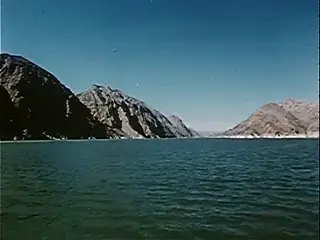
- 21:19 The Colorado pours its waters into Lake Mead, named for Dr. Elwood Mead, Reclamation Commissioner during construction.
- 21:29 Lying calmly behind the dam, these waters await need by downstream users.
- 21:35 Water is released through the Hoover Power Plant turbines in a year-round flow
- 21:40 to irrigate over one and one quarter million acres of desert land.
- 21:44 serve municipal and industrial needs of the Pacific Southwest, generate hydroelectric energy,
- 21:51 and provide various other multipurpose benefits.
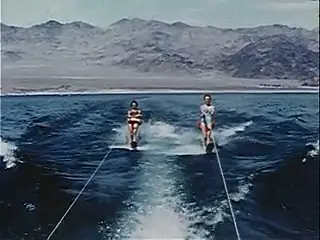
- 21:55 The clear waters of Lake Mead have opened up a vast new recreational
- 22:00 fish and wildlife vacation land for America.
- 22:03 Millions beat paths to this one-time wilderness along the Colorado River to the picnic
- 22:09 Go boating.
- 22:11 swim,
- 22:14 Fish.
- 22:15 and enjoy these important outdoor reclamation products.
- 22:27 Hoover Dam and its power plant work around the clock
- 22:30 to serve water and power needs of the Pacific Southwest
- 22:34 Water from Lake Mead?
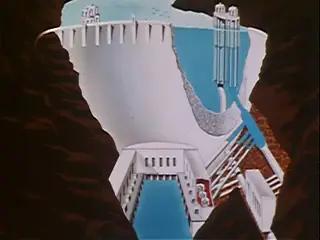
- 22:36 passing into the intake towers,
- 22:38 falls over 500 feet through the penstocks
- 22:41 to spin the giant turbine wheels
- 22:44 and then discharged to the river.
- 22:46 This action is repeated at downstream reclamation dams.
- 22:51 Amen.
- 22:51 Transformers step up Hoover Dam voltage,
- 22:54 as it comes from the generator.
- 22:57 Lines carry this power up over the powerhouse roof.
- 23:00 to the switch yards.
- 23:02 From there,
- 23:03 It is transmitted over lines across the desert.
- 23:09 The river flows southward.
- 23:11 and along the way man diverts from the controlled stream
- 23:15 to sustain his prosperous way of life.
- 23:19 67 miles downstream, Davis Dam re-regulates the Colorado's flow
- 23:25 releasing water through its power plant turbines to irrigators in this country in Mexico.
- 23:32 Davis Dam generators interconnect with those at Hoover Dam upstream
- 23:36 and those at Parker Dam downstream.
- 23:39 This energy goes out over transmission lines of the Parker Davis project
- 23:44 with farms, homes, and factories.
- 23:47 Much of this Colorado River energy pumps the farmers' irrigation and drainage water.
- 23:54 Parker Dam,
- 23:55 155 miles downstream from Hoover Dam,
- 23:59 was built with funds advanced by the Metropolitan Water District of Southern California
- 24:05 Parker Dam provides a forebay for the District's Colorado River Aqueduct.
- 24:09 Another one of America's seven
- 24:12 modern civil engineering wonders.
- 24:15 Electrical energy from Parker and Hoover power plants.
- 24:18 pumps water along the aqueduct.
- 24:21 This waterway delivers municipal and industrial supplies to the Los Angeles and San Diego coastal areas.
- 24:28 Parker Dam also controls floods.
- 24:32 Below Parker Dam, Headgate Rock Dam.
- 24:36 diverts water to Colorado River Indian Reservation lands in Arizona.
- 24:41 and farther downstream
- 24:43 The Palo Verde Diversion Dam sends water to the Palo Verde Irrigation District.
- 24:48 oldest irrigation development on the Colorado River.
- 24:52 At Imperial Dam and De-Silting Works
- 24:55 300 miles downstream from Hoover Dam,
- 24:59 Colorado River water enters river-sized canals
- 25:02 to irrigate farmlands in California and Arizona.
- 25:08 The All-American Canal system carries part of the Colorado's flow
- 25:12 westward to the Yuma, Imperial, and Coachella valleys.
- 25:17 When water reaches its farthest point on this canal system,
- 25:21 It has traveled nearly 500 miles after leaving Hoover Dam
- 25:26 and has required 10 days to make the trip.
- 25:32 The Gila Gravity Main Canal takes water from Imperial Dam
- 25:36 South and East
- 25:38 to valley and mesa lands of the Gila and Yuma Auxiliary Projects.
- 25:43 Mexico's share of Colorado River water to irrigate lands below the border
- 25:48 passes Imperial Dam and most of it is diverted at Morelos Dam
- 25:53 into the Alamo Canal.
- 25:57 the non-surplus food, fiber, and forage crops
- 26:00 grown on lands nourished by water from Hoover Dam.
- 26:04 Find ready markets throughout the nation.
- 26:08 while snow-covered lands lie idle,
- 26:10 Winter fruits and vegetables grown in the warm southwest with Colorado River water are shipped to dinner tables across the nation.
- 26:21 In return, these irrigated areas buy farm machinery and other products from the manufacturing center.
- 26:31 This exchange of goods between west and east, north and south,
- 26:35 has helped develop America's free enterprise prosperity.
- 26:45 Hoover Dam has pointed the way to the fullest utilization of the Colorado River's resources.
- 26:51 Man is adding other mighty reclamation projects to the stairway of dams on the Colorado River.
- 26:57 In northern Arizona, Glen Canyon Dam has joined Hoover Dam in conquering and regulating the Colorado.
- 27:05 potential sites and other canyons on the Colorado River
- 27:08 Await the day when they too
- 27:10 will cradle mighty multi-purpose dams.
- 27:14 These developments will write new chapters
- 27:17 in the story of Hoover Dam.
- 27:19 Truly.
- 27:20 a modern
- 27:21 Civil engineering wonder.
Similar frames
By the average clip vector of the keyframes; a measurement, not a judgement
 Unique War
  The General
  War's End