Protect And Survive 1 Nuclear Explosions Explained (1980)
Crown copyright, not a US Government work. Made 1975–76 by Richard Taylor Cartoons for the Central Office of Information and the Home Office; first shown publicly in 1980. 17 U.S.C. 105 covers only works of the United States Government, so Public Reel's registry rules do not clear this film. The Imperial War Museum reproduces the series as © Crown copyright under delegated authority. The Archive uploads carry an uploader's public-domain mark, which is a claim, not a licence. The atlas indexes it because the series is a landmark of government public information film; the video stays on the Archive.
How this page was made
9 shots over 1:28, read from the Internet Archive copy ProtectAndSurvive1NuclearExplosionsExplained_201806 (Protect_and_Survive_1_Nuclear_Explosions_Explained.mp4, 636×360, 25.00 fps). Shot boundaries by PySceneDetect's adaptive detector; each frame links to the Archive's player at that second. Part of Protect And Survive. JSON
Measurements: colour film on its keyframes (9 of 9 shots judged colour), average shot 9.8s long, a frontal face detected in 0% of keyframes. Shots are detected automatically and each is represented by its midpoint frame.
Released 1980 (Internet Archive).
4 beats in 4 sequences, cut automatically at shot boundaries scored on picture change, pauses in speech, topic shifts, on-screen text and cutting rhythm (each beat says why it starts where it does). Each is annotated by a vision-language model from four sampled frames and the transcript lines in it, as observations with evidence; anything the frames and lines do not support is left null. Machine annotation (Qwen/Qwen3-VL-235B-A22B-Instruct), checked automatically: quotes must be verbatim, names must be spoken, "visible" events are sampled to a second model. 4 of 4 beats annotated, 3 passed the checks, 1 flagged.
Beats
Passages cut at shot boundaries and annotated by a machine from four sampled frames and the transcript lines in them. Each beat says why it starts where it does and what was checked; sequences are visual groups, not scenes.
 1:18
1:181 of 1 shots sampled
Transcript
Machine transcription of the Archive copy's audio with Whisper large-v3-turbo (temperature 0); the model heard it as en. 16 segments kept. Each timestamp links to the Archive's player at that second. This has not been checked against the film and can be wrong.
- 0:00 *Burrish*
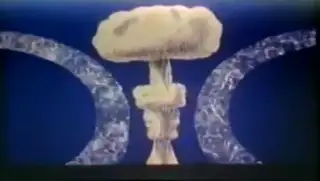
- 0:07 Nuclear explosions are caused by weapons such as H-bombs or atom bombs.
- 0:12 They are like ordinary explosions, only many times more powerful.
- 0:16 They cause great heat and blast.
- 0:21 They also make a cloud of deadly dust which falls slowly to the ground. This is what is called fallout.
- 0:30 So these are the two dangers...
- 0:33 First,
- 0:34 Heat and blast.
- 0:35 which is followed by...
- 0:37 fallout.
- 0:38 The heat and blast is so severe that it can kill.
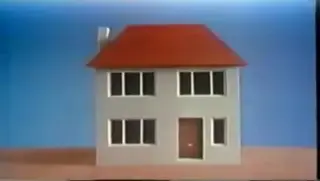
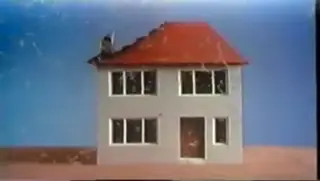
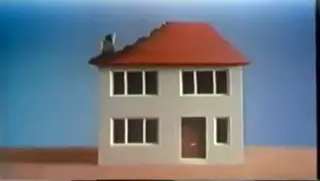
- 0:42 and can destroy buildings for up to five miles from the explosion.
- 0:48 Fallout is dust that is sucked up from the ground by the explosion. It can be deadly dangerous. It rises high in the air and can be carried by winds for hundreds of miles before falling to the ground.
- 1:10 You can protect yourself
- 1:12 and your family.
- 1:14 And later on, we will show you what steps to take.
Similar frames
By the average clip vector of the keyframes; a measurement, not a judgement
 Protect And Survive 15 Life Under Fall Out Conditions
  Protect And Survive 16 What To Do After An Attack
  Protect And Survive 13 Fire Precautions