Protect And Survive 16 What To Do After An Attack (1980)
Crown copyright, not a US Government work. Made 1975–76 by Richard Taylor Cartoons for the Central Office of Information and the Home Office; first shown publicly in 1980. 17 U.S.C. 105 covers only works of the United States Government, so Public Reel's registry rules do not clear this film. The Imperial War Museum reproduces the series as © Crown copyright under delegated authority. The Archive uploads carry an uploader's public-domain mark, which is a claim, not a licence. The atlas indexes it because the series is a landmark of government public information film; the video stays on the Archive.
How this page was made
14 shots over 2:24, read from the Internet Archive copy ProtectAndSurvive16WhatToDoAfterAnAttack (Protect_and_Survive_16_What_To_Do_After_An_Attack.mp4, 636×360, 25.00 fps). Shot boundaries by PySceneDetect's adaptive detector; each frame links to the Archive's player at that second. Part of Protect And Survive. JSON
Measurements: colour film on its keyframes (14 of 14 shots judged colour), average shot 10.3s long, a frontal face detected in 0% of keyframes. Shots are detected automatically and each is represented by its midpoint frame.
Released 1980 (Internet Archive).
6 beats in 5 sequences, cut automatically at shot boundaries scored on picture change, pauses in speech, topic shifts, on-screen text and cutting rhythm (each beat says why it starts where it does). Each is annotated by a vision-language model from four sampled frames and the transcript lines in it, as observations with evidence; anything the frames and lines do not support is left null. Machine annotation (Qwen/Qwen3-VL-235B-A22B-Instruct), checked automatically: quotes must be verbatim, names must be spoken, "visible" events are sampled to a second model. 6 of 6 beats annotated, 6 passed the checks, 0 flagged.
Beats
Passages cut at shot boundaries and annotated by a machine from four sampled frames and the transcript lines in them. Each beat says why it starts where it does and what was checked; sequences are visual groups, not scenes.
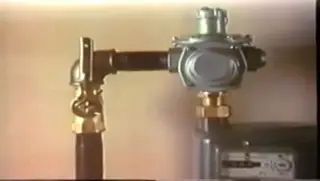
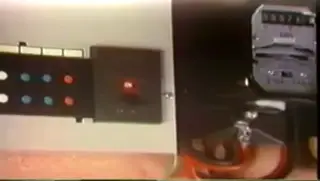
Model synopsis: The video opens with a nuclear explosion and a city skyline at dusk, then shows close-ups of a gas valve and an electrical panel. The narrator advises turning off gas and electricity at the mains after an attack.
- A nuclear explosion is shown. [frame:1]
- A city skyline at dusk or dawn is shown. [frame:2]
- A gas valve is shown. [frame:3]
- 1 more under Evidence and details.
“After an attack,” 0:09 · “Fires will start in many places.” 0:10
Evidence, details and a link to share
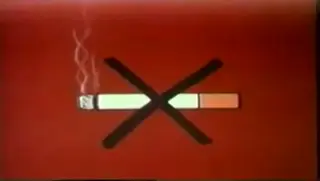
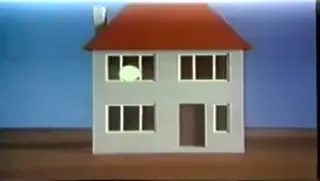
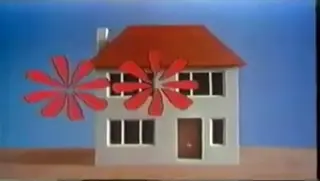
Model synopsis: A public information film advises against smoking and instructs viewers to check for fires starting at the top of the house, using water, earth, or sand to extinguish small fires immediately. The visuals show a cigarette with a cross over it and a two-story house.
- An animated cigarette with smoke is shown with a large black X over it. [frame:1]
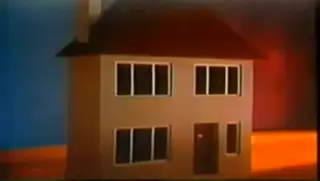
- An animated two-story house with a red roof is shown. [frame:2]
“Don't smoke.” 0:32 · “Then start checking for fires.” 0:34
Evidence, details and a link to share
 2:17
2:171 of 1 shots sampled
Transcript
Machine transcription of the Archive copy's audio with Whisper large-v3-turbo (temperature 0); the model heard it as en. 38 segments kept, 1 dropped as the kind of hallucination the model produces over music and silence. Each timestamp links to the Archive's player at that second. This has not been checked against the film and can be wrong.
- 0:00 *Burrish*
- 0:09 After an attack,
- 0:10 Fires will start in many places.
- 0:13 The FAR Brigade may not be able to help everyone.
- 0:16 So it might be up to us to tackle the fires in our own homes.
- 0:20 Here is some advice on how to do it.
- 0:24 Make sure that you have turned off gas
- 0:28 and electricity at the mains.
- 0:32 Don't smoke.
- 0:34 Then start checking for fires.
- 0:37 Start at the top of the house.
- 0:40 check roof space
- 0:42 and every wrong.
- 0:43 putting out fires before they get out of control.
- 0:48 small fires can be put out quite easily if they're tackled at once.
- 0:53 if they are left
- 0:54 They spread quickly and take hold.
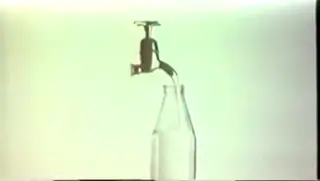
- 0:58 Use water from the tap if there is any. Earth and sand are also useful.
- 1:04 Put all the members of your family to work putting out fires in the house.
- 1:10 When you are satisfied that the inside is safe,
18 more segments
- 1:13 Check the outside of the house
- 1:15 and make sure that you are safe from any fires which have started nearby.
- 1:20 when you have seen to your own household
- 1:22 Help any neighbor in need.
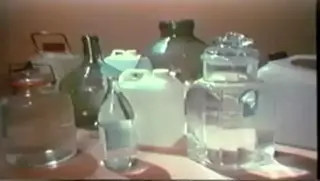
- 1:28 If you have used any of your precious drinking water to fight fires, make good your reserves.
- 1:36 Fill up all your containers again and put covers on them.
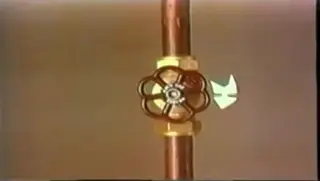
- 1:40 Turn off your water supply at the mains.
- 1:43 it may become contaminated.
- 1:46 If your house is damaged...
- 1:47 you may have a little time before a fallout warning to carry out minor jobs to keep the weather out.
- 1:54 Curtains or sheets may be used to cover broken windows or holes.
- 2:00 Then listen for the fallout warning.
- 2:04 All right.
- 2:06 *poof*
- 2:08 If it comes,
- 2:09 take cover in your inner refuge
- 2:12 and stay there.
- 2:15 No!
Similar frames
By the average clip vector of the keyframes; a measurement, not a judgement
 Protect And Survive 13 Fire Precautions
  Protect And Survive 7 Materials To Use For Your Fall Out Room And Refuge
  Protect And Survive 10 Action After Warnings