Protect And Survive 6 Refuges (1980)
Crown copyright, not a US Government work. Made 1975–76 by Richard Taylor Cartoons for the Central Office of Information and the Home Office; first shown publicly in 1980. 17 U.S.C. 105 covers only works of the United States Government, so Public Reel's registry rules do not clear this film. The Imperial War Museum reproduces the series as © Crown copyright under delegated authority. The Archive uploads carry an uploader's public-domain mark, which is a claim, not a licence. The atlas indexes it because the series is a landmark of government public information film; the video stays on the Archive.
How this page was made
16 shots over 3:52, read from the Internet Archive copy ProtectAndSurvive6Refuges (Protect_and_Survive_6_Refuges.mp4, 636×360, 25.00 fps). Shot boundaries by PySceneDetect's adaptive detector; each frame links to the Archive's player at that second. Part of Protect And Survive. JSON
Measurements: colour film on its keyframes (16 of 16 shots judged colour), average shot 14.5s long, a frontal face detected in 12% of keyframes. Shots are detected automatically and each is represented by its midpoint frame.
Released 1980 (Internet Archive).
8 beats in 6 sequences, cut automatically at shot boundaries scored on picture change, pauses in speech, topic shifts, on-screen text and cutting rhythm (each beat says why it starts where it does). Each is annotated by a vision-language model from four sampled frames and the transcript lines in it, as observations with evidence; anything the frames and lines do not support is left null. Machine annotation (Qwen/Qwen3-VL-235B-A22B-Instruct), checked automatically: quotes must be verbatim, names must be spoken, "visible" events are sampled to a second model. 8 of 8 beats annotated, 8 passed the checks, 0 flagged.
Beats
Passages cut at shot boundaries and annotated by a machine from four sampled frames and the transcript lines in them. Each beat says why it starts where it does and what was checked; sequences are visual groups, not scenes.
 0:59
0:591 of 1 shots sampled
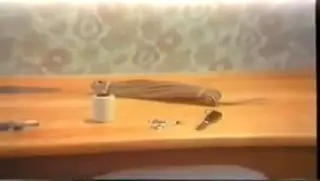
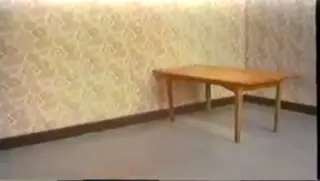
Model synopsis: A table displays tools including a hammer, saw, screwdriver, nails, screws, string, scissors, and a penknife. The voiceover suggests using strong boards or doors to build a lean-to against an inside wall.
1 person observed.
“Hammer?” 0:49 · “Screwdriver” 0:51
Evidence, details and a link to share
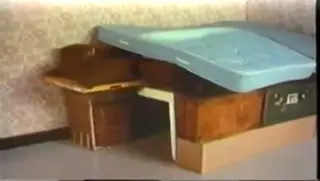
 1:26
1:261 of 1 shots sampled
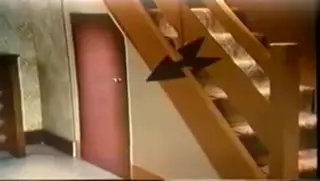
 2:52
2:521 of 1 shots sampled
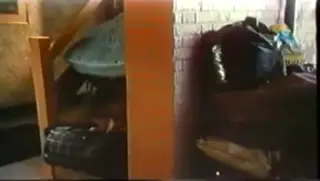
 3:43
3:431 of 1 shots sampled
Transcript
Machine transcription of the Archive copy's audio with Whisper large-v3-turbo (temperature 0); the model heard it as en. 66 segments kept. Each timestamp links to the Archive's player at that second. This has not been checked against the film and can be wrong.
- 0:00 *Burrish noise*
- 0:09 We have told you how to choose a fallout room in your home.
- 0:14 The best place is farthest away from the roof
- 0:17 and outside walls.
- 0:21 Your fallout room will protect you.
- 0:23 but you will make it even safer
- 0:25 by strengthening a small part of it.
- 0:28 This part will be your inner refuge
- 0:30 during the worst of the attack.
- 0:33 Making a refuge is not difficult.
- 0:36 The main things you will need are shovel,
- 0:39 boxes
- 0:40 cartons or large plastic bags, earth or sand.
- 0:43 Start collecting them now.
- 0:46 These things may also come in handy.
- 0:49 Hammer?
- 0:50 Saw
- 0:51 Screwdriver
- 0:52 Nails...
- 0:53 screws,
46 more segments
- 0:55 string or thin rope.
- 0:57 scissors.
- 0:59 or penknife,
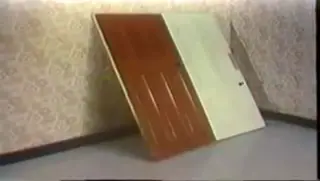
- 1:02 One idea is to make a lean-to of wood.
- 1:06 resting against an inside wall.
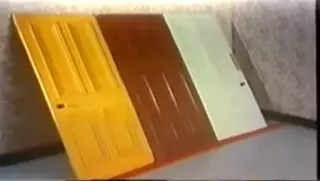
- 1:09 strong boards or doors taken from their hinges are quite good.
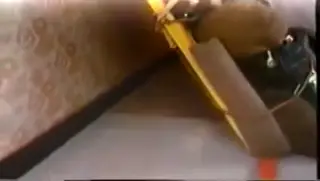
- 1:14 Stop them slipping down the wall by fixing them to the floor with a strip of wood.
- 1:19 Like this.
- 1:25 Then cover the wood with bags or boxes
- 1:28 filled with some heavy material.
- 1:30 like sand,
- 1:31 Earth.
- 1:32 books
- 1:32 or rolled up clothes.
- 1:36 Don't forget to fix the bags and boxes so that they don't slip off.
- 1:41 Across the two open ends of your refuge
- 1:44 you should make thick walls of bags and boxes of earth or sand
- 1:48 or heavy furniture.
- 1:50 Packed tightly with heavy material.
- 1:53 Don't forget to leave an easy way into and out of your refuge.
- 2:01 Next.
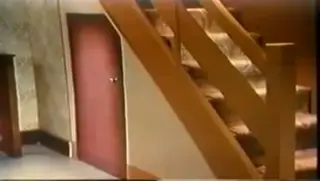
- 2:02 a cupboard under the stairs.
- 2:05 That is another good place for a refuge.
- 2:08 put boxes of earth or sand on the stairs
- 2:12 and along the walls of the cupboard
- 2:15 Like this.
- 2:21 If the stairs are on an outside wall...
- 2:24 Make the wall thicker with bags of earth or sand.
- 2:29 Stack the bags up to a height of about six feet.
- 2:39 Here is another idea.
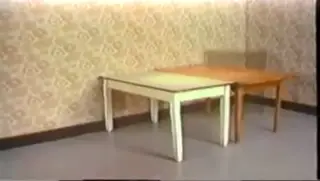
- 2:41 Use tables
- 2:43 if they are strong and large enough for you and your family to shelter beneath.
- 2:50 make solid sides around the tables out of heavy furniture
- 2:55 boxes filled with sand, earth or books.
- 2:59 If you can, lay strong boards or doors across the top.
- 3:03 and cover them with bags of heavy material.
- 3:06 This will make a good roof over your refuge.
- 3:12 If you live in a caravan or other building of lightweight construction, which provides you with very little protection against fallout,
- 3:20 your local authority will be able to advise you on what to do.
- 3:25 Whatever type of refuge you have,
- 3:27 The main thing to remember is
- 3:29 that the more heavy material you have around you,
- 3:33 like earth or sand,
- 3:35 the more chance there is
- 3:37 of saving your life.
- 3:40 No!
Similar frames
By the average clip vector of the keyframes; a measurement, not a judgement


 Protect And Survive 8 Make Your Fall Out Room And Refuge Now
  Protect And Survive 10 Action After Warnings
  Protect And Survive 13 Fire Precautions